Stellaria media (L.) Vill.
Common chickweed, craches, maruns, winterweed, chickweed
This European native is widespread in North America now. It exploded into existence in my yard not long after the neighbor’s chickens began rooting around there. As you may have guessed from the name, chickens like chickweed. I don’t know whether they were attracted to it, or they brought it with them. It is considered a pest by many gardeners, lawn owners, and farmers.
Plants: Chickweed is a low-growing plant with a preference for cool, damp conditions. It has stems up to 1½′ (50 cm) long, spreading horizontally and re-rooting as it goes, and growing upward to 8–12″ (20–30 cm).
Leaves: Stems have multiple pairs of linear or lanceolate leaves, each 1–4 centimetres (0.4–1.6 in) long. The leaves are smooth-edged and mostly hairless.
Flowers: It flowers practically all the time, producing tiny white flowers about ¼″ (6.3 mm) across. Flowers have five petals and five sepals, and ten stamens. Each petal is deeply cut, so the five petals look like ten.
Fruits: Zillions of reddish brown 1/32″ (1 mm) seeds, up to 15,000 per plant.
Habitats: Lawns, landscaping, fallow gardens, any exposed rich soil.
Edibility: Chickweed is edible and tasty when added to salads or boiled briefly like spinach. It has a lot of vitamin C, and good nutritional value.
Online References:
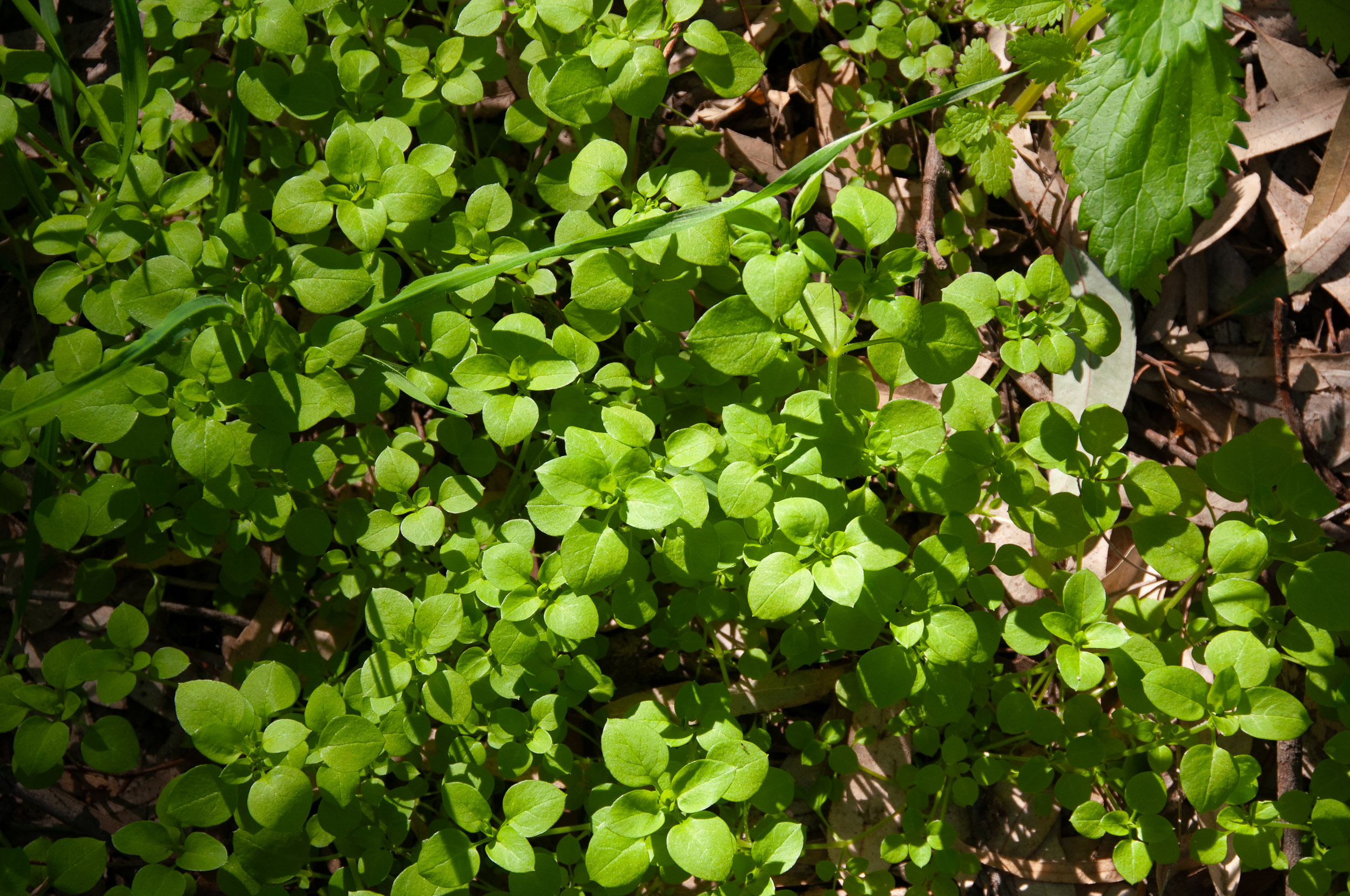
2/24/2010 · Batiquitos Lagoon, Carlsbad, California · ≈ 15 × 10″ (38 × 25 cm) 
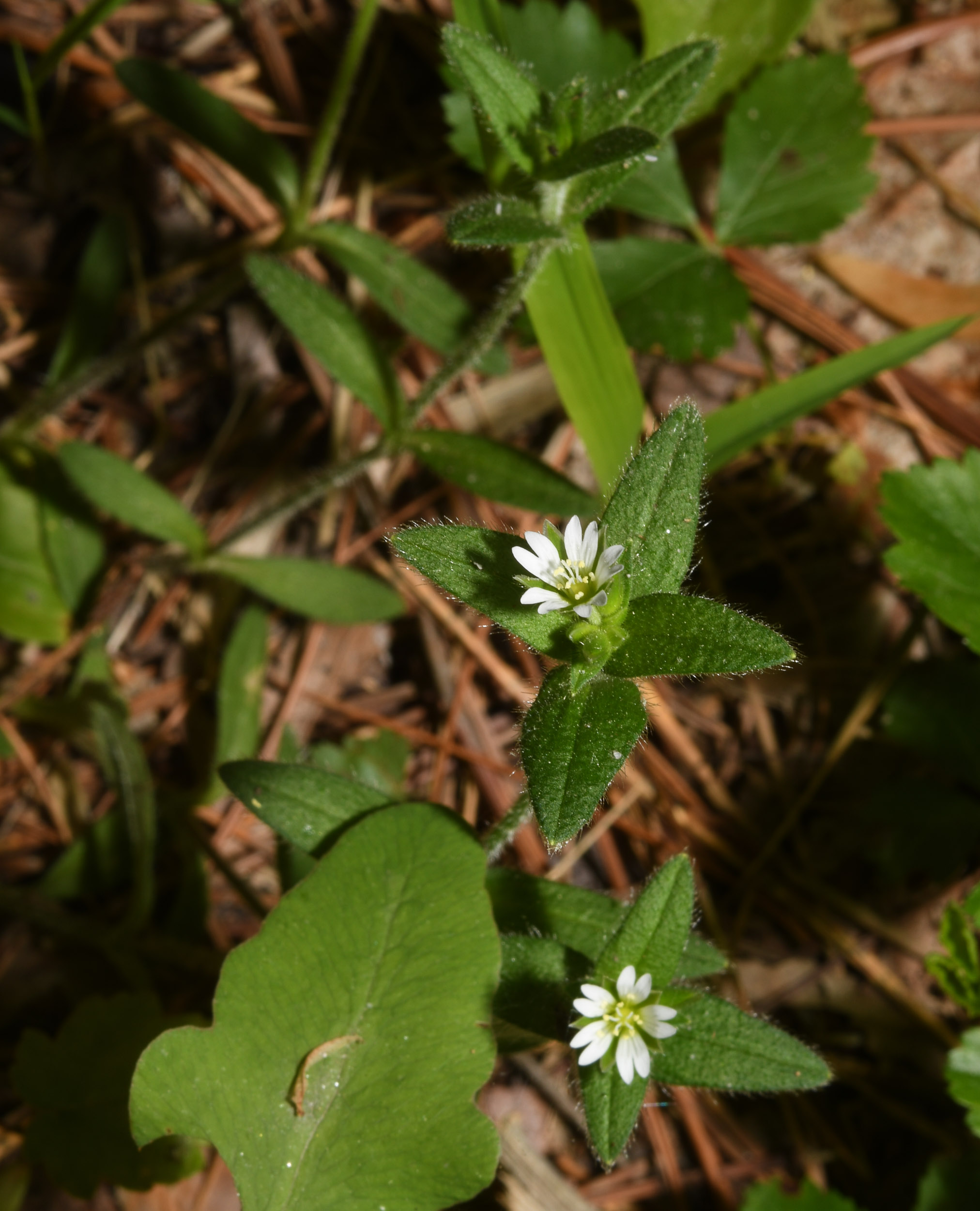
5/31/2016 · J. Harry Rich State Forest, Pepperell, Massachusetts 
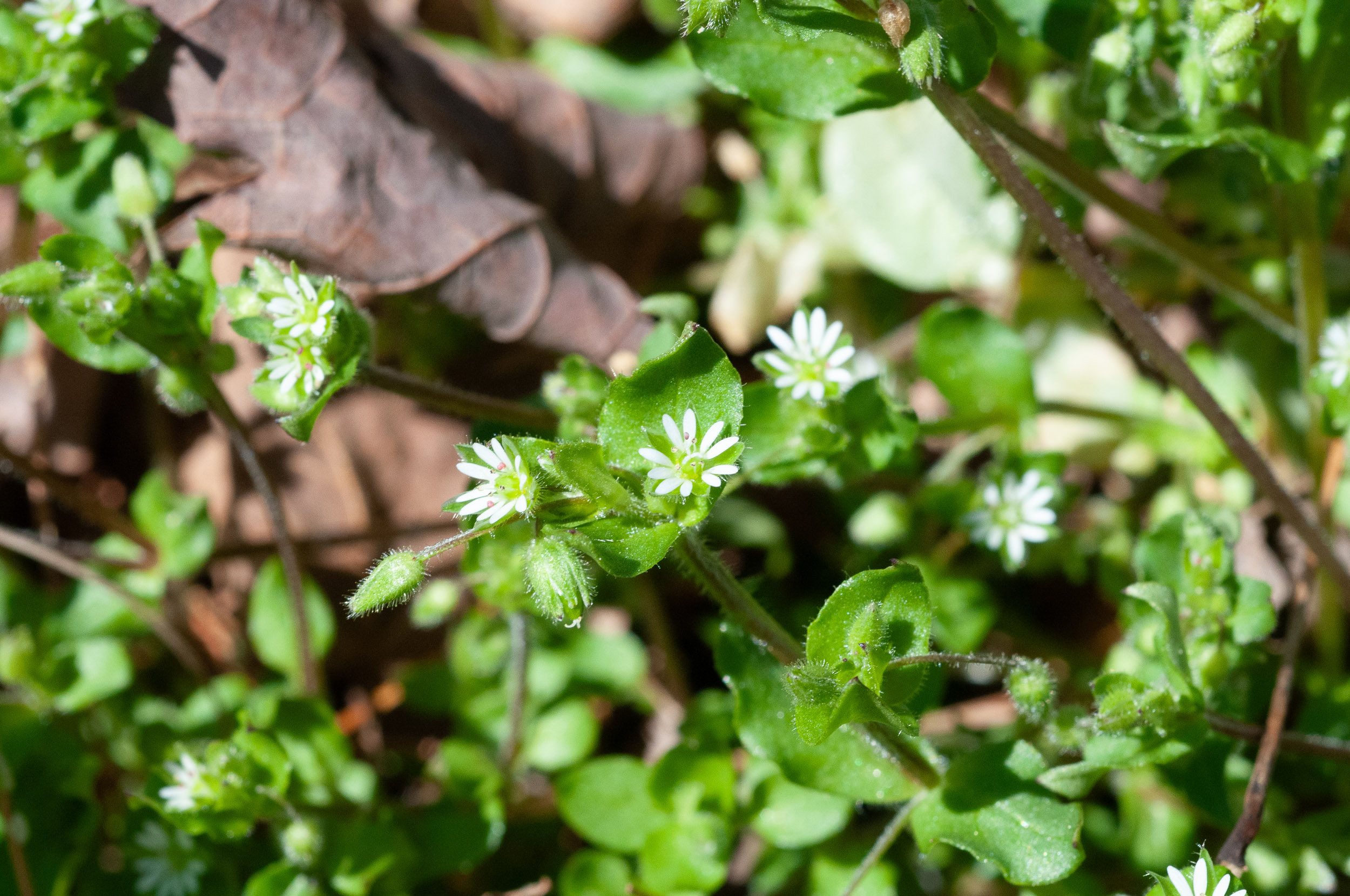
4/10/2010 · Tom & Susan’s, Pepperell, Massachusetts · ≈ 4½ × 3″ (11 × 7.9 cm) 

6/10/2017 · Andres Institute of Art, Big Bear Mountain, Brookline, New Hampshire · ≈ 1½ × 2″ (4.1 × 5.7 cm) 
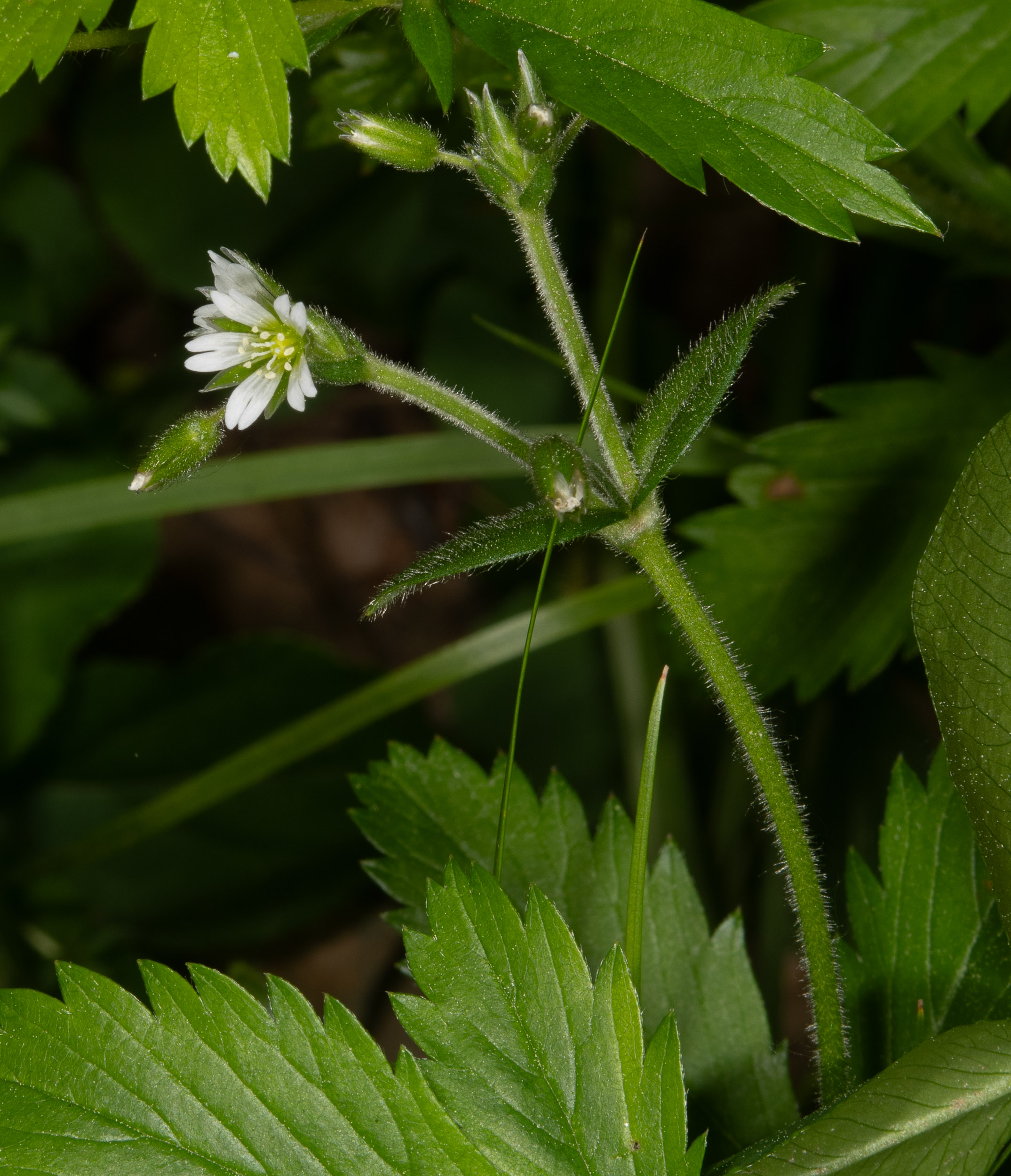
6/10/2017 · Andres Institute of Art, Big Bear Mountain, Brookline, New Hampshire · ≈ 2½ × 3″ (7.2 × 8.4 cm) 
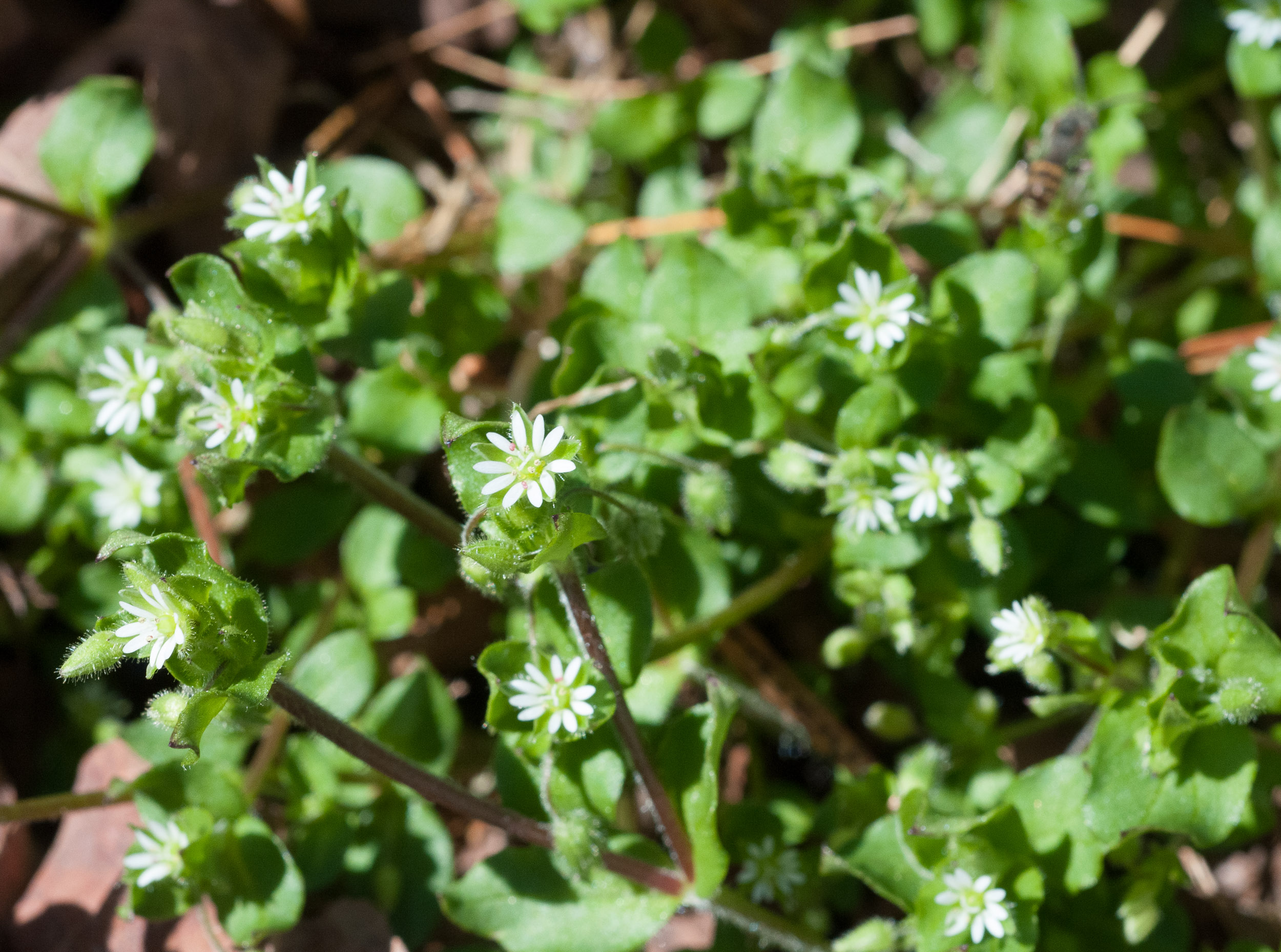
4/10/2010 · Tom & Susan’s, Pepperell, Massachusetts · ≈ 4½ × 3½″ (12 × 9.2 cm) 
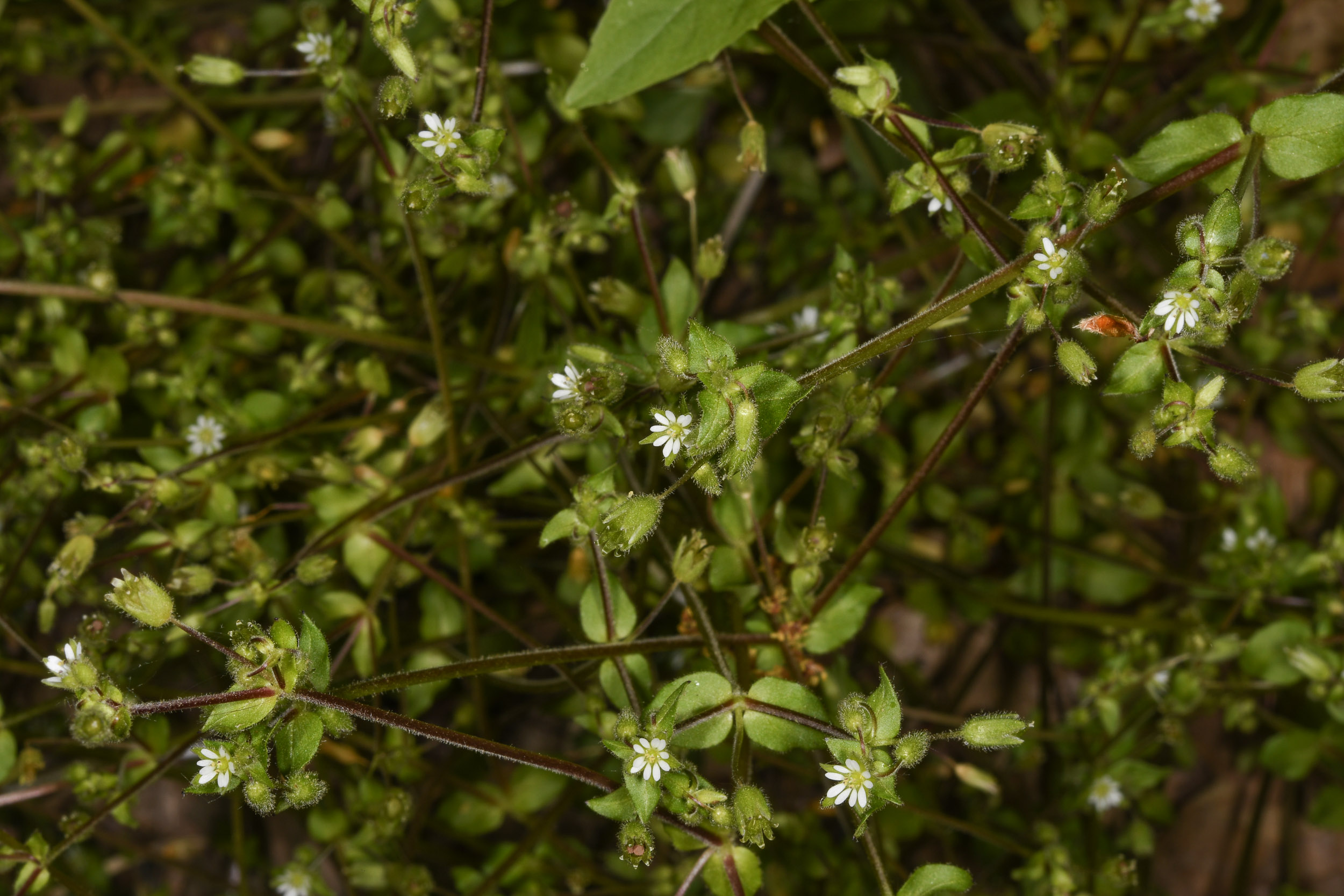
5/16/2016 · Oak Hill, Littleton, Massachusetts 
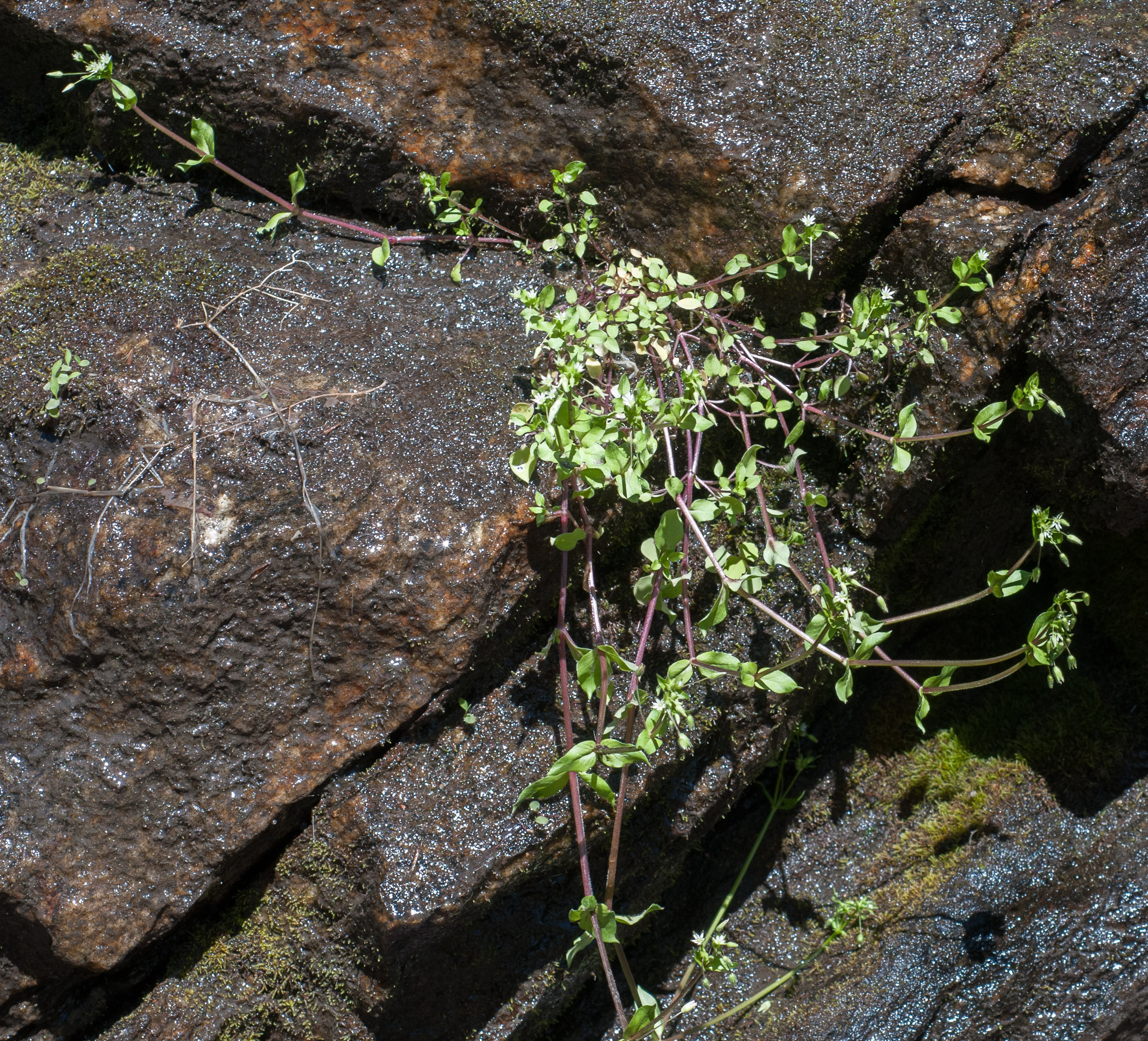
4/6/2012 · North Central Railroad Trail, Sparks, Maryland 
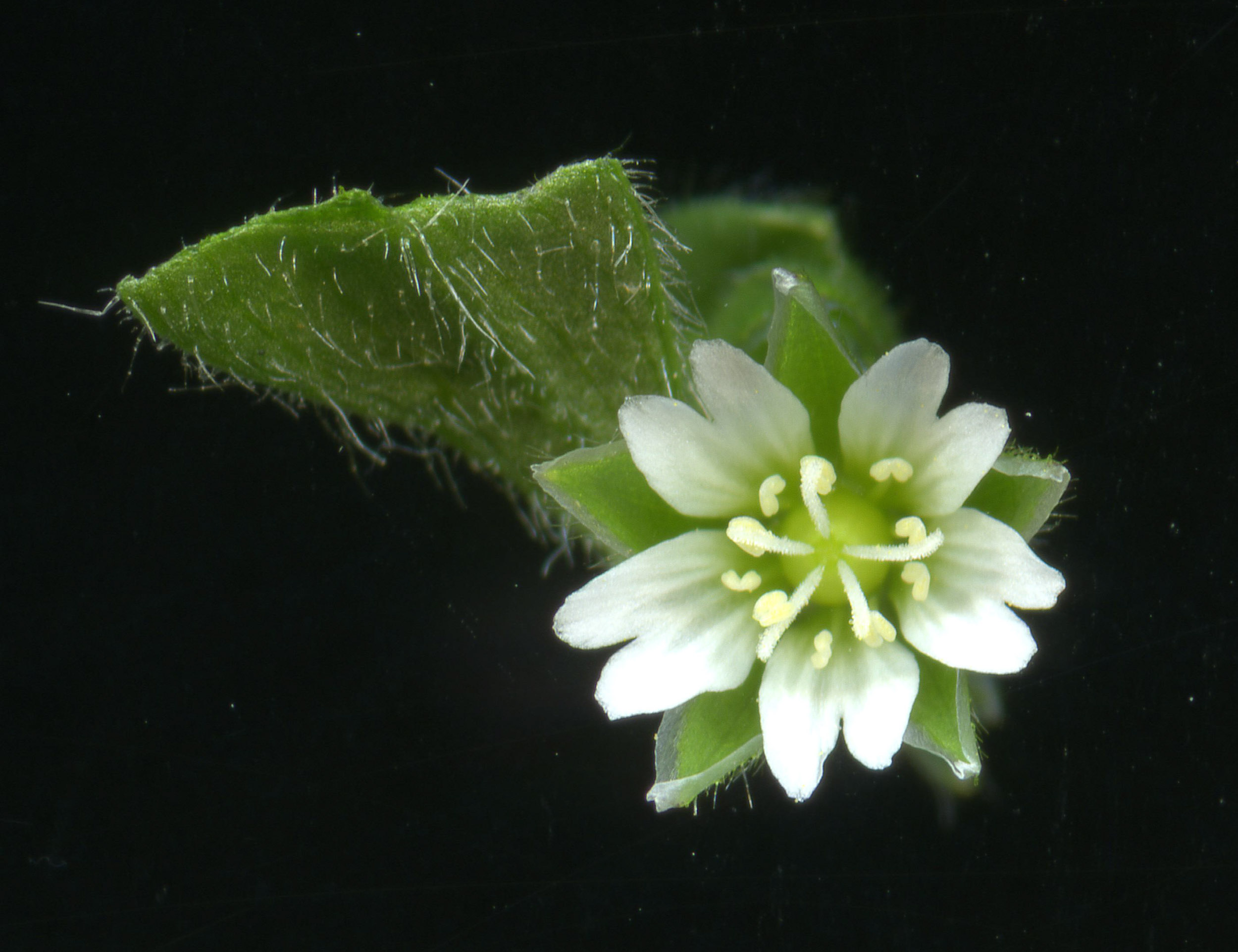
Flower is approximately 3/16" (5 mm) in diameter. · 1/5/2026 · Tom and Susan’s, Pepperell, Massachusetts 
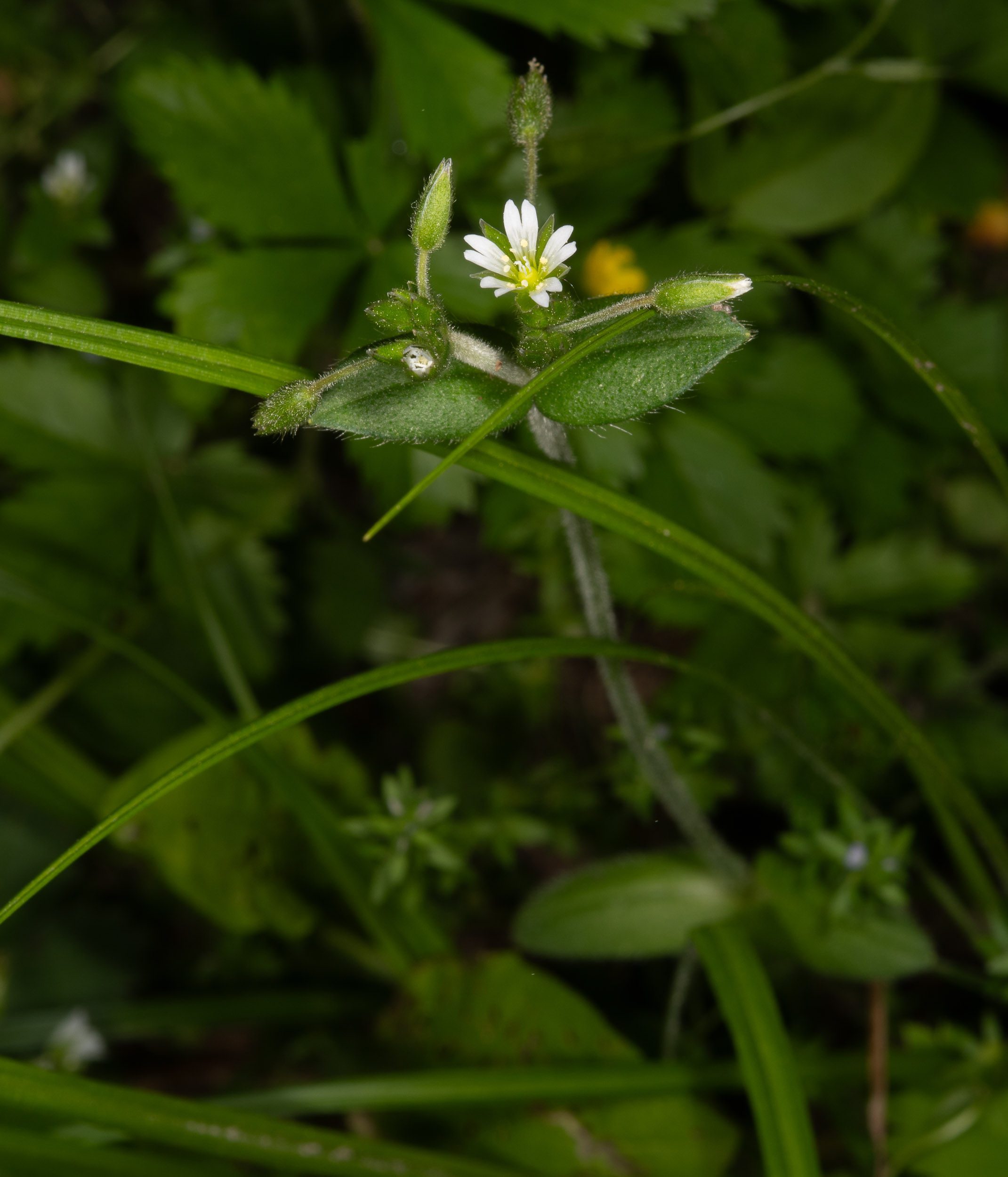
6/10/2017 · Andres Institute of Art, Big Bear Mountain, Brookline, New Hampshire · ≈ 3½ × 4″ (9.2 × 10 cm) 
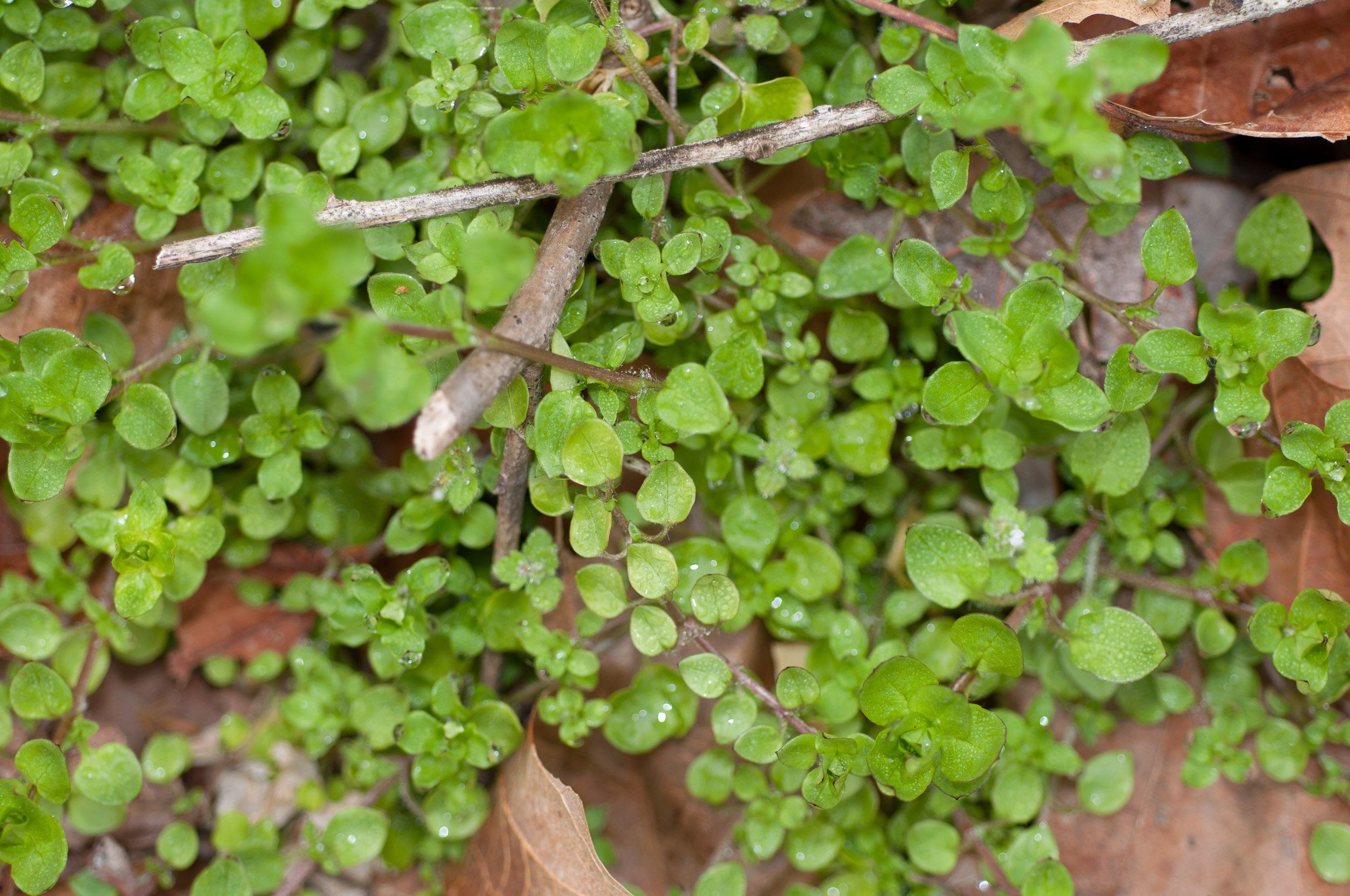
3/18/2012 · Gunpowder Falls State Park, Phoenix Rd., Phoenix, Maryland · ≈ 9 × 6″ (22 × 14 cm)  ID is uncertain
| Kingdom | Plantae | Plants, but not fungi, lichens, or algae (from Stearn's Botanical Latin) |
| Subkingdom | Tracheobionta | Vascular plants—plants with a “circulatory system” for delivering water and nutrients |
| Division | Magnoliophyta | Flowering plants, also known as angiosperms |
| Class | Magnoliopsida | Dicotyledons—plants with two initial seed leaves |
| Subclass | Caryophyllidae | Cacti, many other succulents, carnivorous plants, and leadworts |
| Order | Caryophyllales | Includes cacti, carnations, amaranths, ice plants, and many carnivorous plants |
| Family | Caryophyllaceae | Pink or carnation family |
| Genus | Stellaria | From the Latin stella for “star’ because of the star-like shape of the flowers or some other feature |
| Species | media | Meaning “the middle,” because the plant is midway between two others with regard to some identifying characteristic such as size |
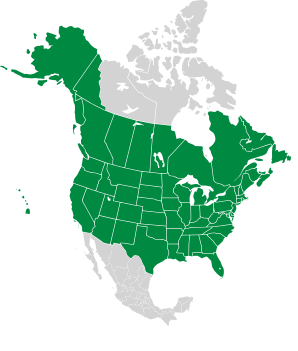
Stellaria media description by Thomas H. Kent, not updated.

© FloraFinder.org. All rights reserved.