Abronia villosa S. Watson
Desert sand verbena
A comparison of two pink sand verbenas
Abronia umbellata
Abronia villosa




|
Abronia villosa S. Watson Desert sand verbena A comparison of two pink sand verbenas | ||
Abronia umbellata |
You are here Abronia villosa |
|
|---|---|---|
| Common Name | |
|
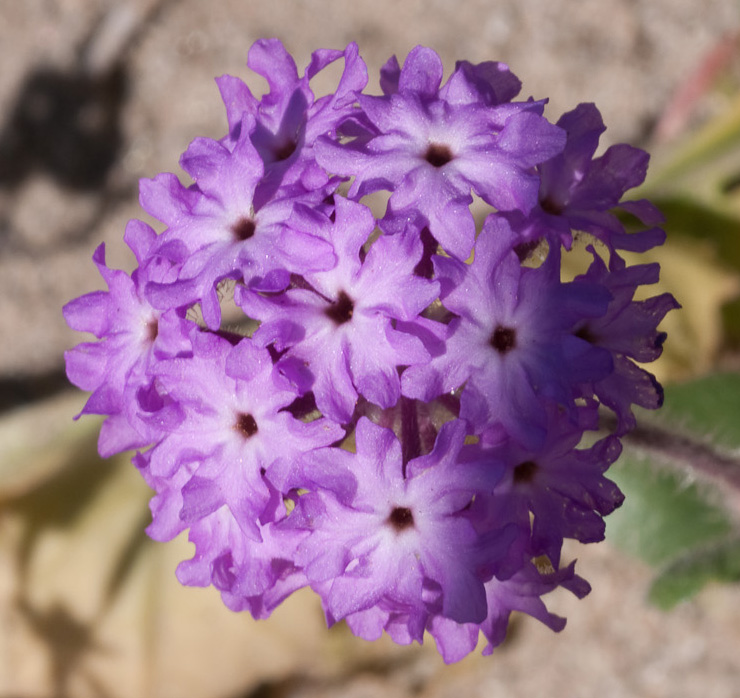
| Plant | Plants form prostrate mats up to 6″ (15 cm) tall and 6′ (1.8 m) around. | Usually less than 6″ (15 cm) high, forming low mats up to 1½′ (50 cm) wide. Plants are sticky, and stems are fuzzy. Desert sand verbena looks similar to pink sand verbena (see below), but it is found in more arid settings. (It can occur on beaches though.) |
| Leaves | Thick, succulent, oval or diamond-shaped. | Thick, hairy, ovate, and gray-green in color., and up to [Suze(1.5")] long. |
| Flowers |
|
|
| Fruit | Small, winged fruits. | Usually winged, ⅛–⅜ ⨉ ⅛–½″ (5–10 ⨉ 4–15 mm). |
| Range/ Zones |
|
|
| Habitats | Loose beach sand and dunes, along the west coast of North America. | The Mojave Desert, in loose sandy soils in creosote bush scrub at elevations below 5000′ (1.5 km). |
Abronia villosa description by Thomas H. Kent, not updated.
© FloraFinder.org. All rights reserved.