Acer campestre L.
Field maple, hedge maple
Field maple is native to much of Europe, parts of southwest Asia, and the Atlas Mountains in north Africa. It has become naturalized in suitable climates in the US and other countries.
Plants: These deciduous trees are up to 35′ (10 m) tall, and, given ample space, around. Bark is gray to pale brown, vertically fissured in older trees. Some branchlets are corky or “winged.”
Leaves: Simple, palmate, and opposite, and 1¾–6″ (5–16 cm) long. They are dark green, uniformly colored, somewhat hairy below when young, with smooth edges. They usually have 5 lobes, but may have 3 or 7. The base of each leaf stem or petiole exudes a milky sap when broken off.
Flowers: Yellowish-green, in clusters 1½–2″ (4–6 cm) across of about 10 flowers, appearing from April to May.
Fruits: Samaras are about 1¼″ (3.5 cm) long, each with two wings that are nearly horizontal. Most maples have similar wings, but at an angle to each other.
Habitats: Moist soils and cooler climates, or more alkaline soils in warmer conditions.
Online References:
Plantfacts.osu.edu (PDF)

6/4/2010 · Nashua River Rail Trail, Ayer, Massachusetts · ≈ 1 × 2′ (41 × 62 cm) 
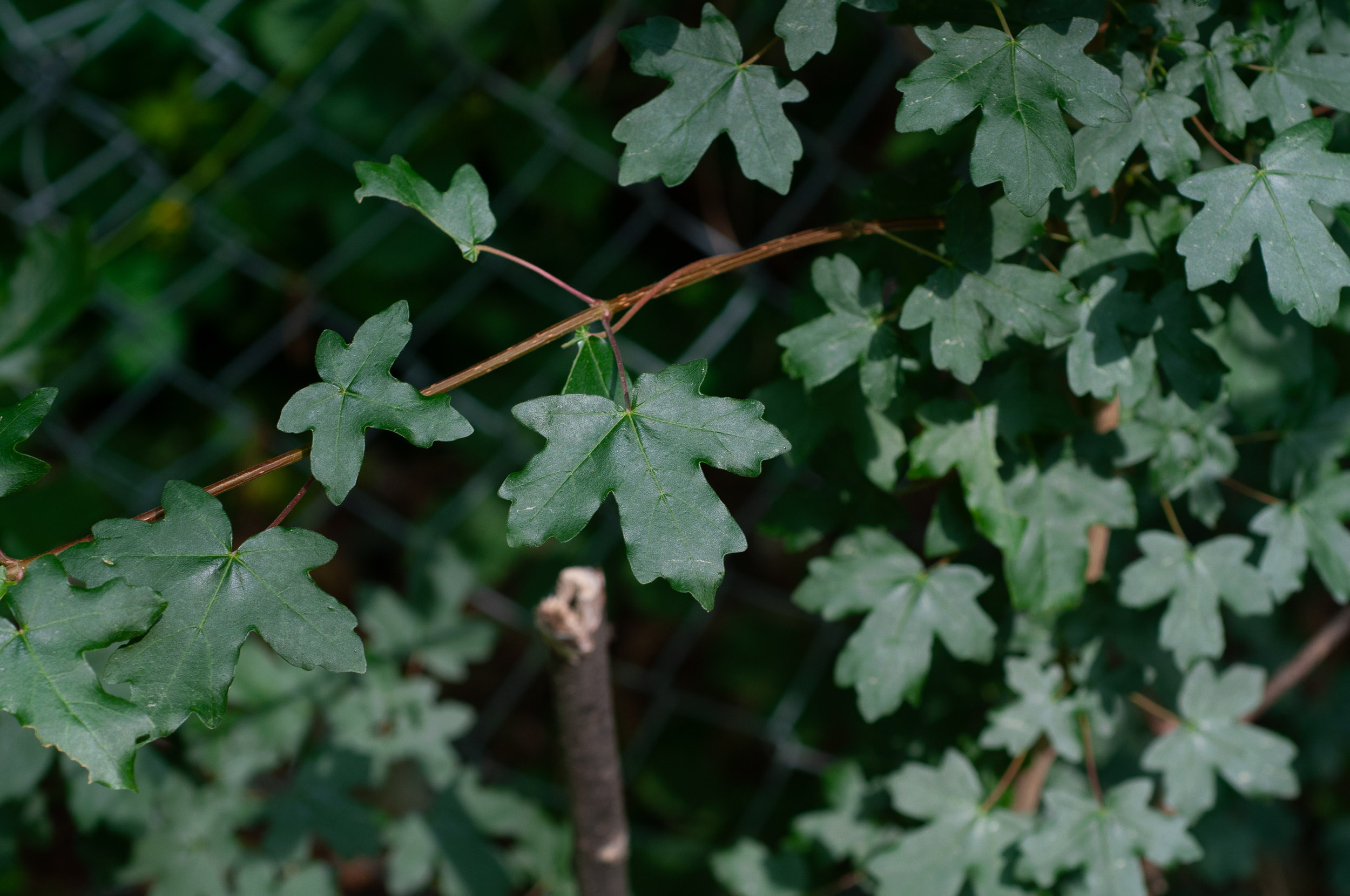
6/4/2010 · Nashua River Rail Trail, Ayer, Massachusetts · ≈ 12 × 8″ (31 × 20 cm) 
| Kingdom | Plantae | Plants, but not fungi, lichens, or algae (from Stearn's Botanical Latin) |
| Subkingdom | Tracheobionta | Vascular plants—plants with a “circulatory system” for delivering water and nutrients |
| Division | Magnoliophyta | Flowering plants, also known as angiosperms |
| Class | Magnoliopsida | Dicotyledons—plants with two initial seed leaves |
| Subclass | Rosidae | Roses, legumes, proteas, dogwoods, hydrangeas, mistletoes, euphorbias, grapes, many more |
| Order | Sapindales | Includes citrus; maples, horse-chestnuts, lychees and rambutans; mangos and cashews; frankincense and myrrh; mahogany and neem |
| Family | Sapindaceae | Soapberry family |
| Genus | Acer | Maples |
| Species | campestre | Of the fields or open plains |

Acer campestre description by Thomas H. Kent, not updated.

© FloraFinder.org. All rights reserved.