Albizia julibrissin Durazz.
Silktree, Persian silktree, pink silktree, mimosa tree
Silktree is native to southwestern and eastern Asia—Iran, the Republic of Azerbaijan, China, and Korea.. This species is sometimes called mimosa, but that name also applies to several unrelated species of acacias. Introduced to North America as ornamental trees in the mid-1700s, they have escaped and are now considered weeds or even invasives in some areas.
Plants: 16–39′ (5–12 m) high, with dark greenish-gray bark that develops vertical stripes as it ages.
Leaves: Bipinnate, 8–18 ⨉ 4½–10″ (20–45 ⨉ 12–25 cm). Each leaf contains 6-12 pairs of pinnae; each of these in turn have 20-30 pairs of leaflets.
Flowers: Flowers appear in attractive dense hemispherical clusters like soft brushes or pom-poms, pink with white centers. The flowers are small but the stamens are pink, silky, and ¾–1″ (2–3 cm) in length. The clusters are about 3″ (8 cm) in diameter, and appear from July to August.
Fruits: Flat brown pods 4–8 ⨉ ¾–⅞″ (10–20 ⨉ 2–2.5 cm).
Edibility: Young leaves and flowers are edible when cooked.
Medical: Many medicinal properties, including a few contradictory ones, are ascribed to this species.
Habitats: Semi-arid areas, such as California’s central valley, that get occasional water.
Online References:

7/2/2010 · Stansbury Mill Rd, Phoenix, Maryland · ≈ 1½ × 1′ (55 × 37 cm) 

5/23/2026 · Mid-Lothian Mines Park, Midlothian, Virginia 

6/30/2023 · Harpers Ferry, West Virginia 

5/23/2026 · Mid-Lothian Mines Park, Midlothian, Virginia 

7/2/2010 · Virginia 
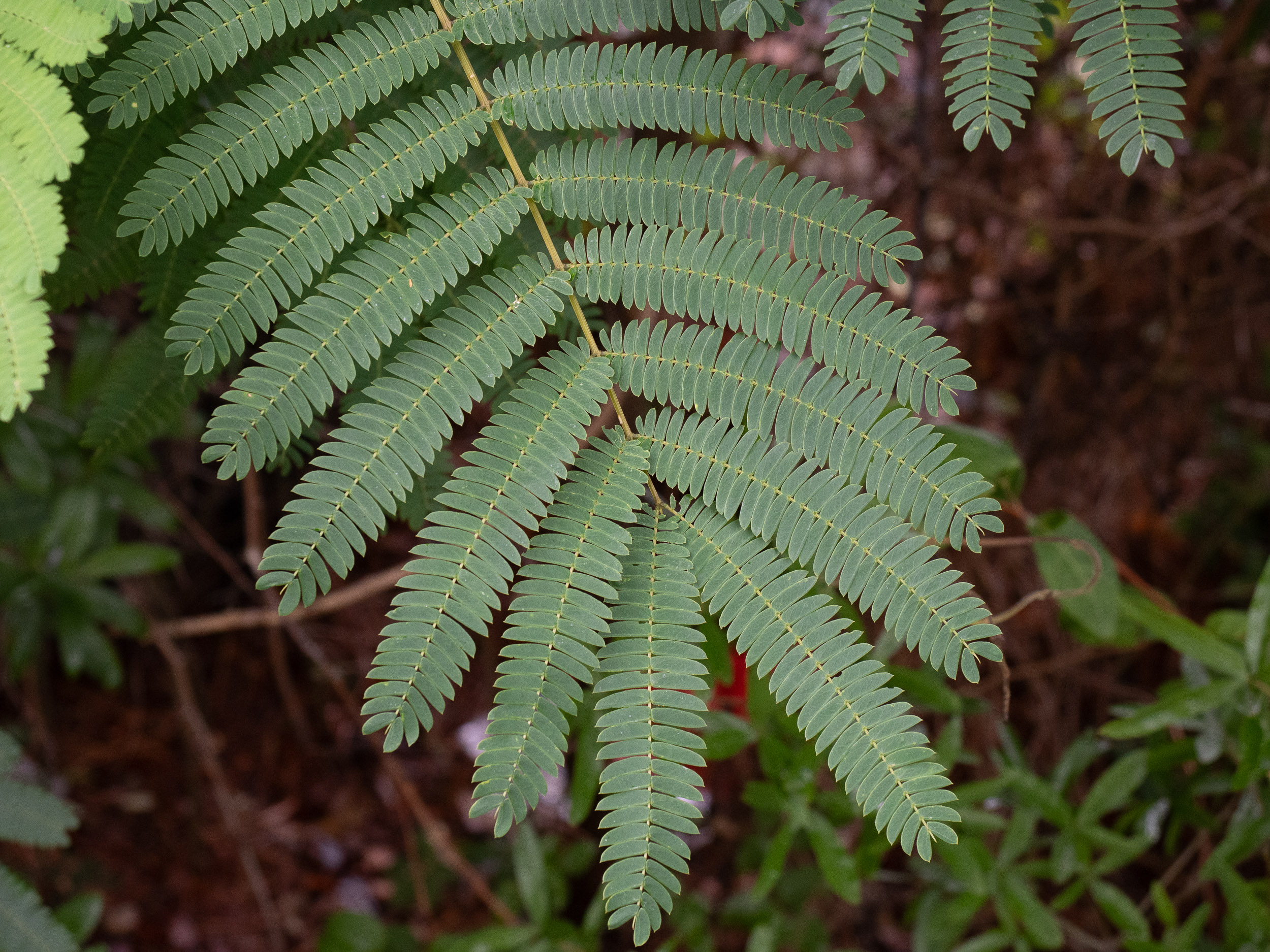
5/23/2026 · Mid-Lothian Mines Park, Midlothian, Virginia 

7/2/2010 · Alexandria, Virginia 

7/19/2017 · West Virginia · ≈ 5 × 3½″ (13 × 9.2 cm) 

6/9/2018 · Virginia 

7/19/2017 · West Virginia · ≈ 6 × 4″ (15 × 10 cm) 

8/10/2008 · By Jacquelyn Boyt 

7/2/2010 · Alexandria, Virginia 

7/2/2010 · Alexandria, Virginia 

7/19/2017 · West Virginia · ≈ 5 × 3½″ (13 × 9.2 cm) 
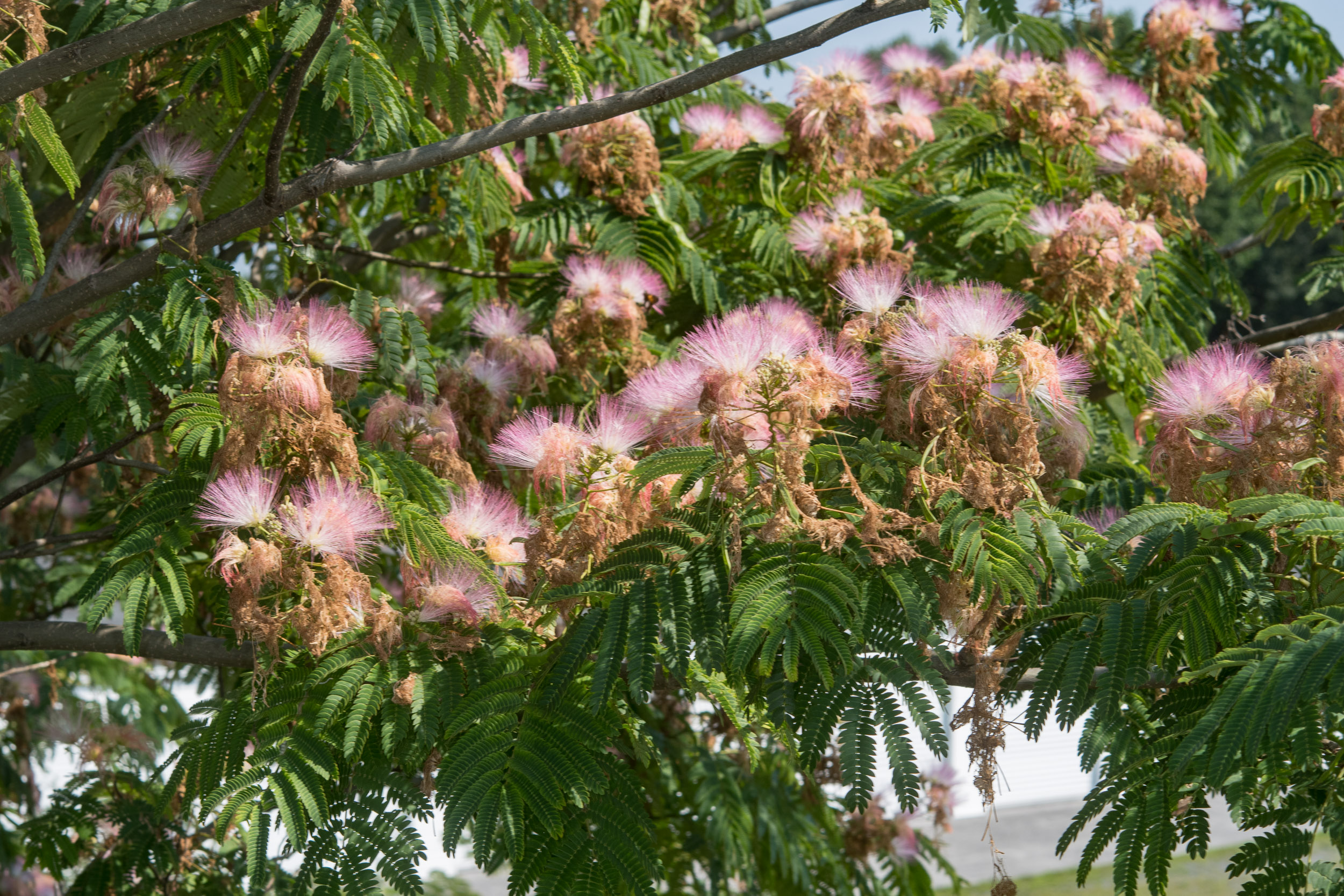
7/19/2017 · West Virginia 
| Kingdom | Plantae | Plants, but not fungi, lichens, or algae (from Stearn's Botanical Latin) |
| Subkingdom | Tracheobionta | Vascular plants—plants with a “circulatory system” for delivering water and nutrients |
| Division | Magnoliophyta | Flowering plants, also known as angiosperms |
| Class | Magnoliopsida | Dicotyledons—plants with two initial seed leaves |
| Subclass | Rosidae | Roses, legumes, proteas, dogwoods, hydrangeas, mistletoes, euphorbias, grapes, many more |
| Order | Fabales | Legumes (pea and bean families) |
| Family | Fabaceae | Legume family (peas and beans) |
| Genus | Albizia | Named for Italian nobleman Filippo degli Albizzi |
| Species | julibrissin | A corruption of the Persian word gul-i abrisham (گل ابریشم), “silk flower.” It derives from gul (گل), “flower,” and abrisham ( ابریشم), “silk” |

Albizia julibrissin description by Thomas H. Kent, not updated.

© FloraFinder.org. All rights reserved.