Aquilegia vulgaris L.
Columbine, European columbine
Columbines are European natives. They have become naturalized, escaping gardens in parts of eastern North America. These beautiful flowers have nearly innumerable cultivars.
Plants: Forms mounds of think, leafy stems 12–28″ (30–72 cm) tall.
Leaves: Divided into three lobes, each also three-lobed (“twice ternately compound,” if you prefer fancier talk). Each leaf is 4–12″ (10–30 cm) long. Leaflets are ½–1¾″ (1.5–4.7 cm).
Flowers: Flowers are nodding, with highly distinctive rear-facing spurs, often curled inward, resembling a the claws of an eagle. (The genus Aquilegia derives from the Latin for an eagle’s claw, though it could also refer to claw-like groups of fruit.) Sepals are lanceolate, ½–⅞ ⨉ ¼–⅜″ (1.5–2.5 cm ⨉ 8–12 mm). Petals are ⅜–½ ⨉ ⅛–⅜″ (1–1.3 cm ⨉ 6–10 mm), with 13 or more stamens ¼–½″ (9–13 mm) long. The original wild flowers are blue or purple, but escaped cultivars may also be white, pink, red, or other colors. Flowers appear from May to July.
Fruits: Dry seedpods 11.8–102.4 mils (0.3–2.6 mm) long.
Habitats: Anthropogenic (man-made or disturbed habitats), forest edges.
Edibility:  Poisonous. Raw plants contain toxic
alkaloids.
Poisonous. Raw plants contain toxic
alkaloids.
Online References:
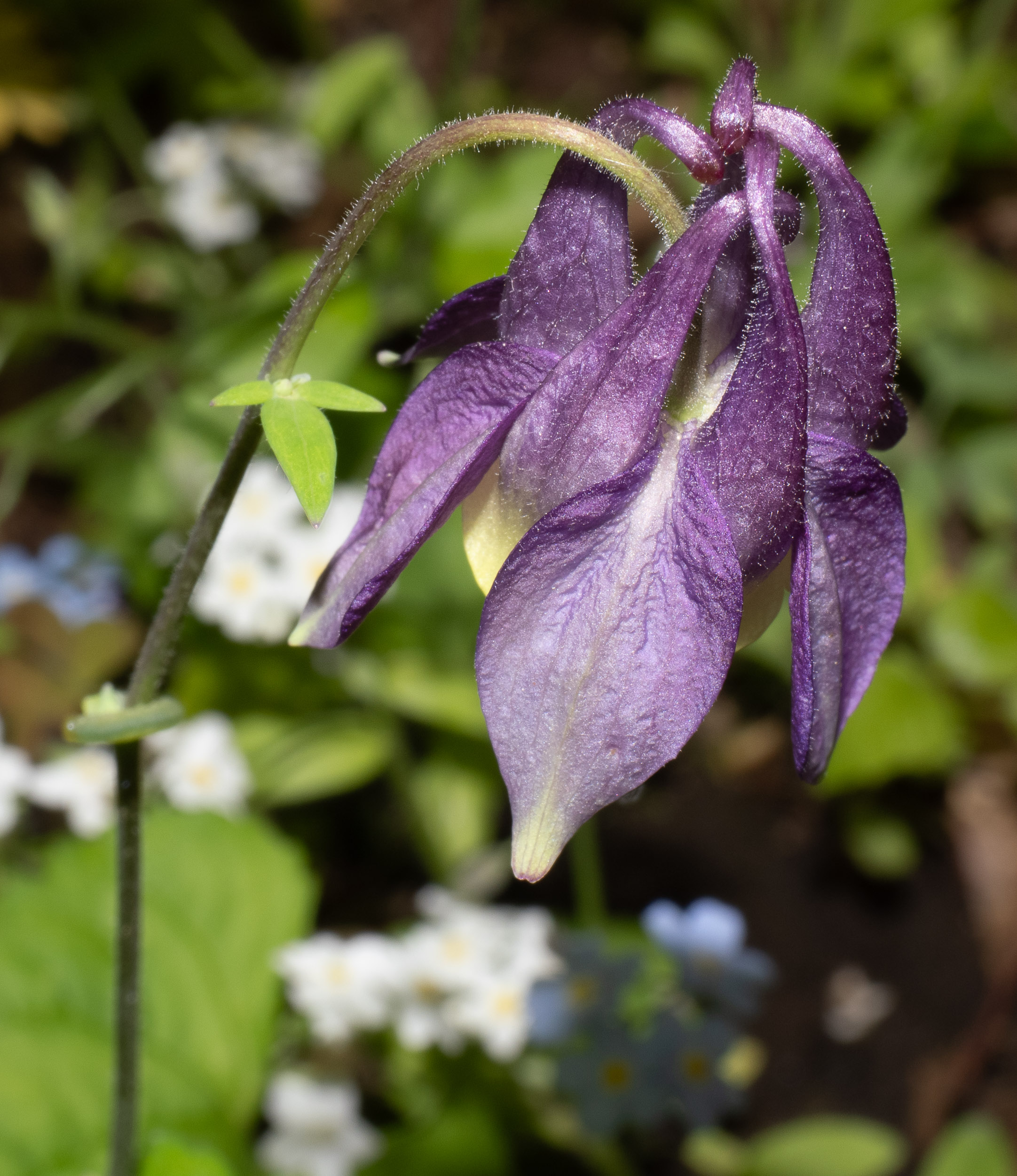
5/26/2024 · McLaughlin Garden and Homestead, South Paris, Maine 

6/1/2013 · Beaver Brook Conservation Area, Hollis, New Hampshire · ≈ 5 × 4½″ (13 × 11 cm) 
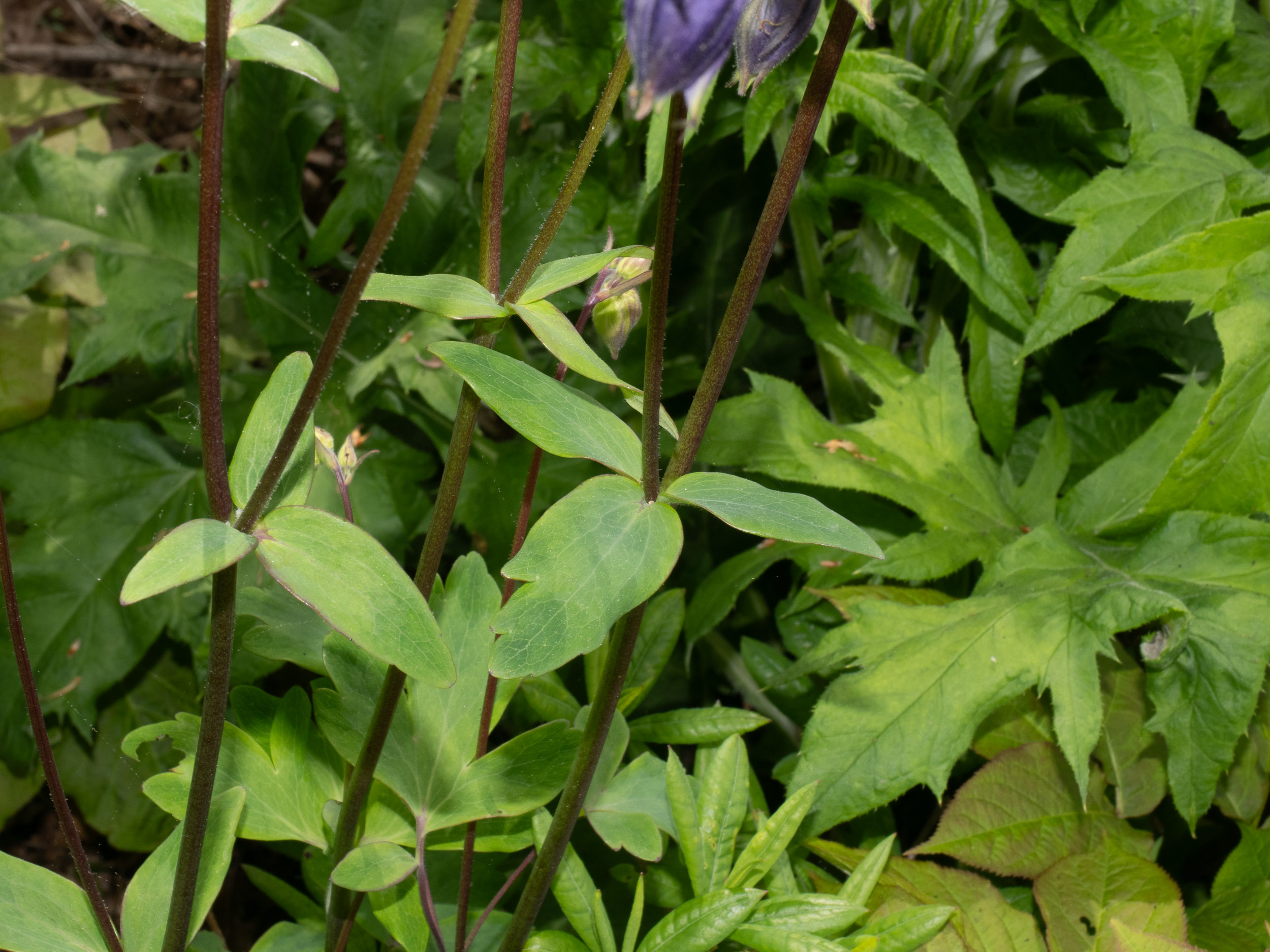
5/23/2024 · Coastal Maine Botanical Gardens, Boothbay, Maine 

A cultivar. · 5/27/2016 · Acton Arboretum, Acton, Massachusetts · ≈ 8 × 11″ (20 × 28 cm) 

6/1/2013 · Beaver Brook Conservation Area, Hollis, New Hampshire · ≈ 3½ × 4″ (9 × 9.9 cm) 

5/23/2024 · Coastal Maine Botanical Gardens, Boothbay, Maine 

6/1/2013 · Beaver Brook Conservation Area, Hollis, New Hampshire · ≈ 5 × 4½″ (13 × 11 cm) 

8/17/2019 · Wildflower Trail, Beaver Brook Conservation Area, Hollis, New Hampshire · ≈ 4 × 3″ (10 × 7.7 cm)  ID is uncertain

A cultivar. · 5/27/2016 · Acton Arboretum, Acton, Massachusetts · ≈ 15 × 10″ (39 × 26 cm) 

8/17/2019 · Wildflower Trail, Beaver Brook Conservation Area, Hollis, New Hampshire · ≈ 3 × 3″ (8.3 × 7.9 cm) ID is uncertain 

5/23/2024 · Coastal Maine Botanical Gardens, Boothbay, Maine 

A cultivar. · 5/27/2016 · Acton Arboretum, Acton, Massachusetts · ≈ 6 × 4″ (16 × 11 cm) 

5/26/2024 · McLaughlin Garden and Homestead, South Paris, Maine 

A cultivar. · 5/27/2016 · Acton Arboretum, Acton, Massachusetts · ≈ 1 × 1′ (38 × 34 cm) 
| Kingdom | Plantae | Plants, but not fungi, lichens, or algae (from Stearn's Botanical Latin) |
| Subkingdom | Tracheobionta | Vascular plants—plants with a “circulatory system” for delivering water and nutrients |
| Division | Magnoliophyta | Flowering plants, also known as angiosperms |
| Class | Magnoliopsida | Dicotyledons—plants with two initial seed leaves |
| Subclass | Magnoliidae | Includes magnolias, nutmeg, bay laurel, cinnamon, avocado, black pepper, and many others |
| Order | Ranunculales | Basal (evolved earlier) eudicots, also called “true dicots” |
| Family | Ranunculaceae | Buttercup family |
| Genus | Aquilegia | From Latin aquila, or “eagle,” for the flower’s resemblence to an eagle’s claw |
| Species | vulgaris | Common |

Aquilegia vulgaris description by Thomas H. Kent, not updated.

© FloraFinder.org. All rights reserved.