Bursera graveolens (Kunth) Triana & Planch.
Incense tree, palo santo
Palo santos are native to the Galápagos and tropical western South America. They appear on all the Galápagos islands. Also called incense trees and holy wood, they belong to the same family as frankincense and myrrh, and the wood is burned as incense.
Plants: Trees vary in height on different islands, and are up to 39′ (12 m) in height. The natural bark is purple-brown, but lichens often make it appear gray.
Leaves: Leafless except during the rainy season. Opposite, odd pinnate, 4–11″ (10–28 cm) long. The main leaf stalk in each leaf group (usually 5-7 leaflets) is winged. Each leaflet is ovate, and bright green, with serrate or crenate margins.
Flowers: Sprays of small pale yellow-green flowers are 4–5″ (10–13 cm) long. Each flower is ⅛″ (4 mm) long.
Fruits: A roundish drupe ¼–⅜″ (9–12 mm) long, brown when mature, contains a single seed.
Habitats: Arid and transitional zones.
Medical: Palo santa has alleged benefits as a mosquito repellant, a relaxant, and a mild pain reliever.
Online References:
References:
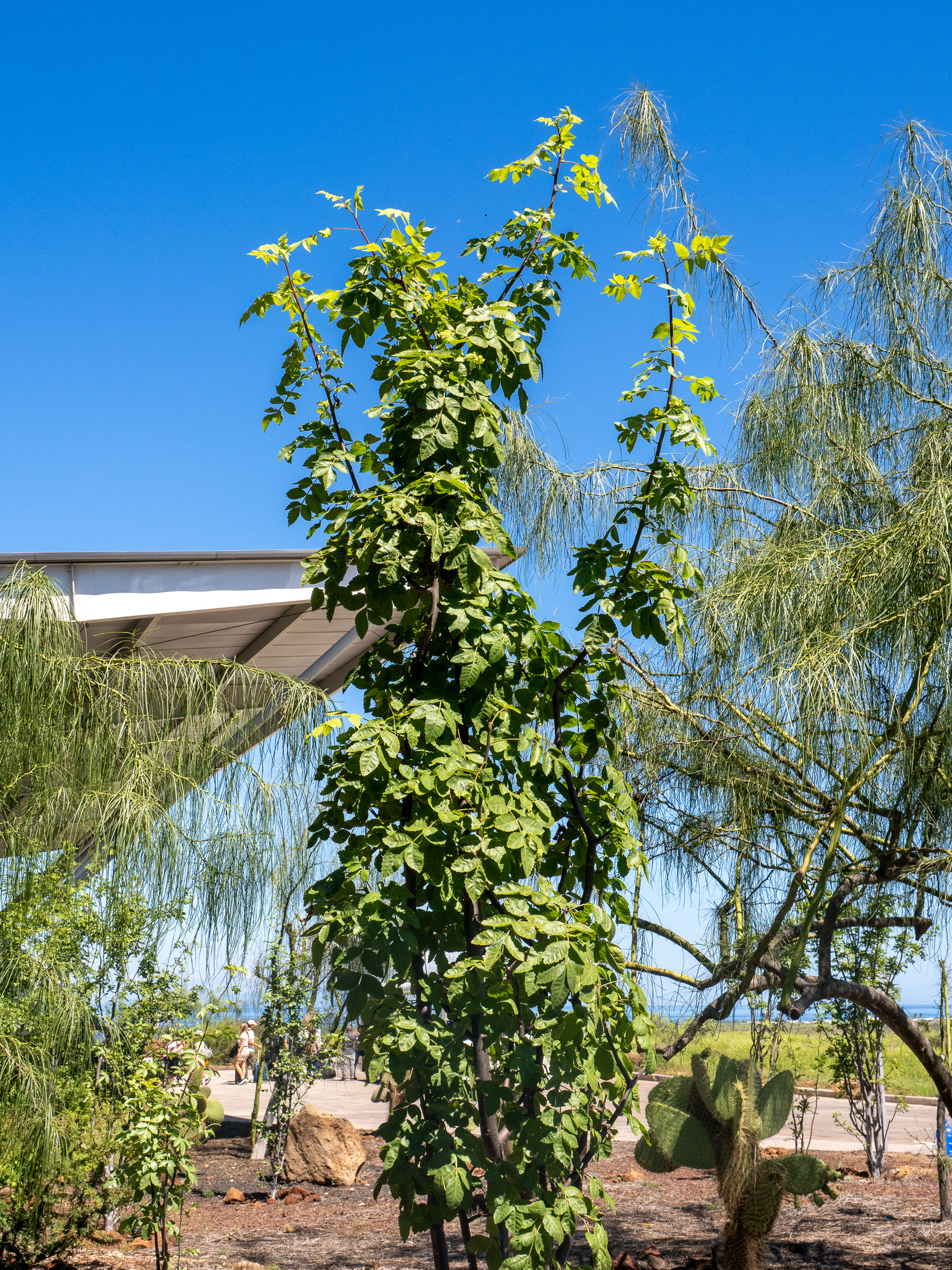
3/30/2025 · Galápagos Airport, Baltra, Galápagos Islands, Ecuador 
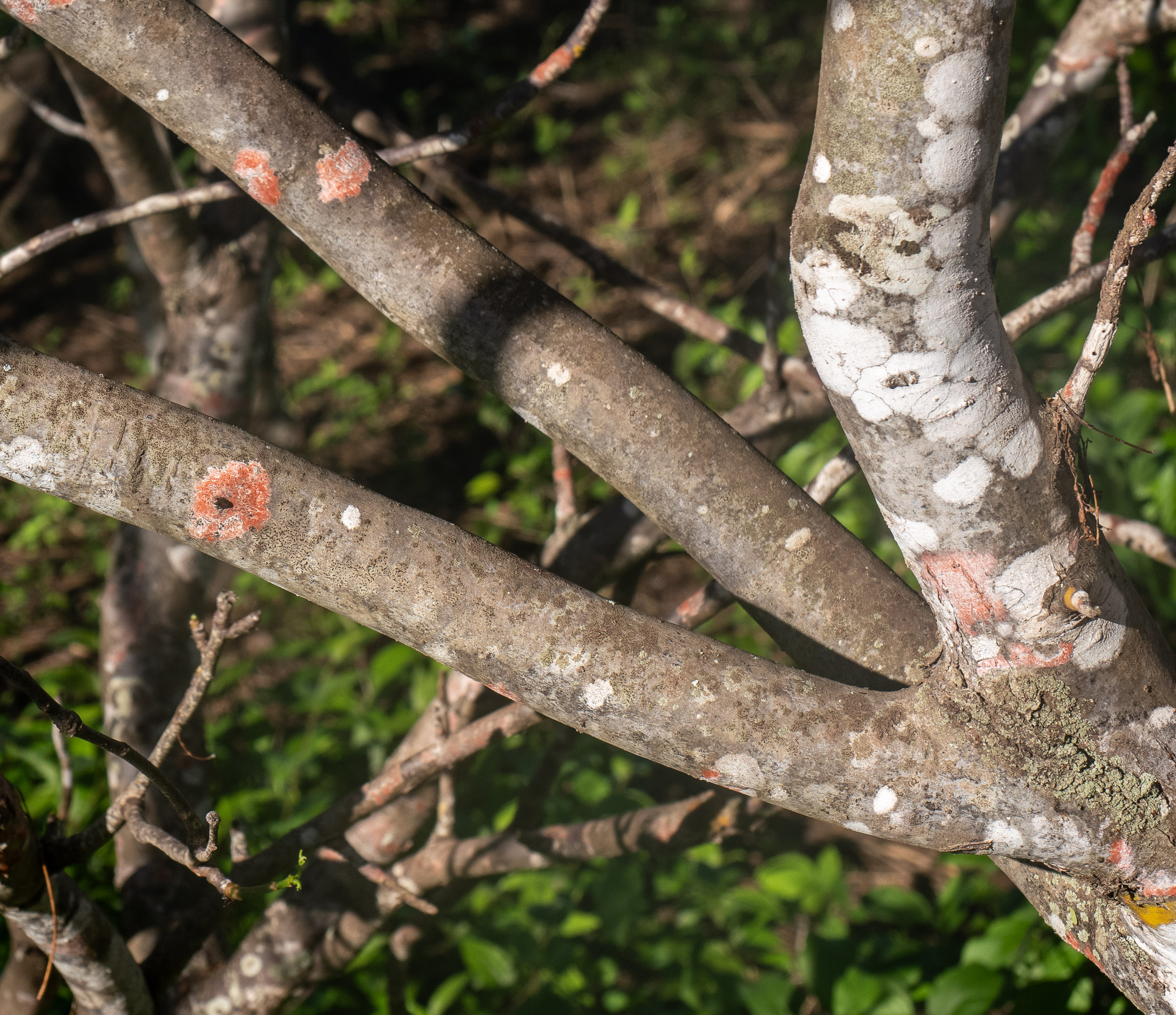
4/4/2025 · Interpretation Center Gianny Arismendi, Puerto Baquerizo Moreno, San Cristóbal, Galápagos Islands, Ecuador  ID is uncertain
| Kingdom | Plantae | Plants, but not fungi, lichens, or algae (from Stearn's Botanical Latin) |
| Subkingdom | Tracheobionta | Vascular plants—plants with a “circulatory system” for delivering water and nutrients |
| Division | Magnoliophyta | Flowering plants, also known as angiosperms |
| Class | Magnoliopsida | Dicotyledons—plants with two initial seed leaves |
| Subclass | Rosidae | Roses, legumes, proteas, dogwoods, hydrangeas, mistletoes, euphorbias, grapes, many more |
| Order | Sapindales | Includes citrus; maples, horse-chestnuts, lychees and rambutans; mangos and cashews; frankincense and myrrh; mahogany and neem |
| Family | Burseraceae | The torchwood family, the frankincense and myrrh family, or simply the incense tree family—over 500 species of tropical trees and shrubs |
| Genus | Bursera | After botanist Joachim Burser (1583-1649) |
| Species | graveolens | Strong or ill-smelling |
Bursera graveolens description by Thomas H. Kent, not updated.

© FloraFinder.org. All rights reserved.