Chimaphila umbellata (L.) W.P.C. Barton
Common pipsissewa, noble prince’s-pine, pipsissewa
Pipsissewa is a low flowering evergreen plant native to the cooler parts of the Northern Hemisphere. Like many forest floor plants that have to make do with limited light, they complement energy from photosynthesis with that from another source, in this case from soil fungi. They are myco-heterotrophs—they parasitize the fungi.
Plants: 4–14″ (10–35 cm) tall, with an umbel of flowering stalks above.
Leaves: Leaves are shiny, toothed, and wider toward the far ends. They are arranged in a whorl, or in opposite pairs, around the stem.
Flowers: White or pink, in groups of two to eight. The flowers hang downward, and are ½–¾″ (1.3–1.9 cm) around. Each flower has five petals that are pink at first, turning white, but remaining pink at the base. It has ten stamens.
Fruits: Upright capsules ⅛–3/16″ (4–6 mm) around, with five sections. They are reddish brown, drying to a dark brown and remaining through the winter. They split open to release seeds.
Habitats: Common in coniferous or mixed forests, with acid, thin, sandy soils.
Edibility: Leaves can be used as tea or a flavoring for root beer.
Medical: Pipsissewa has a number of unproven uses for kidney and bladder problems, cystitis and edema, and regulation of menstrual cycles. Although plants are not toxic unless used for a long period, neither do they have any confirmed medical uses.
Online References:
References:

8/23/2012 · Nashua River Rail Trail, Groton, Groton, Massachusetts · ≈ 10 × 7″ (25 × 17 cm) 

7/2/2017 · Wildlife Pond, Beaver Brook Conservation Area, Hollis, New Hampshire · ≈ 4 × 6″ (10 × 14 cm) 

7/3/2015 · Squannacook River Wildlife Area, Townsend, Massachusetts · ≈ 4½ × 4″ (11 × 11 cm) 
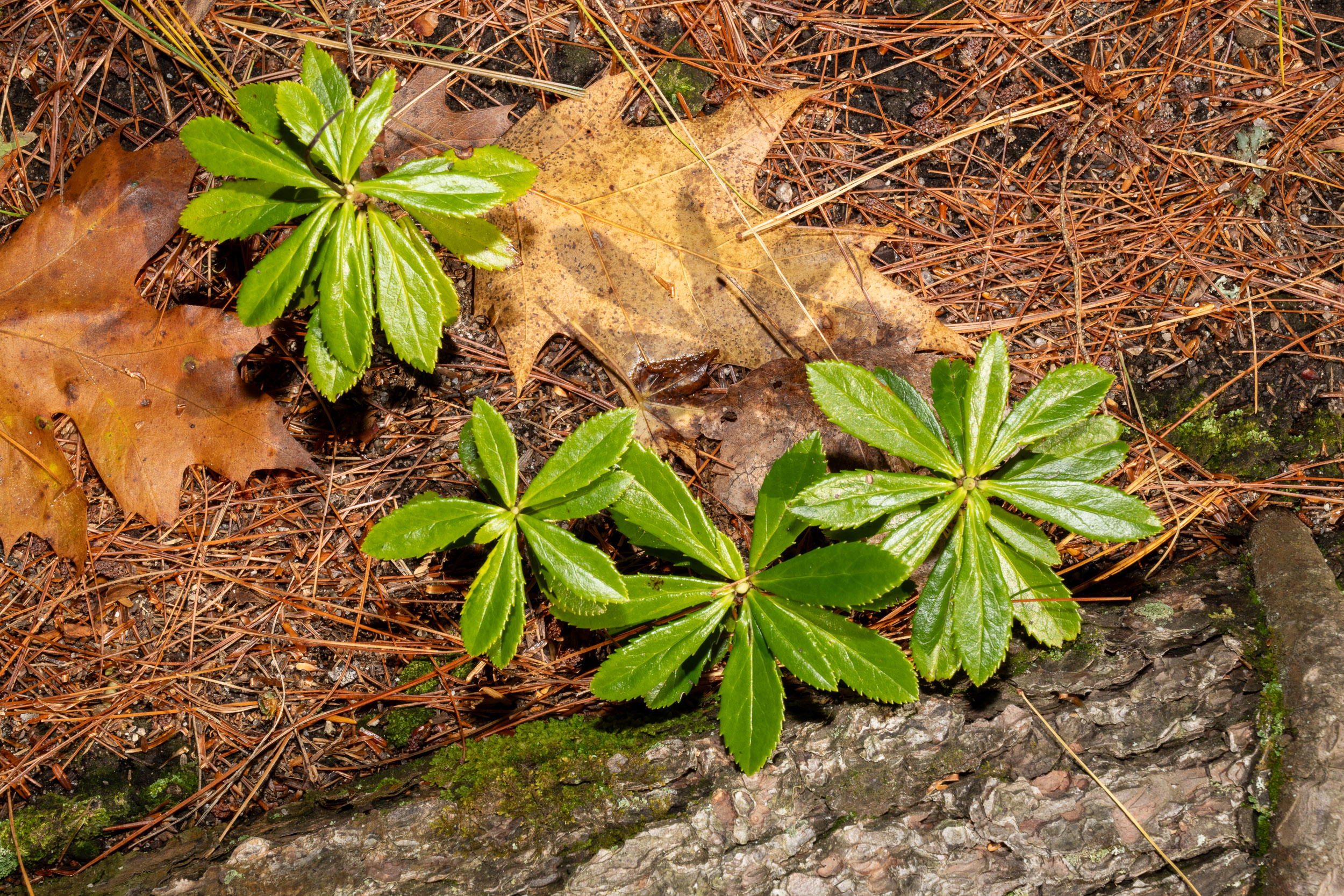
9/26/2025 · Camp, Standish, Maine · ≈ 13 × 8″ (32 × 21 cm) 

8/23/2012 · Nashua River Rail Trail, Groton, Groton, Massachusetts · ≈ 6 × 5″ (16 × 13 cm) 
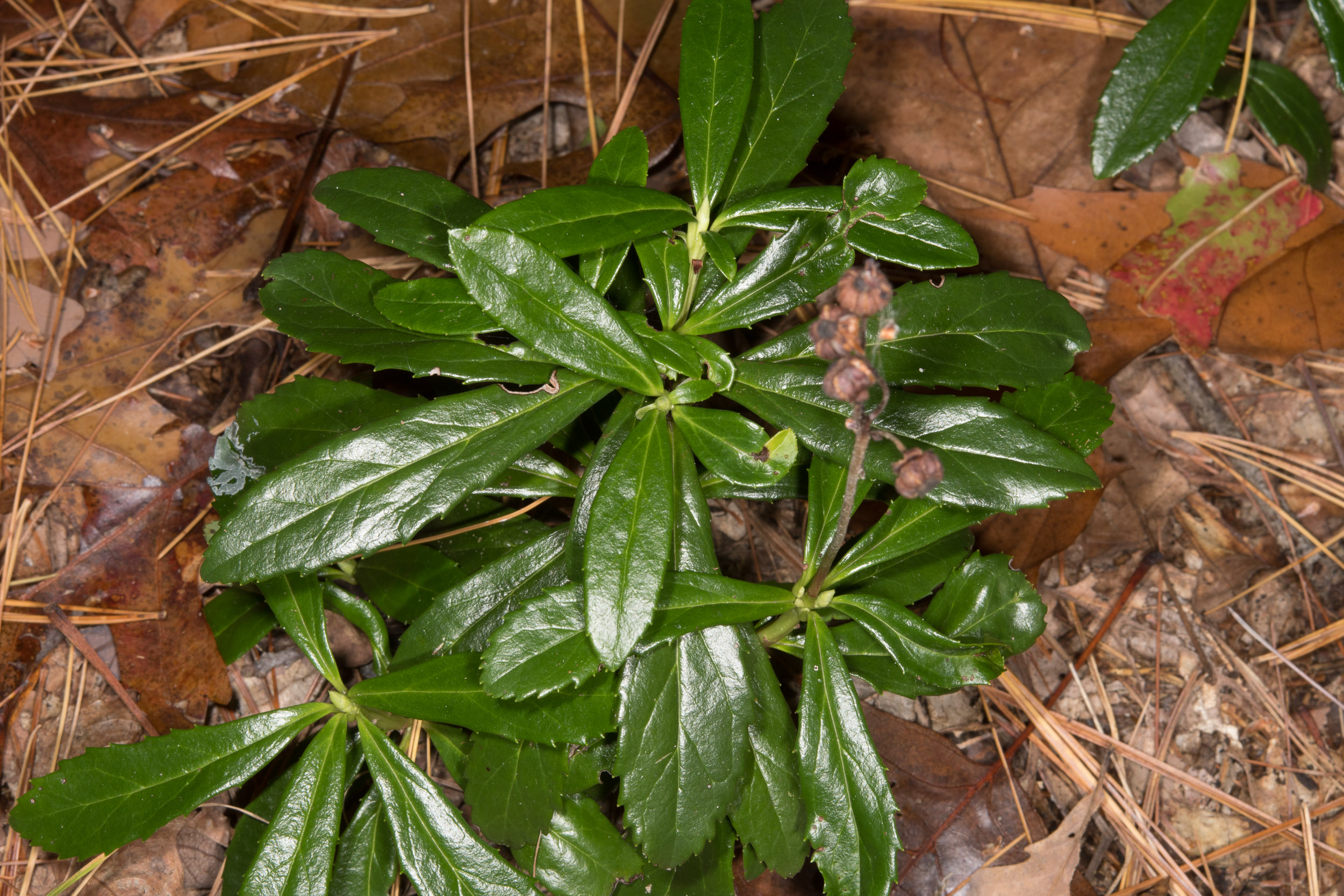
10/23/2016 · Georgetown, Massachusetts · ≈ 10 × 6″ (24 × 16 cm) 

8/23/2012 · Nashua River Rail Trail, Groton, Groton, Massachusetts · ≈ 5 × 4½″ (13 × 12 cm) 

7/3/2015 · Squannacook River Wildlife Area, Townsend, Massachusetts · ≈ 9 × 6″ (23 × 16 cm) 

9/24/2010 · Nissitissit River Wildlife Management Area, Pepperell, Massachusetts · ≈ 9 × 6″ (23 × 15 cm) 

7/2/2017 · Wildlife Pond, Beaver Brook Conservation Area, Hollis, New Hampshire · ≈ 3½ × 4″ (9.4 × 10 cm) 
| Kingdom | Plantae | Plants, but not fungi, lichens, or algae (from Stearn's Botanical Latin) |
| Subkingdom | Tracheobionta | Vascular plants—plants with a “circulatory system” for delivering water and nutrients |
| Division | Magnoliophyta | Flowering plants, also known as angiosperms |
| Class | Magnoliopsida | Dicotyledons—plants with two initial seed leaves |
| Subclass | Asteridae | A large class that encompasses asters |
| Order | Ericales | Tea, persimmon, blueberry, Brazil nut, azalea, many others |
| Family | Pyrolaceae | Includes at least Chimaphila, Moneses, Orthilia, and Pyrola, and sometimes several genera usually placed in the family Monotropaceae |
| Genus | Chimaphila | From the Greek cheima, “winter weather,” and phelein, “to love,” from its evergreen habit and referring to one of the common names, wintergreen aka pipsissiwa or prince’s pine |
| Species | umbellata | Refers to the arrangement of the flowers which arise in a head from a central point, i.e. bearing an umbel |

Chimaphila umbellata description by Thomas H. Kent, not updated.

© FloraFinder.org. All rights reserved.