Cichorium intybus L. var. sativum (Bisch.) Janch.
Cichorium intybus L.
Chicory
Common chicory is native to Europe, but it was introduced to North America and Australia, where it has become widespread.
Plants: 2–4′ (60–121 cm) high, with tough grooved stems. Stems branch sparsely, looking unruly and sometimes lying almost sideways. Broken branches ooze a milky sap.
Leaves: Stalked, lanceolate, and unlobed, 3–13″ (7.5–32 cm) long.
Flowers: 1–1¾″ (3–5 cm) around, lavendar, blue, violet, or sometimes white. Each petal tip has five serrations. The stigmas, small hairlike structures in the center, are curled at the top and dark blue. Flowers appear from March to October.
Fruits: Brown oblong 5-ribbed achenes have blunt ends, one with bristles.
Habitats: Roadsides, railroads, disturbed ground.
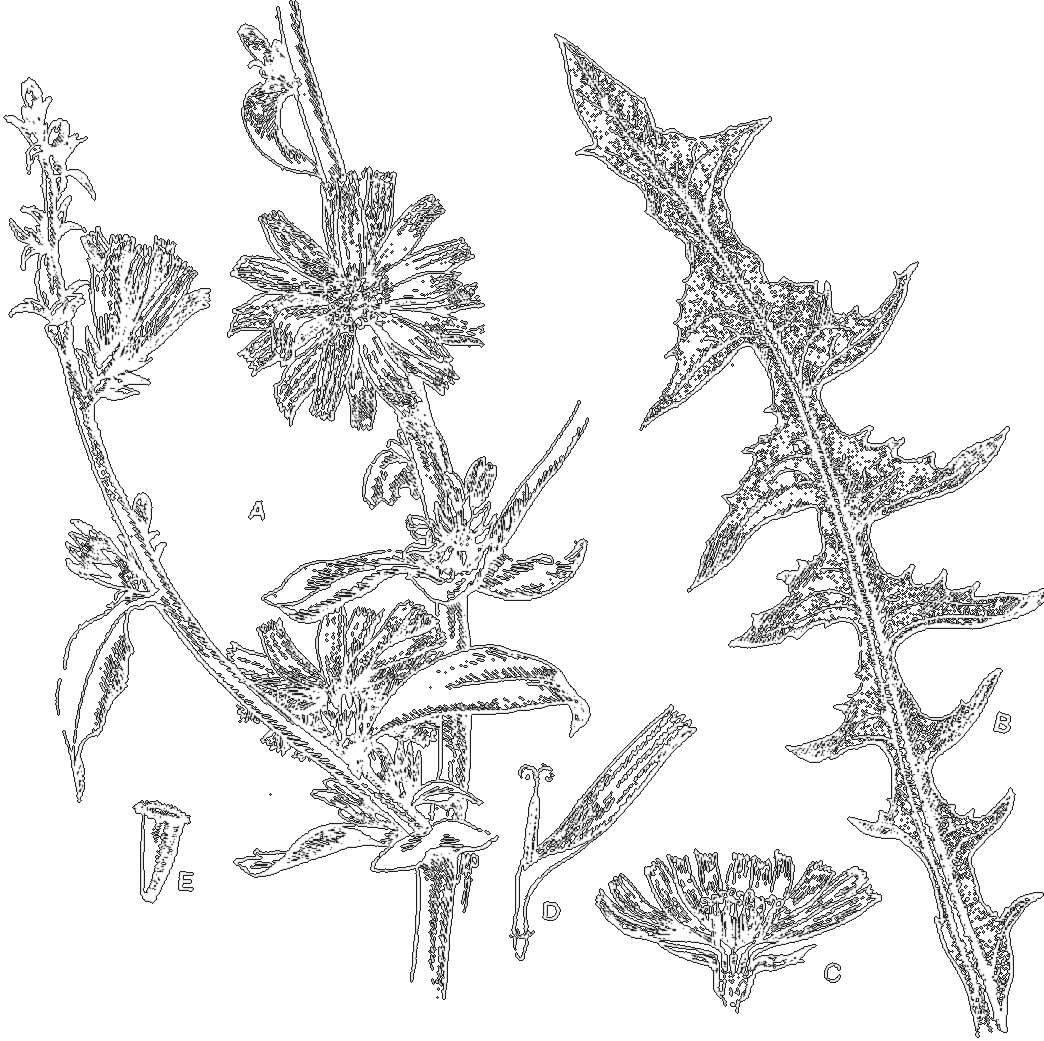
Chicory (Chichorium intybus). A, portion of flowering branch; B, basal leaf (runcinate-pinnatifid); C, median longitudinal section through a head, showing the insertion of the flowers; D, individual flower; E, fruit (ripened ovary), showing the persistent pappus (calyx) of short scales. From a scan at the Southwest School of Botanical Medicine. Original source unknown. 
Edibility: Roots, after being baked and ground, have long been used as a coffee additive or even substitute, for example, during the Great Depression in America. Chicory root contains inulin, a starchlike substance just sweet enough to serve as a sweetener in some applications. (Chicory root itself is very bitter, due to the presence of several bitter agents.) Long term use of chicory may be deleterious to night vision, but this has not been confirmed.
Online References:
Bjørn Rørslett/NN's Nature Photography site (photographed in ultraviolet light)

8/28/2007 · Valley of the Rogue State Park, Oregon  ID is uncertain
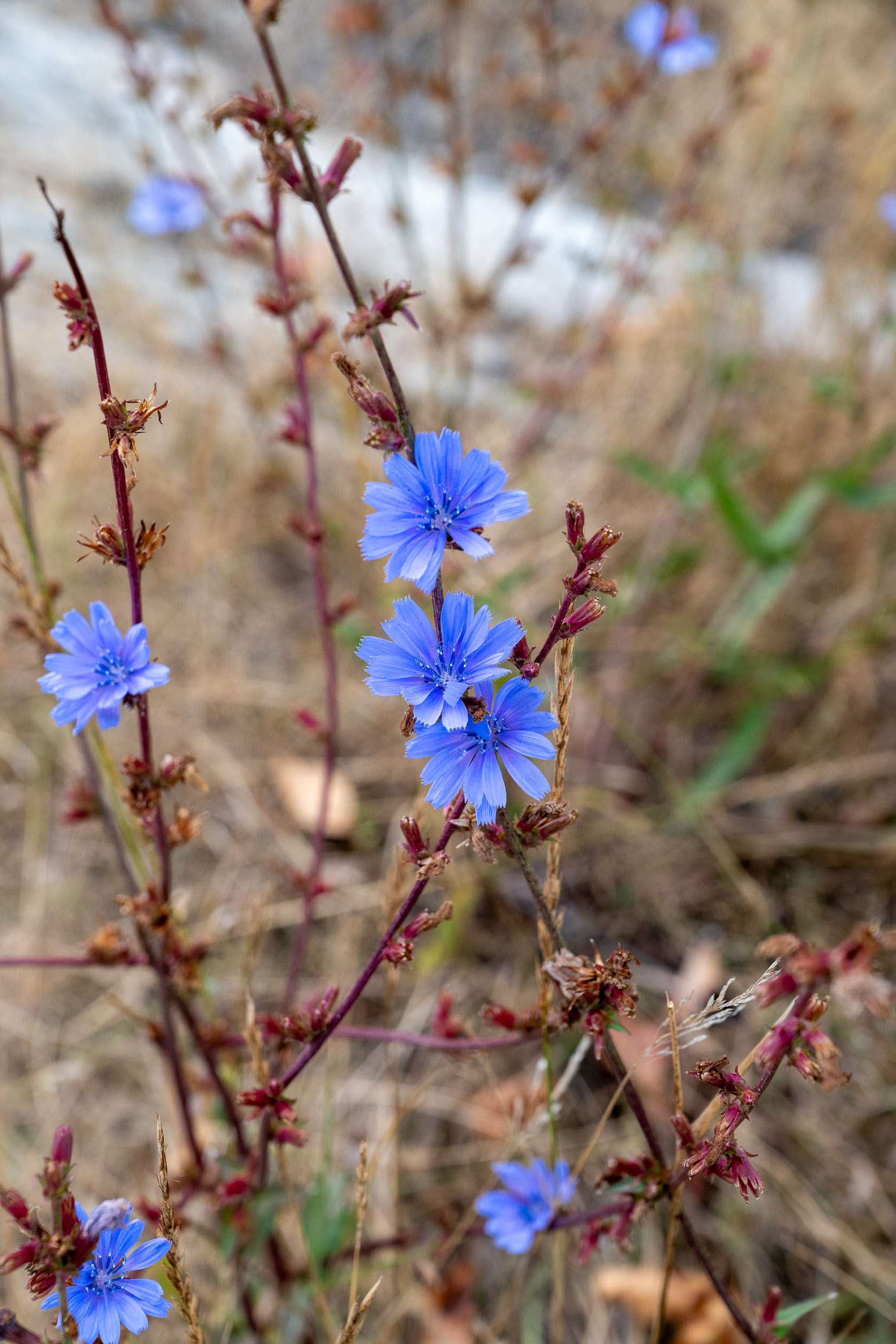
8/20/2025 · Peaks Island, Maine · ≈ 8 × 13″ (21 × 32 cm) 
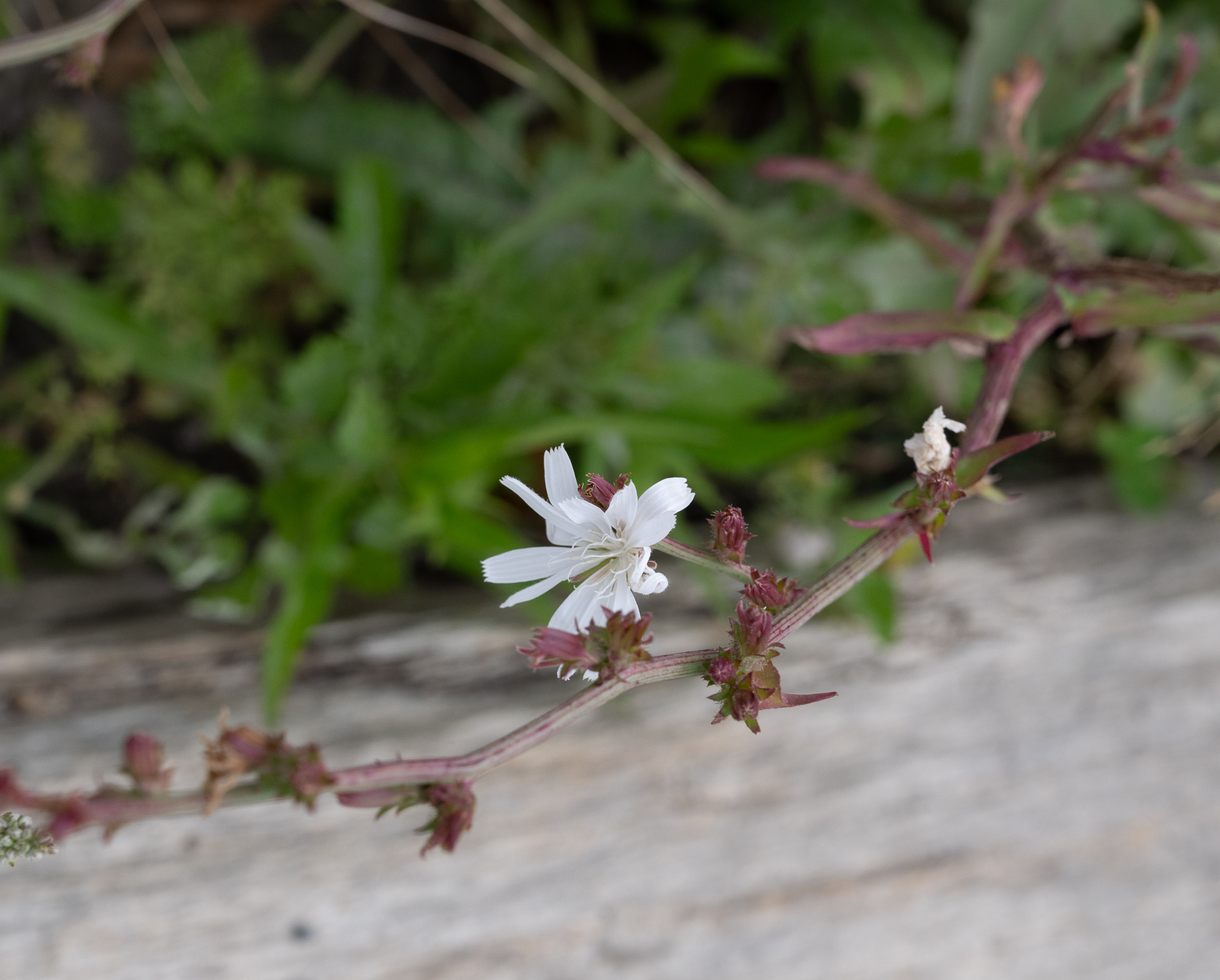
A while mutant · 8/20/2025 · Peaks Island, Maine · ≈ 6 × 8″ (15 × 19 cm) 

7/19/2017 · West Virginia · ≈ 5 × 4″ (12 × 10 cm) 
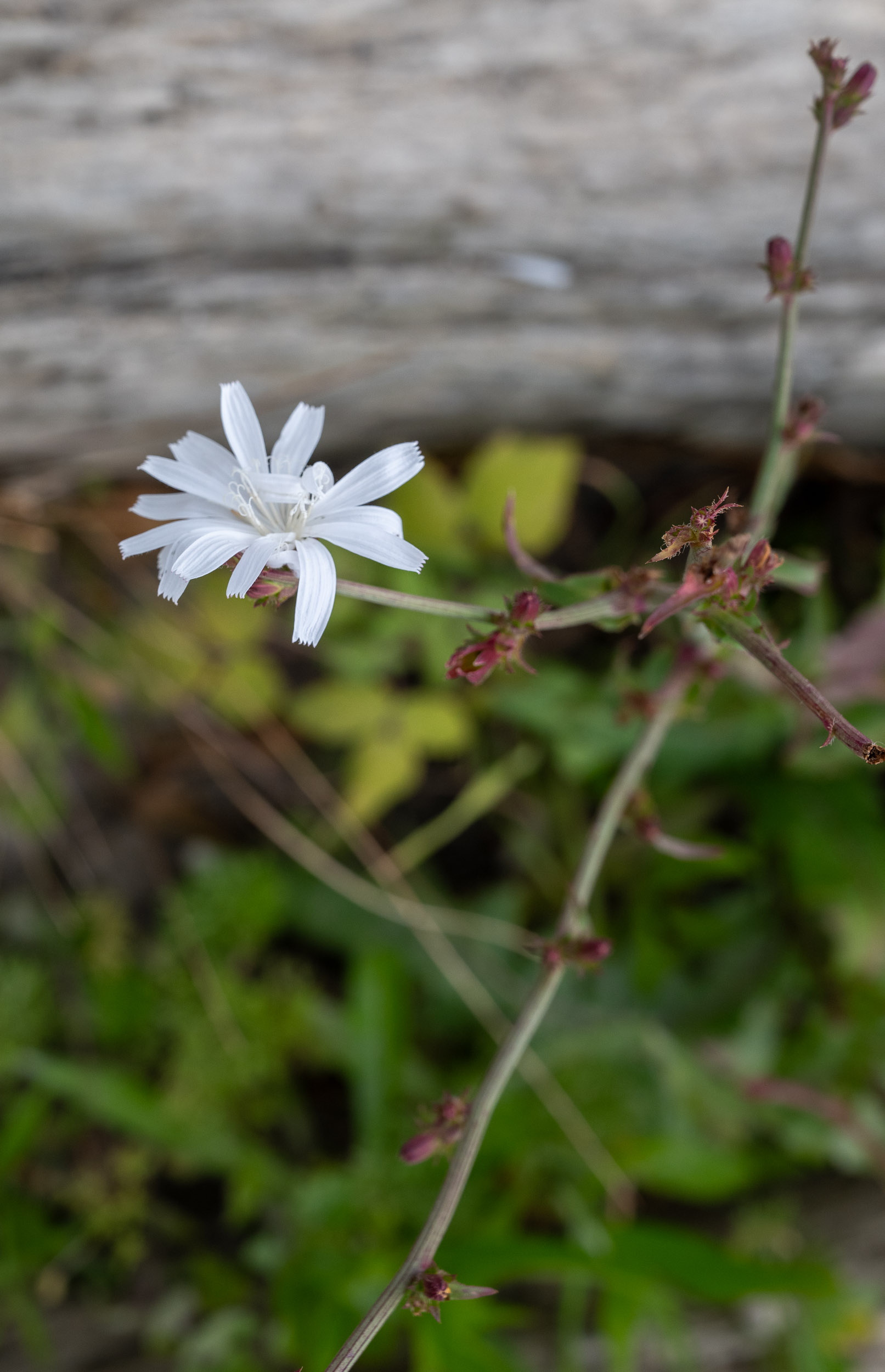
A while mutant · 8/20/2025 · Peaks Island, Maine · ≈ 8 × 5″ (20 × 13 cm) 

7/7/2012 · Gibbet Hill, Groton, Massachusetts · ≈ 11 × 7″ (27 × 18 cm) 

8/14/2017 · Beaver Brook Conservation Area, Old Long Loop, Hollis, New Hampshire · ≈ 4½ × 4″ (11 × 11 cm) 

7/8/2016 · Dunstable Rural Land Trust, Dunstable, Massachusetts 

7/21/2013 · Gibbet Hill, Groton, Massachusetts · ≈ 3 × 3″ (8.3 × 7.5 cm) 

7/7/2012 · Gibbet Hill, Groton, Massachusetts · ≈ 5 × 3½″ (12 × 9.2 cm) 

7/7/2012 · Gibbet Hill, Groton, Massachusetts · ≈ 6 × 4″ (15 × 10 cm) 

7/7/2012 · Gibbet Hill, Groton, Massachusetts · ≈ 5 × 3½″ (13 × 9.2 cm) 

Nashoba Conservation Land on Mt. Lebanon Rd · 7/16/2009 · Mt. Lebanon St, Pepperell, Massachusetts · ≈ 10 × 15″ (24 × 37 cm) 

7/7/2012 · Gibbet Hill, Groton, Massachusetts · ≈ 4½ × 3½″ (11 × 9.2 cm) 

9/17/2012 · Blood Dragon Ravine, Jeff Smith Trail, Pepperell, Massachusetts · ≈ 2½ × 3″ (6.8 × 8.4 cm) 

8/20/2025 · Peaks Island, Maine · ≈ 2½ × 2½″ (7.1 × 6.7 cm) 

8/25/2009 · Nashua River Rail Trail, East Pepperell, Massachusetts · ≈ 11 × 7″ (27 × 18 cm) ID is uncertain 

6/17/2010 · Mt. Lebanon St., Pepperell, Massachusetts · ≈ 2½ × 2½″ (7 × 6.6 cm) 

8/25/2009 · Nashua River Rail Trail, East Pepperell, Massachusetts ID is uncertain 

8/25/2009 · Nashua River Rail Trail, East Pepperell, Massachusetts · ≈ 4½ × 3″ (11 × 7.9 cm) ID is uncertain 

7/27/2016 · Michaux State Forest, Caledonia State Park, Fayetteville, Pennsylvania · ≈ 4 × 3″ (10 × 8.4 cm) 

Nashoba Conservation Land on Mt. Lebanon Rd · 7/16/2009 · Mt. Lebanon St, Pepperell, Massachusetts · ≈ 3 × 4½″ (8.3 × 12 cm) 
| Kingdom | Plantae | Plants, but not fungi, lichens, or algae (from Stearn's Botanical Latin) |
| Subkingdom | Tracheobionta | Vascular plants—plants with a “circulatory system” for delivering water and nutrients |
| Division | Magnoliophyta | Flowering plants, also known as angiosperms |
| Class | Magnoliopsida | Dicotyledons—plants with two initial seed leaves |
| Subclass | Asteridae | A large class that encompasses asters |
| Order | Asterales | Flowering plants with a central disk flower and surrounding petals, like daisies |
| Family | Asteraceae | The aster family, which also includes daisies and sunflowers; from the Greek ἀστήρ, “star,” for the star-shaped flowers |
| Genus | Cichorium | The Latinized version of an Arabic name for one species of this genus from the Greek kichore, which usually carries a common name of chicory or endive |
| Species | intybus | Derived from Egyptian tybi, “January,” the month that this species was customarily eaten |
Cichorium intybus description by Thomas H. Kent, not updated.

© FloraFinder.org. All rights reserved.
