Liquidambar aspleniifolia (L.) L.
Liquidambar peregrina L.
Myrica aspleniifolia L.
Myrica aspleniifolia L. var. tomentosa (A. Chev) Gleason
Myrica peregrina (L.) Kuntze
Comptonia peregrina (L.) J.M. Coult.
Sweetfern, sweet fern
Sweetfern is literally in a class by itself, being the only member of genus Comptonia. (The genus is named from Henry Compton, bishop of London from 1632-1713.) Sweetfern is native to eastern North America. Although its foliage is fern-like, it is not actually a fern. Ferns don’t flower, and sweetfern does. The common name refers to the odor of its foliage, not its flowers. The odor is stronger when the leaves are crushed.
Plants: Deciduous shrubs up to 5′ (1.5 m) tall. Stems are woody and strong, red-brown to gray.
Leaves: Linear to lanceolate, lustrous, olive to dark green, deeply notched, and 1–6 ⨉ ⅛–1″ (3–15 cm ⨉ 3–30 mm). They are somewhat fernlike in appearance, but on close inspection, the long narrow leaves are not symmetrical like those of ferns.
Flowers: Flowers of both sexes occur on the same plant. Staminate (male) flowers are in clustters at branch tips, up to 1¾″ (5 cm) long. Pistillate (female) flowers are ⅛″ (5 mm) long. Flowers appear from April to May.
Fruits: Pistillate flowers become up to 1¾″ (5 cm) long. Each fruit has four greenish-brown burr-like nutlets.
Habitats: Dry sandy sites, often together with pines.
Edibility: Leaves are edible, added as a flavoring to soups and stews and often removed after cooking, like bay leaves. Nutlets are edible too. See this Forager | Chef article by Alan Bergo.
Online References:

8/12/2009 · Pearl Hill State Park, Townsend, Massachusetts · ≈ 2 × 1′ (62 × 41 cm) 

A touch of frost. · 11/19/2009 · Nashua River Rail Trail, East Pepperell, Massachusetts · ≈ 9 × 6″ (23 × 15 cm) 

5/13/2016 · Nashua River Rail Trail, Groton, Groton, Massachusetts 

8/6/2009 · Nashua River Rail Trail, Groton, Massachusetts · ≈ 17 × 12″ (44 × 29 cm) 

6/22/2010 · Nashua River Rail Trail, Ayer, Massachusetts · ≈ 6 × 4½″ (15 × 11 cm) 
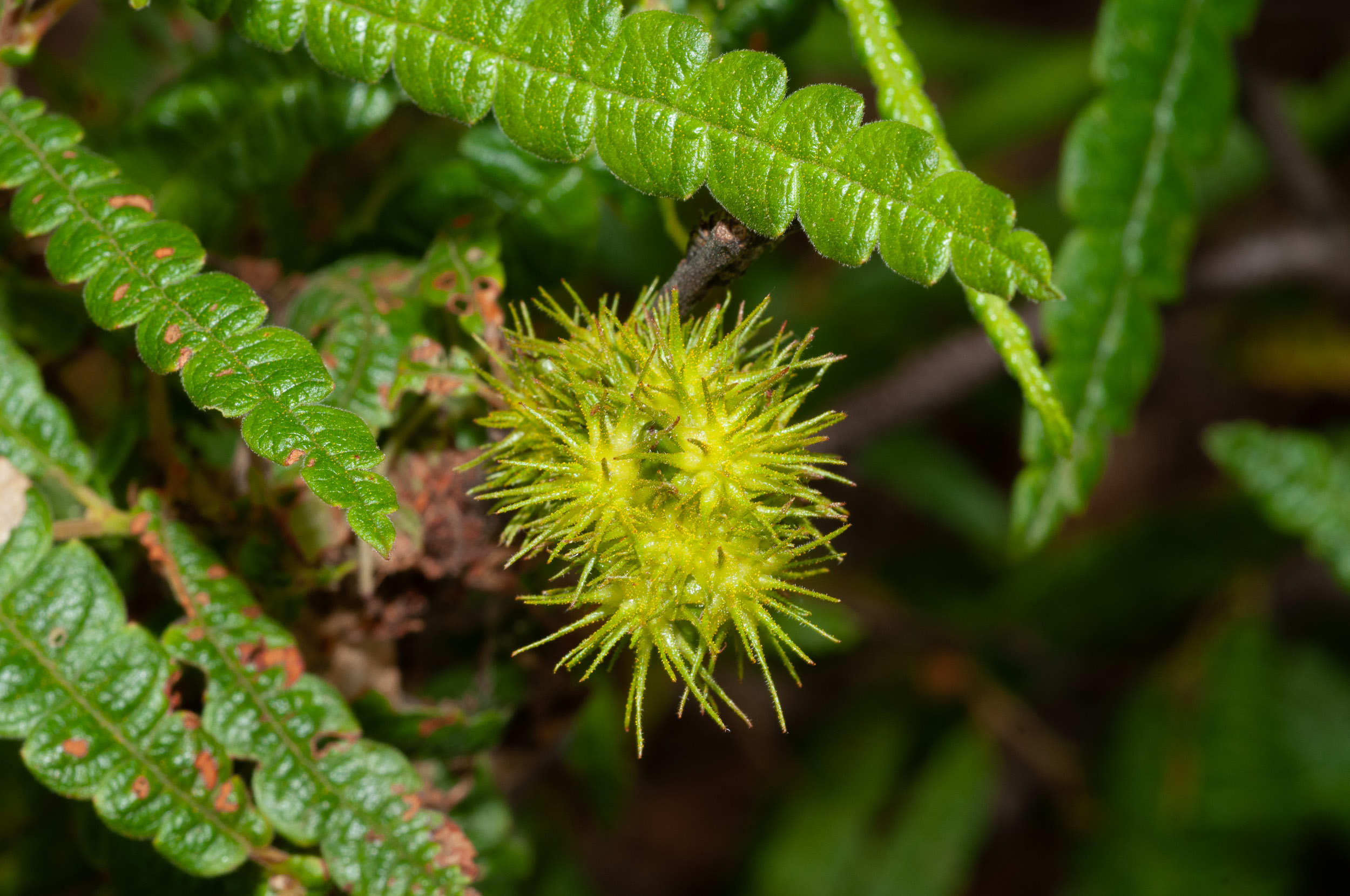
6/27/2012 · Townsend Wildlife Management Area, Townsend, Massachusetts · ≈ 4½ × 3″ (11 × 7.9 cm) 

6/12/2010 · Tom and Susan’s, Pepperell, Massachusetts 
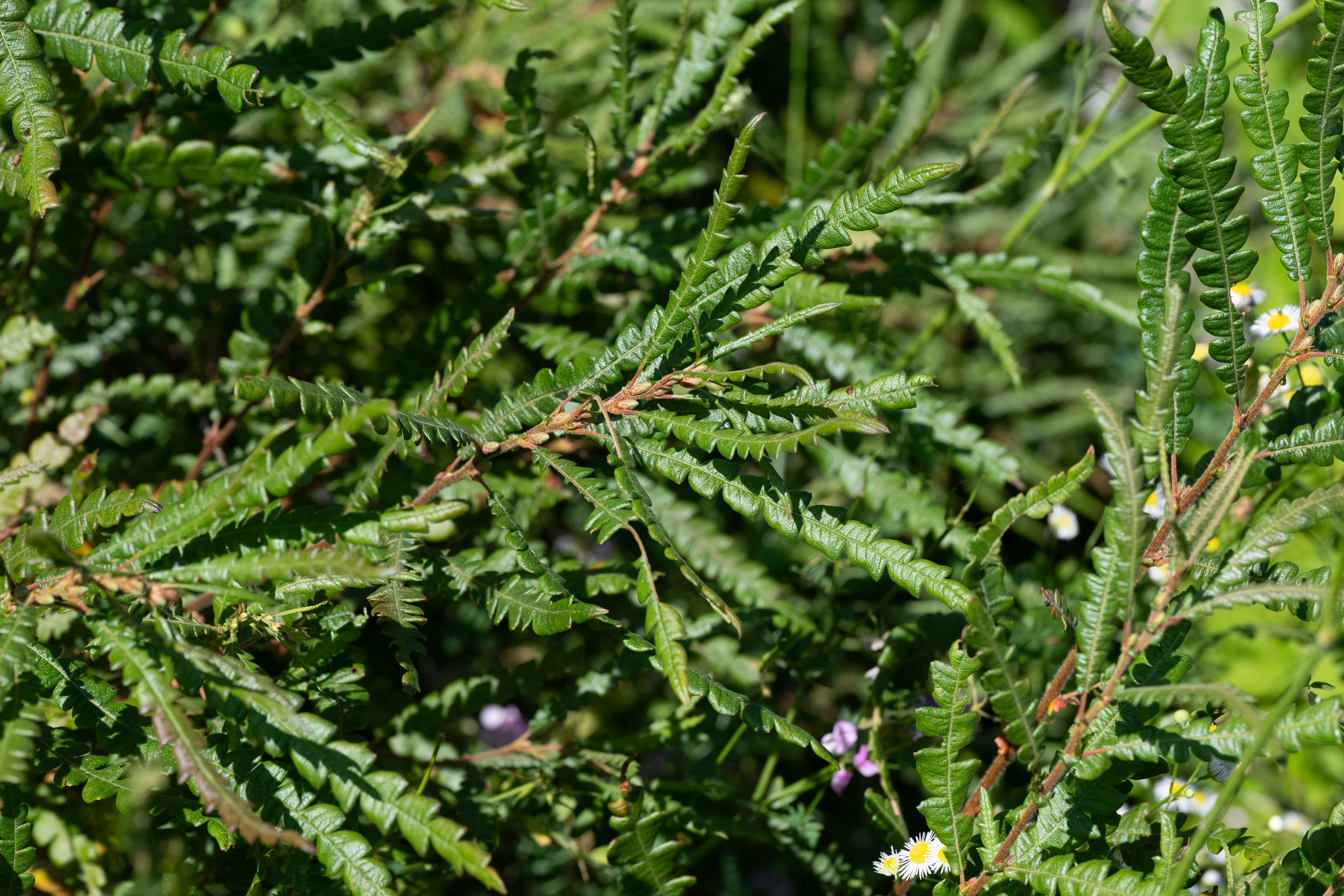
7/26/2025 · River Point Conservation Area, Falmouth, Maine · ≈ 13 × 9″ (34 × 22 cm) 

9/14/2023 · Nature Conservancy Access Trail, Sprague Pond, Phippsburg, Maine · ≈ 6 × 10″ (16 × 24 cm) 

8/7/2009 · Tom and Susan’s, Pepperell, Massachusetts · ≈ 1½ × 1′ (45 × 34 cm) 
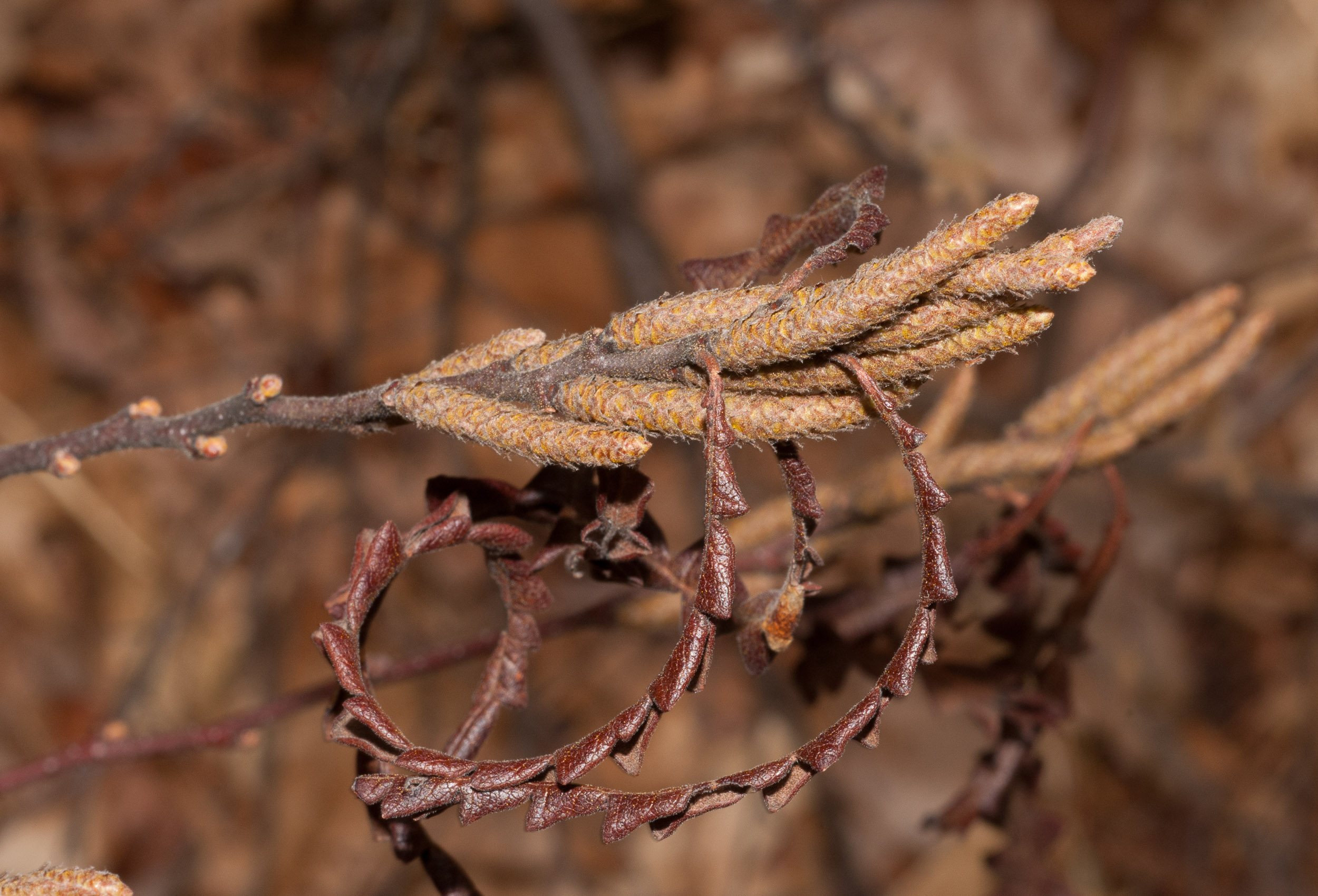
4/14/2013 · Bemis Rd, Pepperell, Massachusetts · ≈ 4½ × 3″ (12 × 8.3 cm) 

8/4/2009 · Near Nashoba Hospital, Ayer, Massachusetts 

7/3/2005 · Pepperell, Massachusetts 

9/16/2020 · Cathance River Nature Preserve, Topsham, Maine · ≈ 4 × 6″ (10 × 14 cm) 

8/29/2015 · Mount Grace, Athol, Massachusetts · ≈ 9 × 6″ (22 × 15 cm) 

9/23/2017 · Summit of Mt. Agamenticus, York, Maine · ≈ 4 × 2½″ (10 × 7 cm) 
| Kingdom | Plantae | Plants, but not fungi, lichens, or algae (from Stearn's Botanical Latin) |
| Subkingdom | Tracheobionta | Vascular plants—plants with a “circulatory system” for delivering water and nutrients |
| Division | Magnoliophyta | Flowering plants, also known as angiosperms |
| Class | Magnoliopsida | Dicotyledons—plants with two initial seed leaves |
| Subclass | Rosidae | Roses, legumes, proteas, dogwoods, hydrangeas, mistletoes, euphorbias, grapes, many more |
| Order | Fagales | Birch, she-oak, beech, walnut, bayberry, others |
| Family | Myricaceae | Bayberry (sweet gale) family |
| Genus | Comptonia | After Henry Compton, Bishop of London from 1632-1713, by Sir Josiah Banks |
| Species | peregrina | Foreign or exotic, wandering or straggling in growth |
Comptonia peregrina description by Thomas H. Kent, not updated.

© FloraFinder.org. All rights reserved.
