Crotalaria retusa L.
Rattlebox, rattleweed
Rattlebox is native to Asia, and probably Africa and Australia as well. It was introduced to the Galápagos as an ornamental. It is sometimes farmed for fiber, but it is poisonous to birds and large mammals.
Plants: Annual are 2–3′ (60–100 cm) in height.
Leaves: Alternate, simple, oblanceolate, with smooth edges, up to 3″ (8 cm) long.
Flowers: Each flower is up to ⅞″ (2.5 cm) in size, with a large standard petal, two lateral wing petals, and two lower keel petals. The large petal is usually tinged reddish to reddish brown. There are five partially fused sepals beneath. Ten stamens are fused into a tube.
Fruits: Beanlike, dark brown to black, 1–1½″ (3–4 cm) long. Each “bean” inflates, and its numerous tan to brownish seeds rattle inside.
Habitats: Arid lowlands.
Online References:
References:
McMullen, Conley K., Flowering Plants of the Galápagos, Comstock Publishing Associates, 1999, p. 202
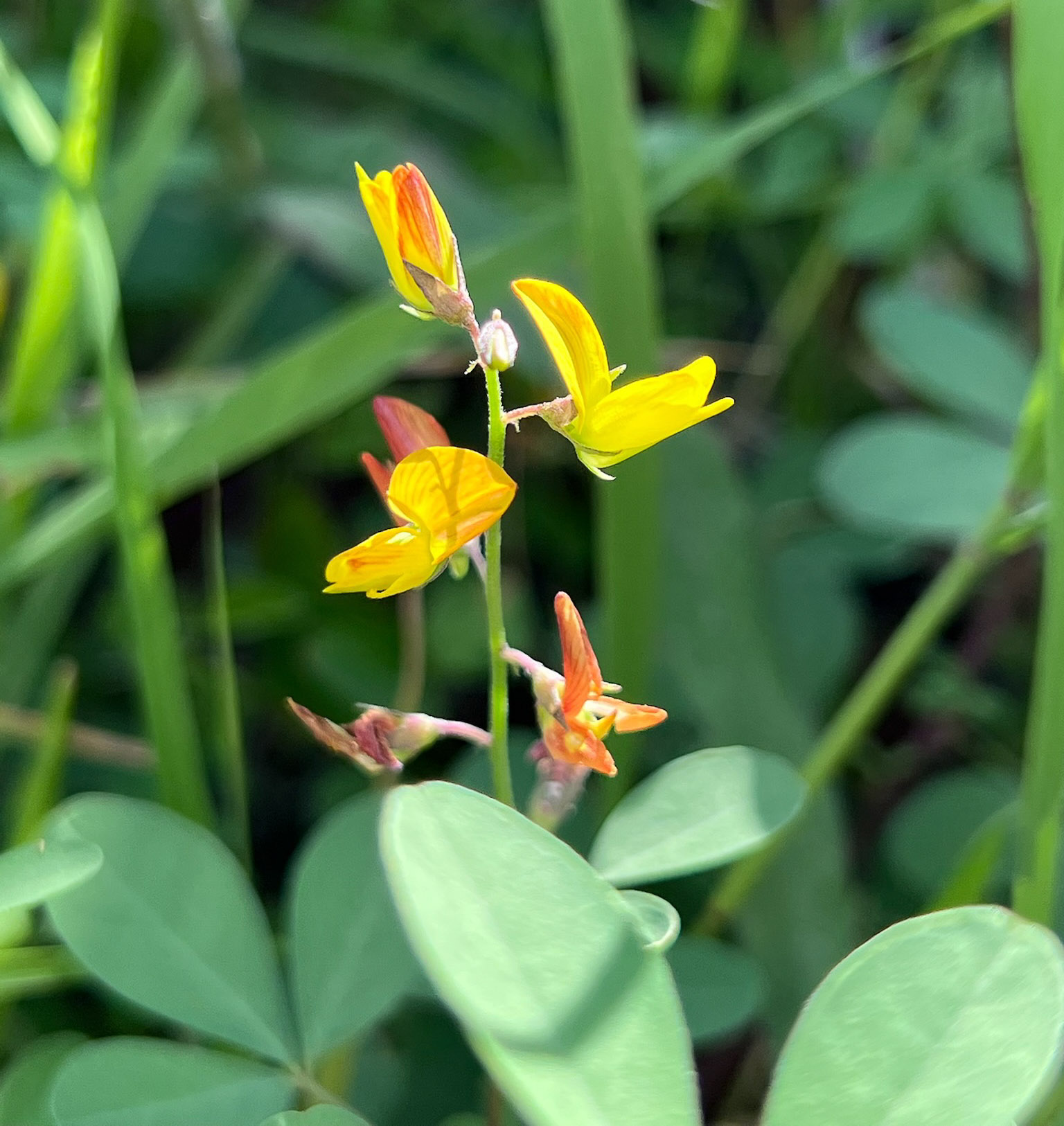
3/31/2025 · Rábida, Galápagos Islands, Ecuador · By Heather Kent 

3/31/2025 · Rábida, Galápagos Islands, Ecuador · By Heather Kent 

3/31/2025 · Rábida, Galápagos Islands, Ecuador · By Kathryn Morgis 

3/31/2025 · Rábida, Galápagos Islands, Ecuador · By Kathryn Morgis 

3/31/2025 · Rábida, Galápagos Islands, Ecuador · By Heather Kent 
| Kingdom | Plantae | Plants, but not fungi, lichens, or algae (from Stearn's Botanical Latin) |
| Subkingdom | Tracheobionta | Vascular plants—plants with a “circulatory system” for delivering water and nutrients |
| Division | Magnoliophyta | Flowering plants, also known as angiosperms |
| Class | Magnoliopsida | Dicotyledons—plants with two initial seed leaves |
| Subclass | Rosidae | Roses, legumes, proteas, dogwoods, hydrangeas, mistletoes, euphorbias, grapes, many more |
| Order | Fabales | Legumes (pea and bean families) |
| Family | Fabaceae | Legume family (peas and beans) |
| Genus | Crotalaria | From Greek crotalon, meaning “rattle,” referring to loose seeds inside inflated pod |
| Species | retusa | A rounded leaf apex with a notch |

Crotalaria retusa description by Thomas H. Kent, not updated.

© FloraFinder.org. All rights reserved.