Tithymalus cyparissias (L.) Hill
Euphorbia cyparissias L.
Cypress spurge, spurge
I think of Euphorbias as being plants, often cactus-like in appearance, from tropical and subtropical climes. But there are many members of this genus, like cypress spurge, that are at home in temperate climates. This plant was introduced as an ornamental to North America from Europe, and it is now naturalized throughout much of North America. In many areas it is considered an invasive.
Plants: Plants are 4–31″ (10–80 cm) in height.
Leaves: Small and very narrow, bluish-green, needlelike, ¾–1½ ⨉ 1/32–1/16″ (2–4 cm ⨉ 1–2 mm).
Flowers: Plants are topped by a ball or dome of “flowers” (really bracts, or specialized leaves). New flowers are greenish yellow or yellow, becoming dark yellow, orange, purple or red as they age.
Fruits: The mature fruit explodes, spreading seeds up to 16′ (5 m).
Habitats: Dry, gravelly or sandy soil of roadsides, pastures, and meadows.
Edibility: Poisonous  Plants emit a milky sap
when broken that irritates eyes, mouth, and skin.
Plants emit a milky sap
when broken that irritates eyes, mouth, and skin.
Online References:

5/24/2010 · Eastern Promenade, Portland, Maine · ≈ 12 × 8″ (31 × 20 cm)  ID is uncertain
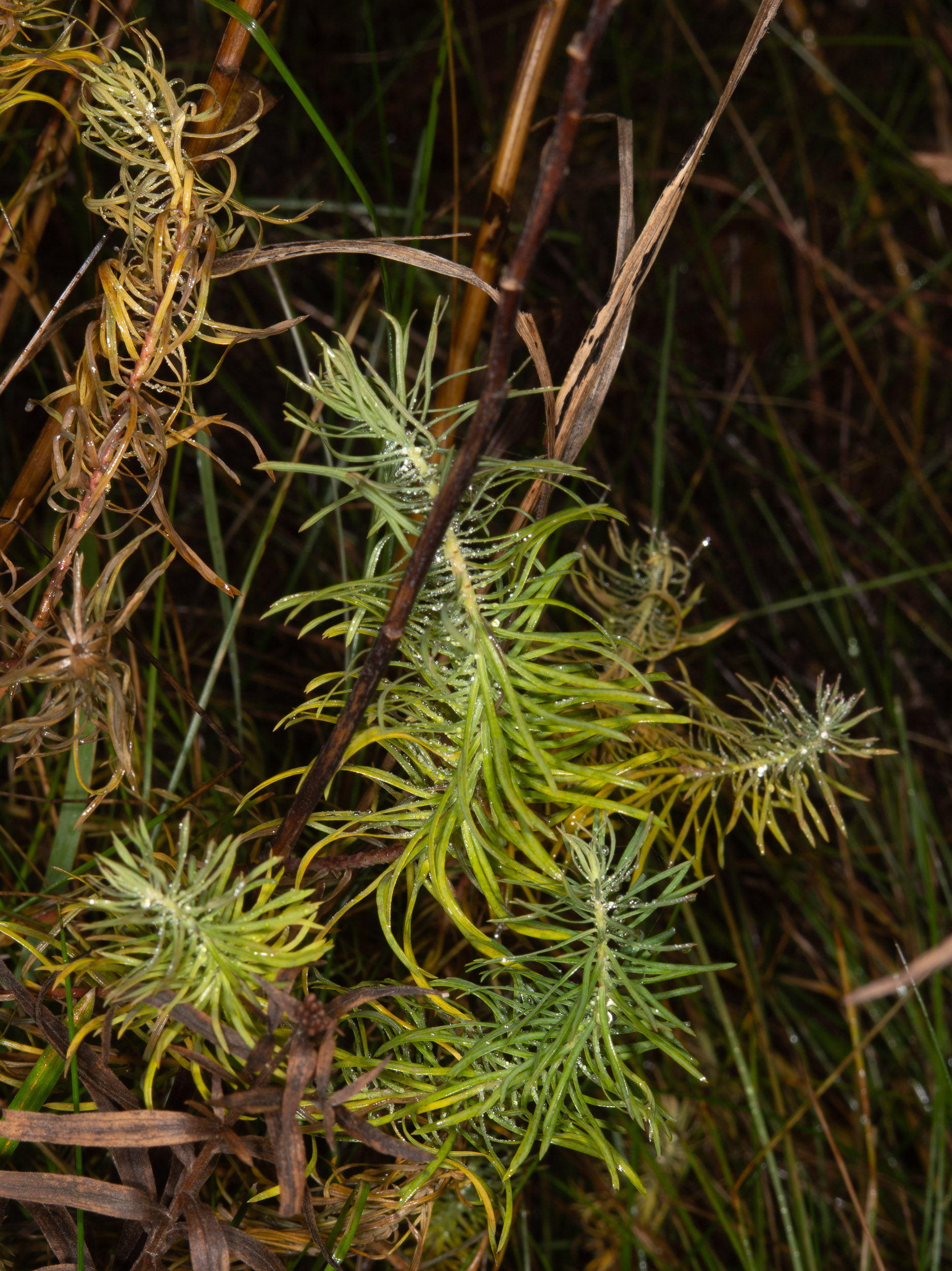
10/17/2016 · Mt. Greylock, Lanesborough, Massachusetts · ≈ 5 × 7″ (12 × 16 cm) 

5/24/2010 · Eastern Promenade, Portland, Maine · ≈ 14 × 9″ (35 × 23 cm) ID is uncertain 

6/9/2016 · Monhegan Island, Maine 

5/7/2016 · Long Cove Cottages, Tenant’s Harbor, Maine 

5/7/2016 · Long Cove Cottages, Tenant’s Harbor, Maine 

5/6/2016 · Long Cove Cottages, Tenant’s Harbor, Maine 
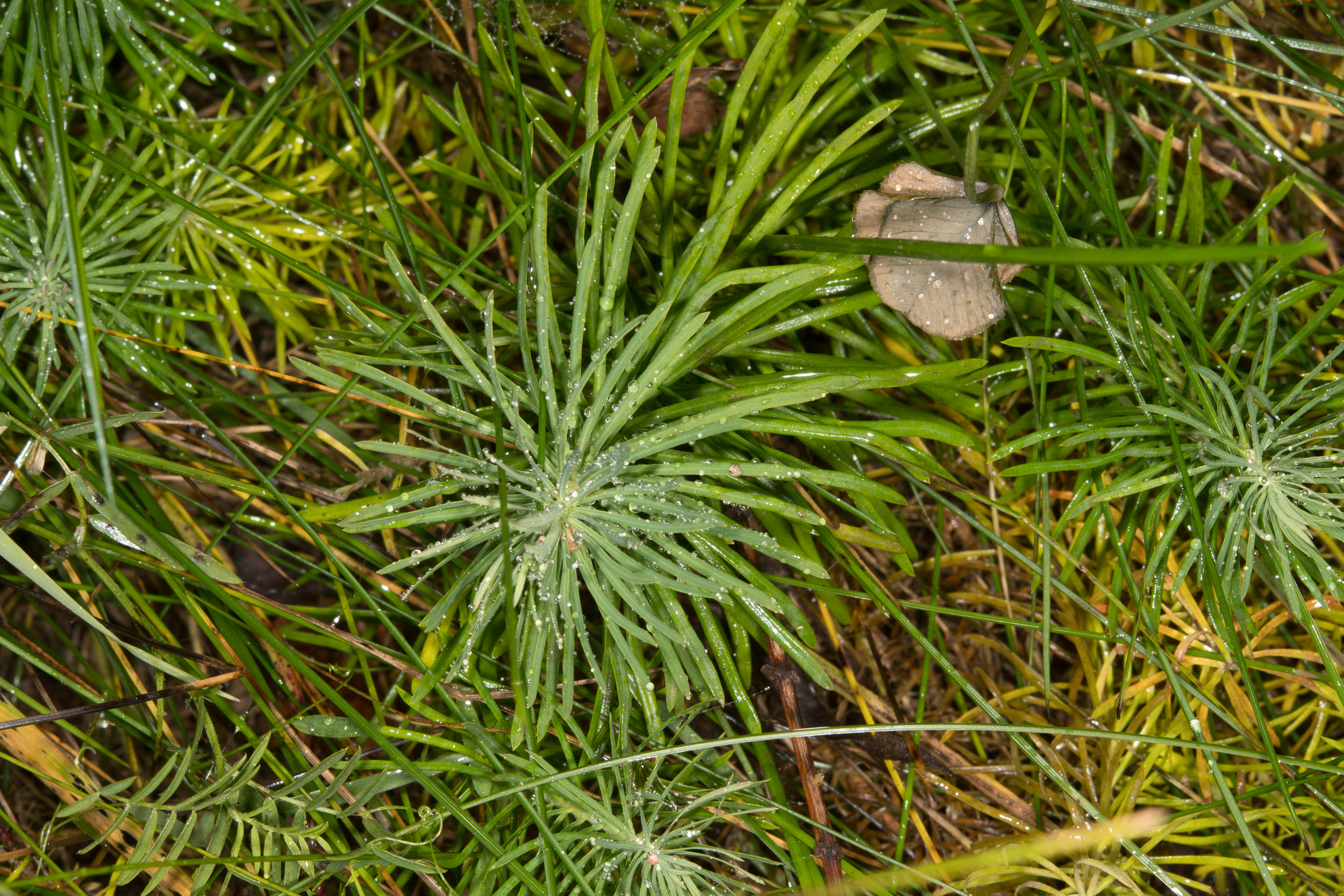
10/17/2016 · Mt. Greylock, Lanesborough, Massachusetts · ≈ 6 × 4″ (16 × 11 cm) 

5/6/2016 · Long Cove Cottages, Tenant’s Harbor, Maine 
| Kingdom | Plantae | Plants, but not fungi, lichens, or algae (from Stearn's Botanical Latin) |
| Subkingdom | Tracheobionta | Vascular plants—plants with a “circulatory system” for delivering water and nutrients |
| Division | Magnoliophyta | Flowering plants, also known as angiosperms |
| Class | Magnoliopsida | Dicotyledons—plants with two initial seed leaves |
| Subclass | Rosidae | Roses, legumes, proteas, dogwoods, hydrangeas, mistletoes, euphorbias, grapes, many more |
| Order | Malpighiales | A broad group encompassing 16,000 species |
| Family | Euphorbiaceae | Euphorbia or spurge family |
| Genus | Euphorbia | An extremely diverse-looking genus of mostly tropical and subtropical succulent plants. For Euphorbus, corpulent Greek physician of Juba II, King of Mauretania. Literally, “euphorbia” means “well-fed” |
| Species | cyparissias | Derivded from Greek kuparisso, “spurge;” spurge in turn means “to purge,” for which some species were sometimes used |
Euphorbia cyparissias description by Thomas H. Kent, not updated.

© FloraFinder.org. All rights reserved.
