Ferocactus wislizeni (Engelmann) Britton & Rose 1922
Fishhook barrel cactus, fishhook barrel, Arizona barrel cactus, biznaga de agua, candy barrel cactus, viznaga hembra, compass barrel cactus
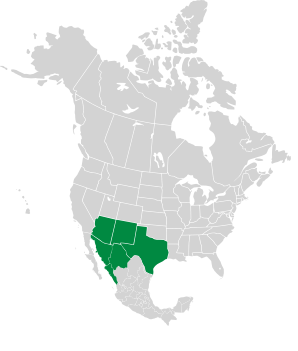
The Arizona barrel cactus is native to southwestern North America. Adult plants often lean toward the south, perhaps because strong southern sun inhibits growth on that side, hence the name “compass barrel cactus.” Sometimes the lopsided columns tip over in the mud following a sudden rain.
Plants: Round or column-shaped, plants are usually single, 3–9½′ (1–3 m) high and 2½′ (80 cm) around, with 20-30 ribs. Stems are asparagus-colored. There are two types of spines. Central spines, the largest and most prominent, may be red, white, or gray. They are round or flattened in cross-section, occurring in groups of 4-7. One spine is largest, often shaped like a hook, and 3–4″ (8–10 cm) long; smaller spines are straight. Underneath the central spines are radial spines, which are white, much thinner (almost hairlike), and more flush against the stem.
Flowers: Funnel-shaped flowers are 1½–1¾″ (4–5 cm) in size, usually orange but grading into red and yellow, blooming from July to September.
Fruits: Oval shaped fruits up to 1¾″ (5 cm) are yellow.
Habitats: Gravelly or sandy soil, more commonly on bajadas than steep slopes, at 984–5249′ (300–1600 m) elevation. It prefers full sun, and does well in hot arid climates.
Edibility: Ripe fruits are edible, “tart and lemony,” with firm texture. Indigenous Americans also processed the pulp into a cabbage-like food.
References:
Online References:

1/5/2026 · Cienega Creek Natural Preserve,, Arizona · By John W. Kent 

1/5/2026 · Cienega Creek Natural Preserve,, Arizona · By John W. Kent 

5/25/2009 · Boyce Thompson Arboretum, Superior, Arizona · ≈ 1½ × 2½′ (48 × 79 cm) 

4/6/2011 · Howard Peters Rawlings Conservatory & Botanic Gardens, Druid Hill Park, Baltimore, Maryland · ≈ 12 × 12″ (29 × 30 cm) 
| Kingdom | Plantae | Plants, but not fungi, lichens, or algae (from Stearn's Botanical Latin) |
| Subkingdom | Tracheobionta | Vascular plants—plants with a “circulatory system” for delivering water and nutrients |
| Division | Magnoliophyta | Flowering plants, also known as angiosperms |
| Class | Magnoliopsida | Dicotyledons—plants with two initial seed leaves |
| Subclass | Caryophyllidae | Cacti, many other succulents, carnivorous plants, and leadworts |
| Order | Caryophyllales | Includes cacti, carnations, amaranths, ice plants, and many carnivorous plants |
| Family | Cactaceae | Succulent (water-storing) plants, often spiny |
| Genus | Ferocactus | From the Latin ferus, “fierce,” and cactus, referring to its heavy spines |
| Species | wislizeni | After Frederick Adolf Wislizenus (1810-1889), Army surgeon, explorer, botanist and plant collector of German birth who travelled extensively in the southwestern United States |
Ferocactus wislizeni description by Thomas H. Kent, not updated.

© FloraFinder.org. All rights reserved.