Ginkgo biloba L.
Maidenhair tree, golden fossil tree, stinkbomb tree
Ginkgo biloba is native to China. It has become naturalized in a few places in eastern North America, but it borders on extinction everywhere. Natural trees live as long as 2,500 years. Cultivated varieties are often included in landscape plantings, and it is also cultivated for its alleged medicinal properties. Gingkos are a very very old species: fossilized leaves date back 270 million years, before even the first dinosaurs!
Plants: Trees are 40–80′ (12–24 m), rarely as much as 128′ (39 m), with an oval to cone-shaped crown.
Leaves: Leaves are more or less fan-shaped, sometimes resembling crescents, usually with one lobe, sometimes divided into two; leaf edges are softly scalloped. Leaves are medium green; in the fall, they turn bright yellow.
Flowers: These trees are dioecious: male and female flowers are borne on separate trees. Male flowers are small greenish conelike structures about 1 ⨉ ¼″ (2.5 cm ⨉ 6.3 mm). Female trees produce ovules—inconspicuous rounded green bumps about ⅛″ (3.2 mm) in diameter—at the ends of stalks.
Fruits: Fruits are roughly oval-shaped, up to 1″ (2.5 cm) long, hanging on long stems. They are produced in large quantities, and smell unpleasant (like “rancid butter”) as they rot, hence the name “stinkbomb tree.”
Habitats: Although cultivars are common, ginkgo is found infrequently in nature, in deciduous forests and valleys on acidic fine, silty soils with good drainage.
Medical: Ginkgo biloba is frequently touted as a dietary supplement with curative or preventative properties. It is best known for memory enhancement and slowing the progress of dementia and Alzheimer’s disease. However, ginkgo has, at best, slight benefits in memory enhancement—many studies found no improvement at all. And in 2008, the GEM study, involving 3,000 elderly participants, found it to have no benefit whatsoever in arresting the progress of dementia or Alzheimer’s. Ginkgo has also been used for glaucoma, macular degeneration, tinnitus, and Raynaud’s phenomenon, and many other ailments. No large scale studies have been performed for the first three of these, but a well-designed study did find a benefit for Raynaud’s sufferers.
Online References:
References:

10/5/2010 · Susan and Raimond’s, Phoenix, Maryland · ≈ 6 × 4″ (15 × 10 cm) 

This mature ginkgo, planted in the heart of Boston, was thriving. I haven’t previously seen them in Massachusetts. · 1/5/2026 · Beth Israel Hospital, Boston, Massachusetts 

10/5/2010 · Susan and Raimond’s, Phoenix, Maryland · ≈ 3½ × 4½″ (9.2 × 11 cm) 

5/27/2016 · Acton Arboretum, Acton, Massachusetts · ≈ 1½ × 1′ (52 × 34 cm) 

10/5/2010 · Susan and Raimond’s, Phoenix, Maryland · ≈ 7 × 11″ (18 × 27 cm) 

10/5/2010 · Susan and Raimond’s, Phoenix, Maryland · ≈ 7 × 4½″ (17 × 11 cm) 
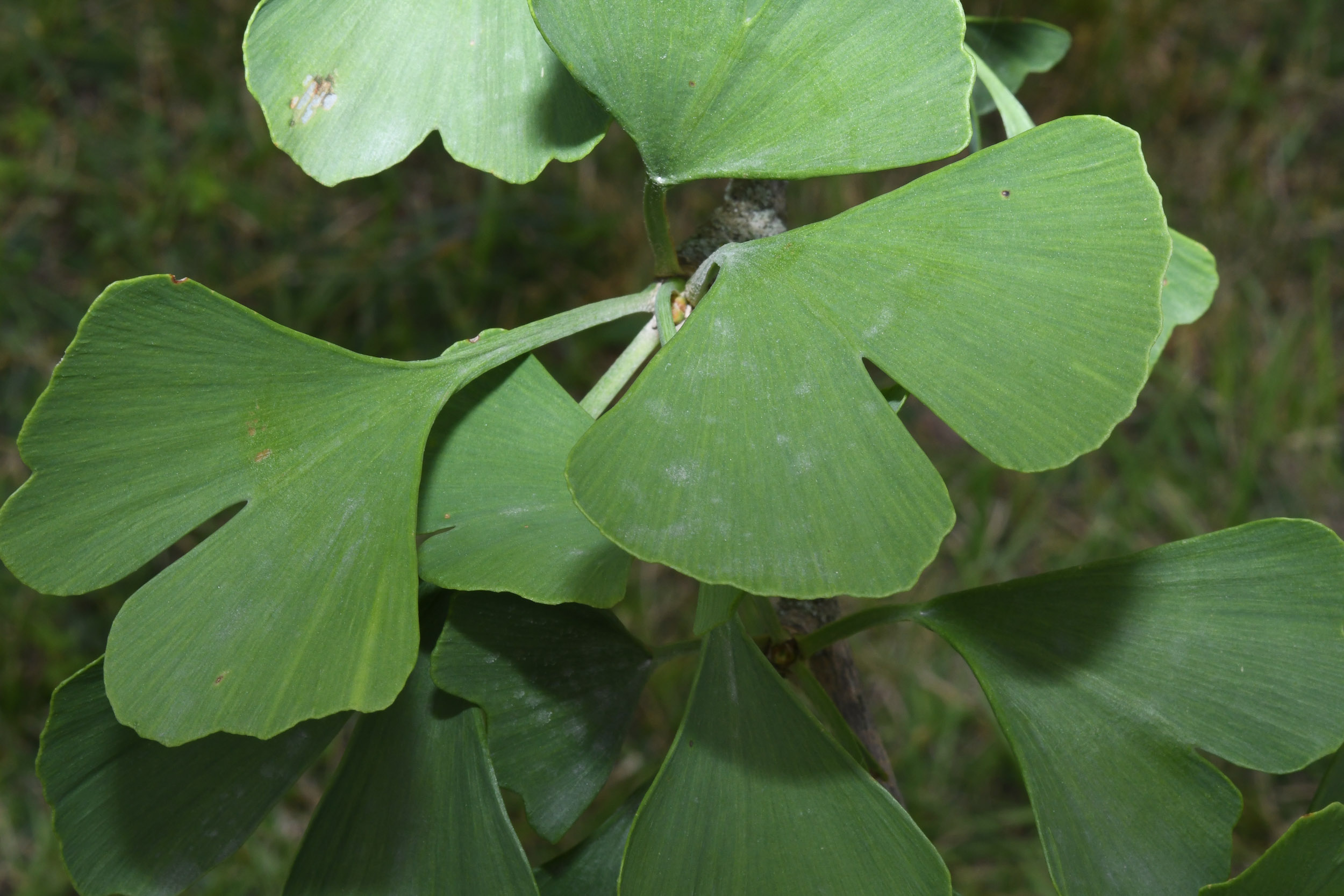
7/27/2016 · State Arboretum of Virginia, Boyce, Virginia 

Leaf undersides. · 1/5/2026 · Beth Israel Hospital, Boston, Massachusetts 

10/5/2010 · Susan and Raimond’s, Phoenix, Maryland · ≈ 6 × 9″ (15 × 23 cm) 
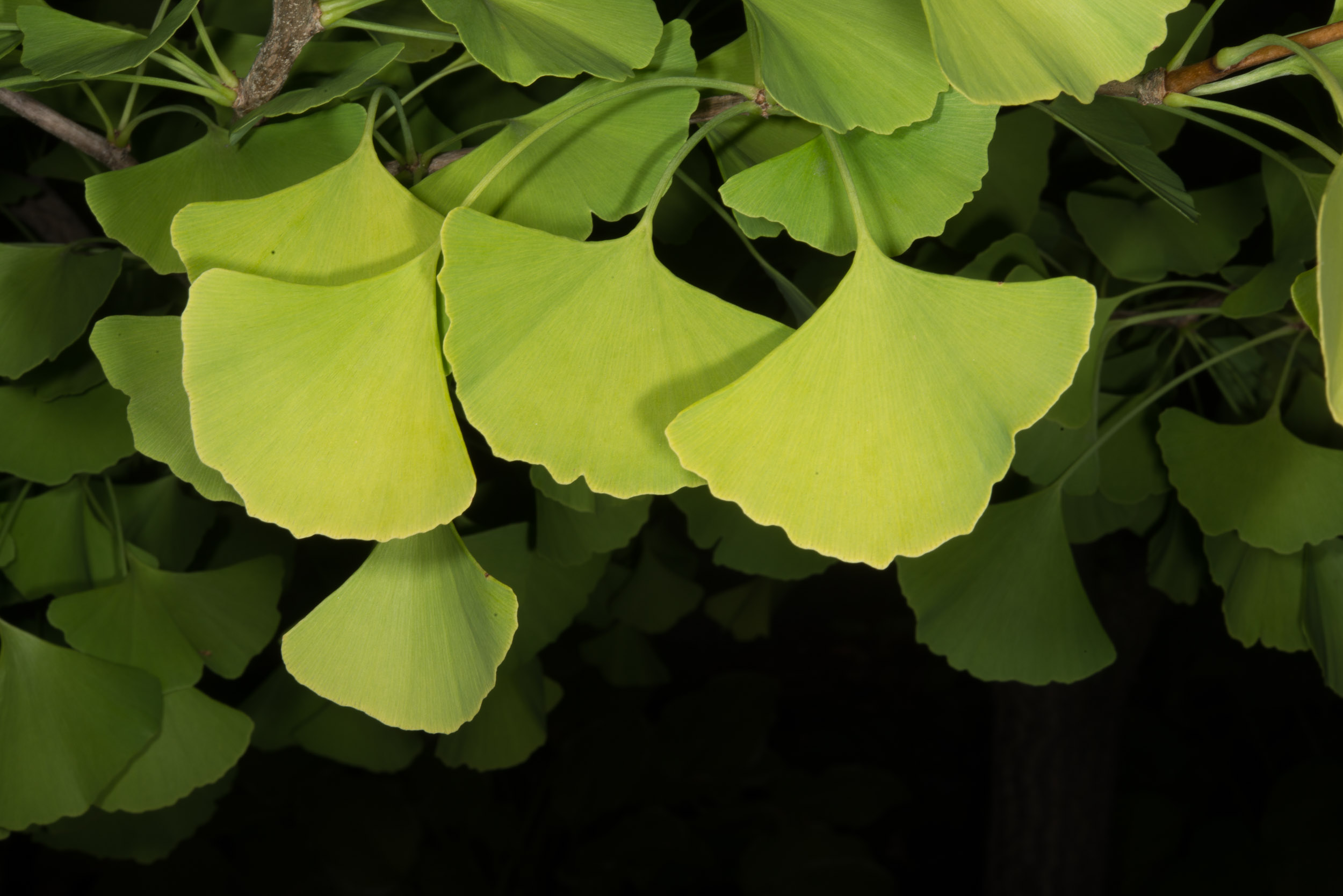
This may be a cultivar. · 9/10/2014 · Acton Arboretum, Acton, Massachusetts · ≈ 10 × 7″ (25 × 16 cm) 
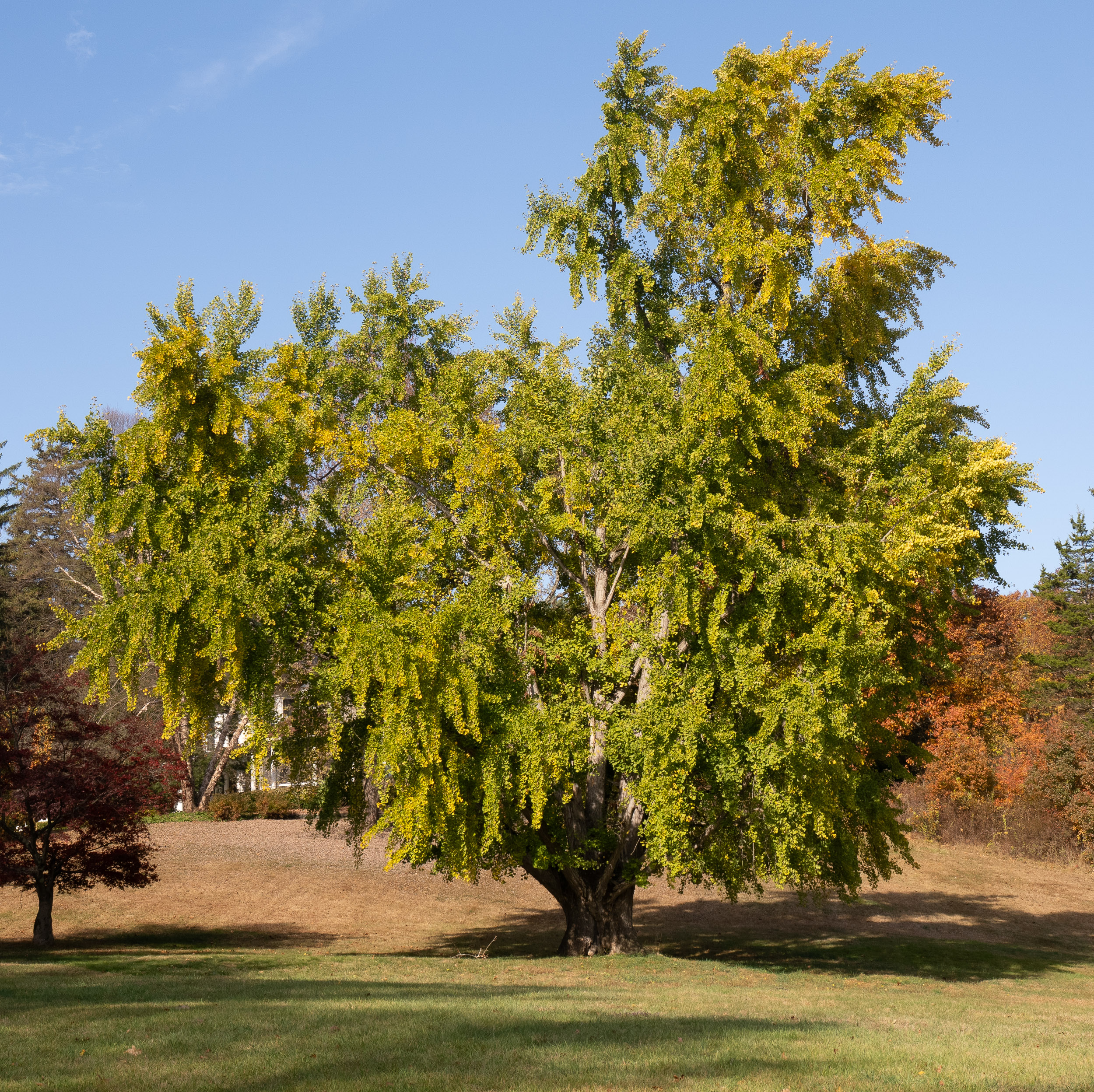
10/31/2024 · Dr. Hoffert's Land, Selkirk, New York 
| Kingdom | Plantae | Plants, but not fungi, lichens, or algae (from Stearn's Botanical Latin) |
| Subkingdom | Tracheobionta | Vascular plants—plants with a “circulatory system” for delivering water and nutrients |
| Division | Ginkgophyta | A group of gymnosperms, with Gingko biloba the only living member |
| Class | Ginkgoopsida | A group of gymnosperms, with Gingko biloba the only living member |
| Order | Ginkgoales | A group of gymnosperms, with Gingko biloba the only living member |
| Family | Ginkgoaceae | A group of gymnosperms, with Gingko biloba the only living member |
| Genus | Ginkgo | Probably an English distortion of Middle Chinese characters meaning “silver apricot” |
| Species | biloba | From the Latin bis, “two,” and loba, “lobed,” for the leaf shape |
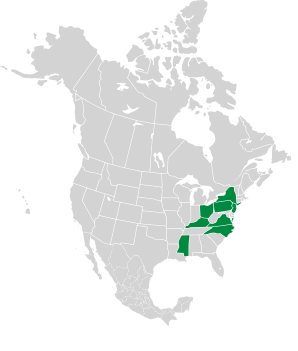
Ginkgo biloba description by Thomas H. Kent, not updated.

© FloraFinder.org. All rights reserved.