Haworthia retusa
Star cactus
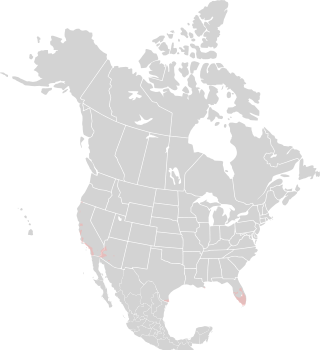
This haworthia hails from a very small area around Riverdale, in the Western Cape Province of South Africa. Though sometimes called a star cactus, it is not a cactus. In fact, it may not even be a haworthia, instead being an aloe, Aloe retusa.
Plants: This perennial succulent is known for its weird leaves—more below. Leaves form a tight basal rosette only about 3–4″ (7.6–10 cm) tall.
Leaves: . Leaves are “retuse”—deltoid, and recurved so that the upturned face of each leaf forms a triangle. They are thick and fleshy. The leaves also have shiny “leaf top windows,” translucent areas through which light can enter. This adaptation allows a good portion of the plant’s leaves to remain below the surface of the ground, minimizing dessication, a bit like natural skylights. The windows focus and channel diffused light to the green photosynthesizing surface hidden underground. A surprising number of succulent species have evolved this trick.
Flowers: A raceme of flowers about 6″ (15 cm) high tops a stalk about 1½′ (50 cm) in height. Flowers are tubular, white or pale pink, with six tepals, and a green central vein in each tepal.
Fruits: Ovoid to oblong capsules have three compartments containing winged seeds.
Habitats: Low clayey hills, under bushes or among stones in undisturbed places where original vegetation is remaining, in its restricted habitat in South Africa.
Online References:

12/27/2024 · Heather and Katie's, Holbrook, Massachusetts 

12/17/2024 · Heather and Katie, Holbrook, Massachusetts · By Heather A. Kent 

12/17/2024 · Heather and Katie, Holbrook, Massachusetts · By Heather A. Kent 

12/17/2024 · Heather and Katie, Holbrook, Massachusetts · By Heather A. Kent 
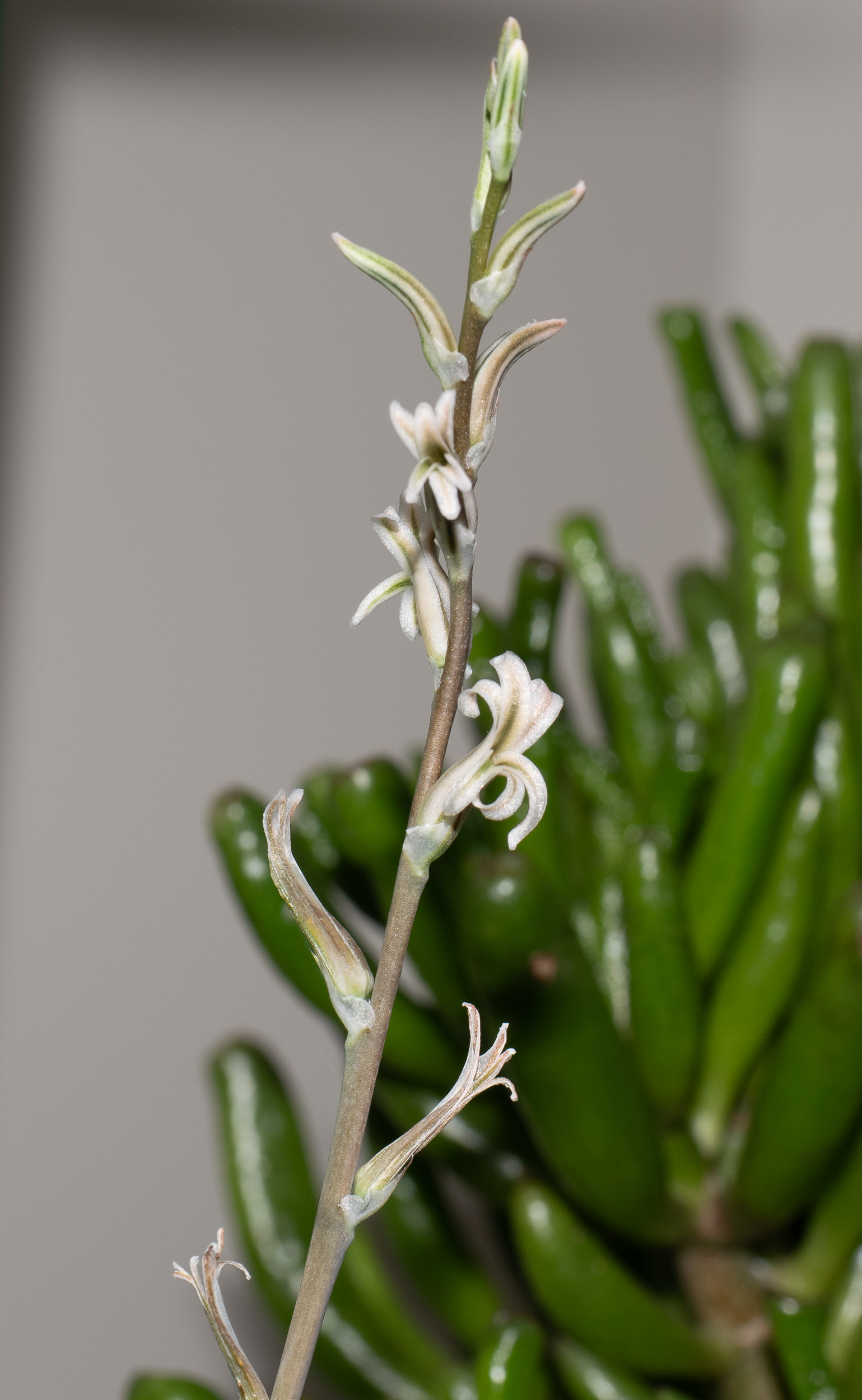
12/27/2024 · Heather and Katie's, Holbrook, Massachusetts 

12/17/2024 · Heather and Katie, Holbrook, Massachusetts · By Heather A. Kent 

12/27/2024 · Heather and Katie's, Holbrook, Massachusetts 

12/27/2024 · Heather and Katie's, Holbrook, Massachusetts 

12/17/2024 · Heather and Katie, Holbrook, Massachusetts · By Heather A. Kent 

12/27/2024 · Heather and Katie's, Holbrook, Massachusetts 
| Parents | Unknown | Genus is not in the current taxonomy |
| Genus | Haworthia | Haworth (1767-1833), English botanist, plus New Latin -ia |
| Species | retusa | “Blunt, dull; retuse (curved back like a thumb)” |
Haworthia retusa description by Thomas H. Kent, not updated.

© FloraFinder.org. All rights reserved.