Hippomane mancinella L.
Manchineel tree
The manchineel tree, sometimes called the tree of death or the death apple, is native to tropical and subtropical North and South America. It is an endangered species in Florida, but well established throughout the rest of its range.
Radiologist Nicola Strickland, in a 2000 British Medical Journal article about eating manchineel with a friend, writes:“I rashly took a bite from this fruit and found it pleasantly sweet. Moments later we noticed a strange peppery feeling in our mouths, which gradually progressed to a burning, tearing sensation and tightness of the throat. The symptoms worsened over a couple of hours until we could barely swallow solid food because of the excruciating pain and the feeling of a huge obstructing pharyngeal lump.”
Plants: These trees are up to 49′ (15 m) tall, with wide, rounded crowns. The bark is reddish-to-grayish brown and deeply furrowed or cracked.
Leaves: Glossy green, leathery, elliptical to ovate, simple, and alternate, with very fine tteth. Leaves have prominent veins, and are 2–4″ (5–10 cm) long.
Flowers: Spikes of small greenish flowers.
Fruits: Fruits resemble small green or greenish yellow apples, at about 1–2″ (2.5–5 cm) in diameter. They have a sweet odor.
Habitats: Most common along tropical coastlines, on sandy beaches or interspersed among mangroves.
Edibility: Poisonous.  All parts of this plant are
extremely toxic, including the apple-like fruits. They cause excruciating pain, inflammation, and
blistering. Even standing under the tree during a rainstorm is a very painful experience.
Some fatalities have occurred. Smoke from burning causes eye and lung pain or temporary blindness.
All parts of this plant are
extremely toxic, including the apple-like fruits. They cause excruciating pain, inflammation, and
blistering. Even standing under the tree during a rainstorm is a very painful experience.
Some fatalities have occurred. Smoke from burning causes eye and lung pain or temporary blindness.
Online References:
References:
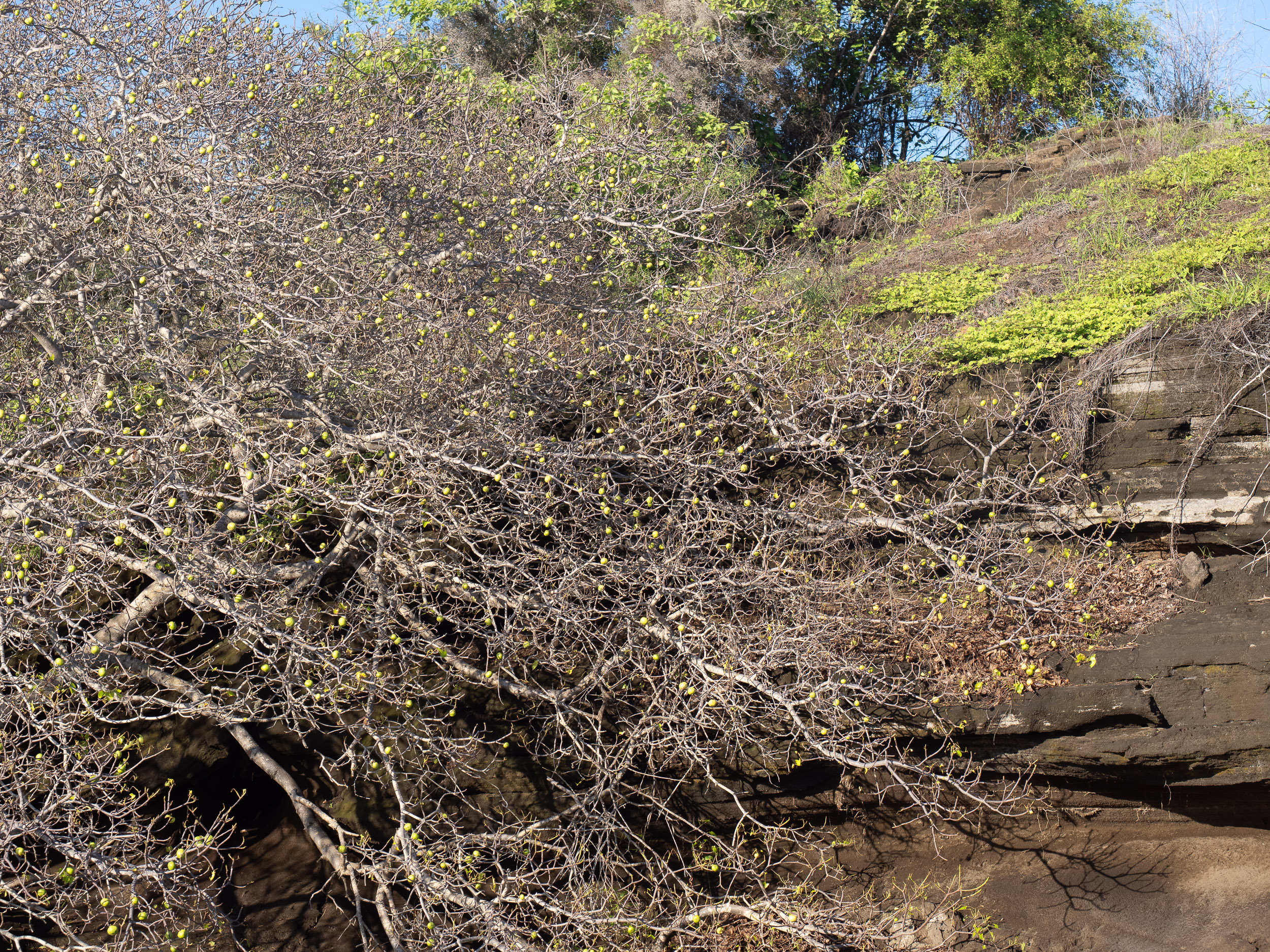
3/31/2025 · Puerto Egas, Santiago, Galápagos Islands, Ecuador 

3/31/2025 · Puerto Egas, Santiago, Galápagos Islands, Ecuador 

3/31/2025 · Puerto Egas, Santiago, Galápagos Islands, Ecuador · By Heather Kent 

3/31/2025 · Puerto Egas, Santiago, Galápagos Islands, Ecuador · By Heather Kent 
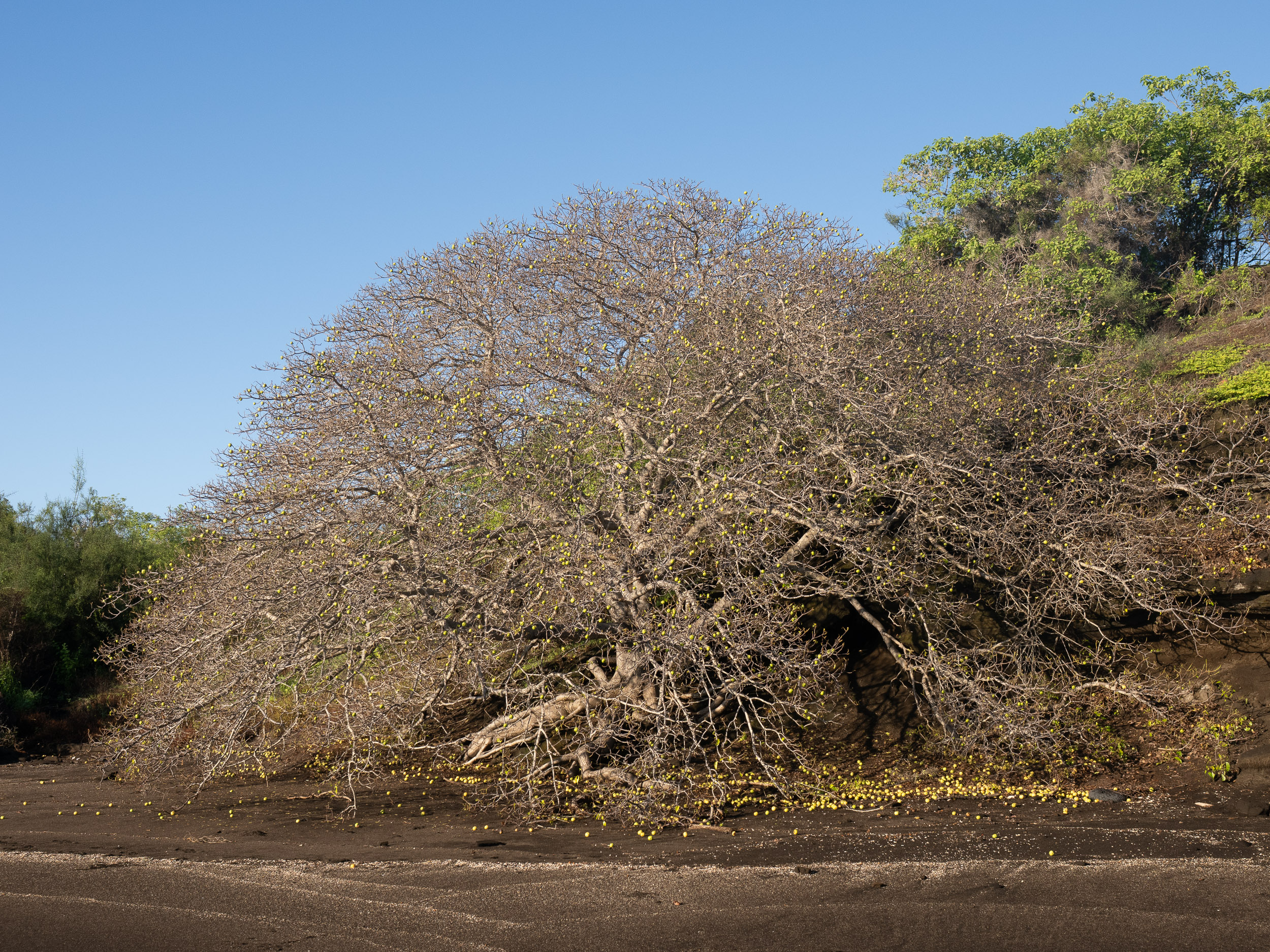
3/31/2025 · Puerto Egas, Santiago, Galápagos Islands, Ecuador 
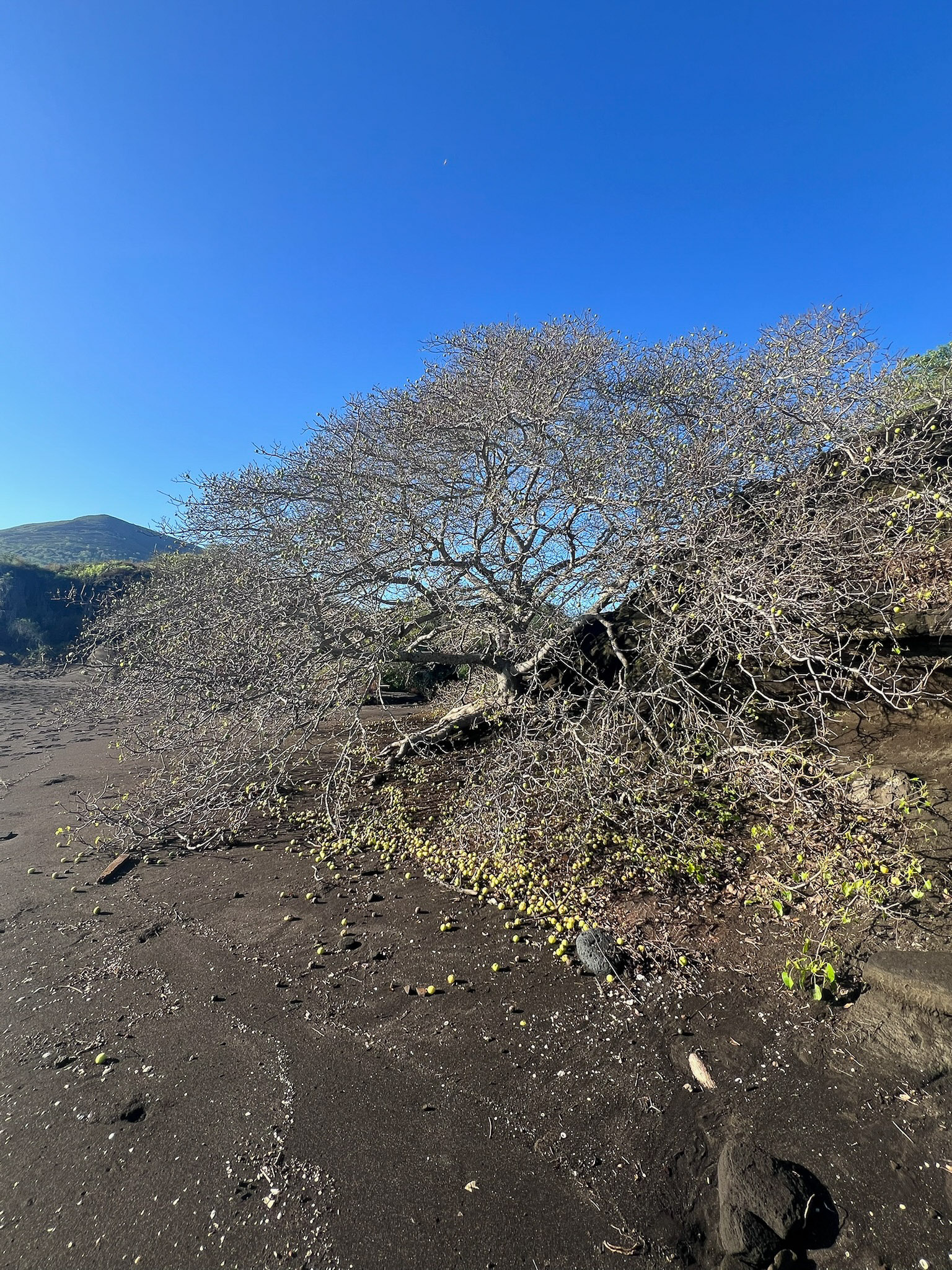
3/31/2025 · Puerto Egas, Santiago, Galàpagos Islands, Ecuador · By Heather Kent 
| Kingdom | Plantae | Plants, but not fungi, lichens, or algae (from Stearn's Botanical Latin) |
| Subkingdom | Tracheobionta | Vascular plants—plants with a “circulatory system” for delivering water and nutrients |
| Division | Magnoliophyta | Flowering plants, also known as angiosperms |
| Class | Magnoliopsida | Dicotyledons—plants with two initial seed leaves |
| Subclass | Rosidae | Roses, legumes, proteas, dogwoods, hydrangeas, mistletoes, euphorbias, grapes, many more |
| Order | Malpighiales | A broad group encompassing 16,000 species |
| Family | Euphorbiaceae | Euphorbia or spurge family |
| Genus | Hippomane | From Ancient Greek ἱππομᾰνής (hippomănḗs)—from ἵππος (híppos, “horse”) + μαίνομαι (maínomai, “to rage, to be crazy”)—probably a result of the toxins in this genus |
| Species | mancinella | From Spanish manzanilla, “little apple” |

Hippomane mancinella description by Thomas H. Kent, not updated.

© FloraFinder.org. All rights reserved.