Lantana involucrata L.
Wild lantana, wild sage, buttonsage
Buttonsage is an evergreen perennial native to Florida, Central America, and much of South America. It tolerates a wide variety of soils, including disturbed soils and coastal sands. Butterflies love these plants.
Plants: Shrubs 3–6½′ (1–2 m) tall, multiple branched from the base. Stems are somewhat four-angled.
Leaves: Opposite, ovate to oblong-elliptic, up to ¾″ (2 cm) long, with crenate leaf margins. Leaves are highly aromatic when crushed, with densely hairy undersides.
Flowers: Flowerheads are cymes with densely packed flowers, ¼–⅜ ⨉ ⅜–½″ (8–12 mm ⨉ 1–1.5 cm) in size. Flowers are white, sometimes tinged with pink, with yellow centers. They have four fused greenish sepals and four fused petals. Four stamens are fused to the petals. Flowers appear year round.
Fruits: Purplish-pink, shiny drupes.
Habitats: Anthropogenic (human-altered) habitats, coastal sands, dry forests and shrublands.
Online References:
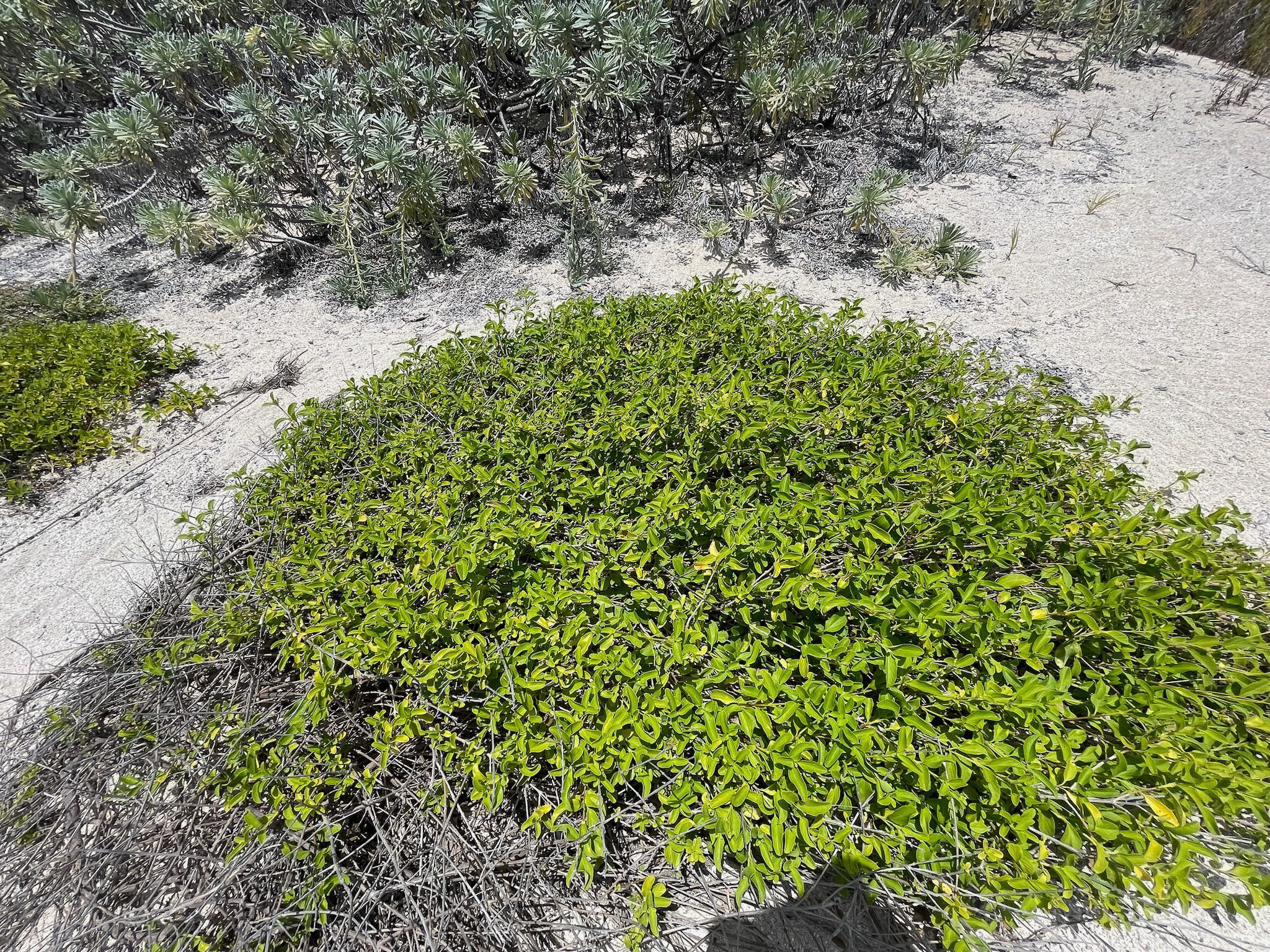
6/7/2024 · Saint Marten, Leeward Islands · By Heather A. Kent 

6/7/2024 · Saint Marten, Leeward Islands · By Heather A. Kent 
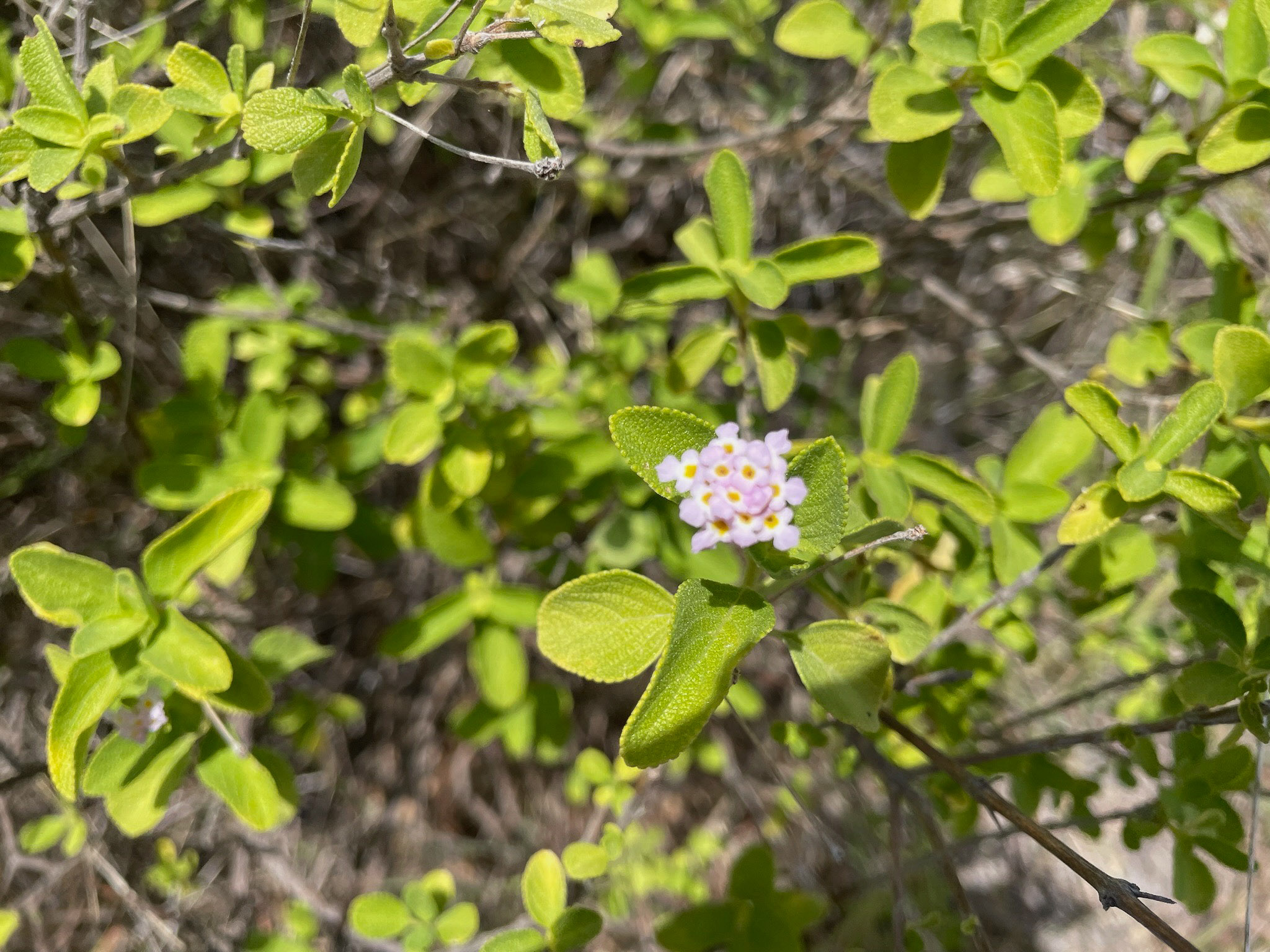
6/7/2024 · Saint Marten, Leeward Islands · By Heather A. Kent 
| Kingdom | Plantae | Plants, but not fungi, lichens, or algae (from Stearn's Botanical Latin) |
| Subkingdom | Tracheobionta | Vascular plants—plants with a “circulatory system” for delivering water and nutrients |
| Division | Magnoliophyta | Flowering plants, also known as angiosperms |
| Class | Magnoliopsida | Dicotyledons—plants with two initial seed leaves |
| Subclass | Asteridae | A large class that encompasses asters |
| Order | Lamiales | Aromatic herbs and shrubs, including lavender, lilac, olive, jasmine, ash, teak, snapdragon, sesame, psyllium, garden sage, mint, basil, and rosemary |
| Family | Verbenaceae | Verbena (vervain) family, about 3,000 species |
| Genus | Lantana | Latin for “viburnum,” whose flowers look somewhat similar |
| Species | involucrata | Provided with an involucre, a ring of bracts surrounding or enclosing a head of several flowers |

Lantana involucrata description by Thomas H. Kent, not updated.

© FloraFinder.org. All rights reserved.