Lycogala epidendrum L. 1829
Wolf’s milk slime mold
Wolf’s milk is a slime mold. Or more formally, a myxogastrid amoeba, a member of the plasmodial or acellular slime molds. If that’s any help. Though their fruiting bodies resemble fungi, they are not. They are widespread throughout North America.
Identification: These plants are single-celled, too small to see, reddish in color. The only visible part of this species is its fruiting bodies, which appear when conditions are wet enough. The individuals aggregate to make the “fruits.” Pink to brown circular blobs called aethalia are the fruiting bodies of this slime mold, appearing in scattered groups on rotting logs. Each blob is ⅛–½″ (3–15 mm) in diameter. As they mature, they darken to pinkish gray, yellowish brown, greenish or blackish. Their pastelike interior matures to powdery spores 0.2–0.3 mils (6–7 µm). They appear from June to November.
Edibility: Not edible.
Online References:

6/9/2025 · Curtis Farm Preserve, Harpswell, Maine · ≈ 8 × 5″ (20 × 13 cm) 
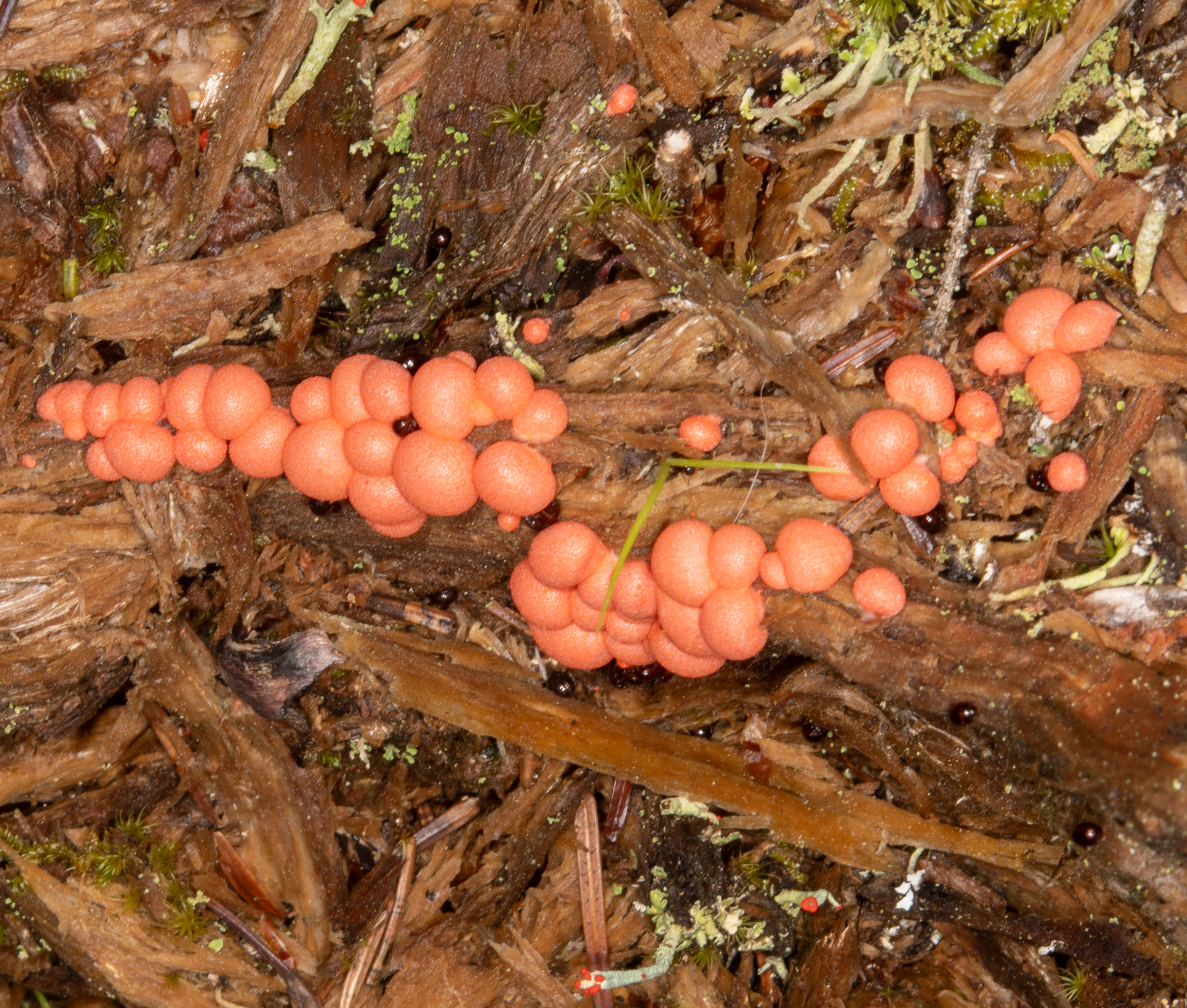
6/24/2024 · Otter Brrok Preserve, Harpswell Heritage Land Trust, Harpswell, Maine · ≈ 3½ × 3″ (9.8 × 8.3 cm) 
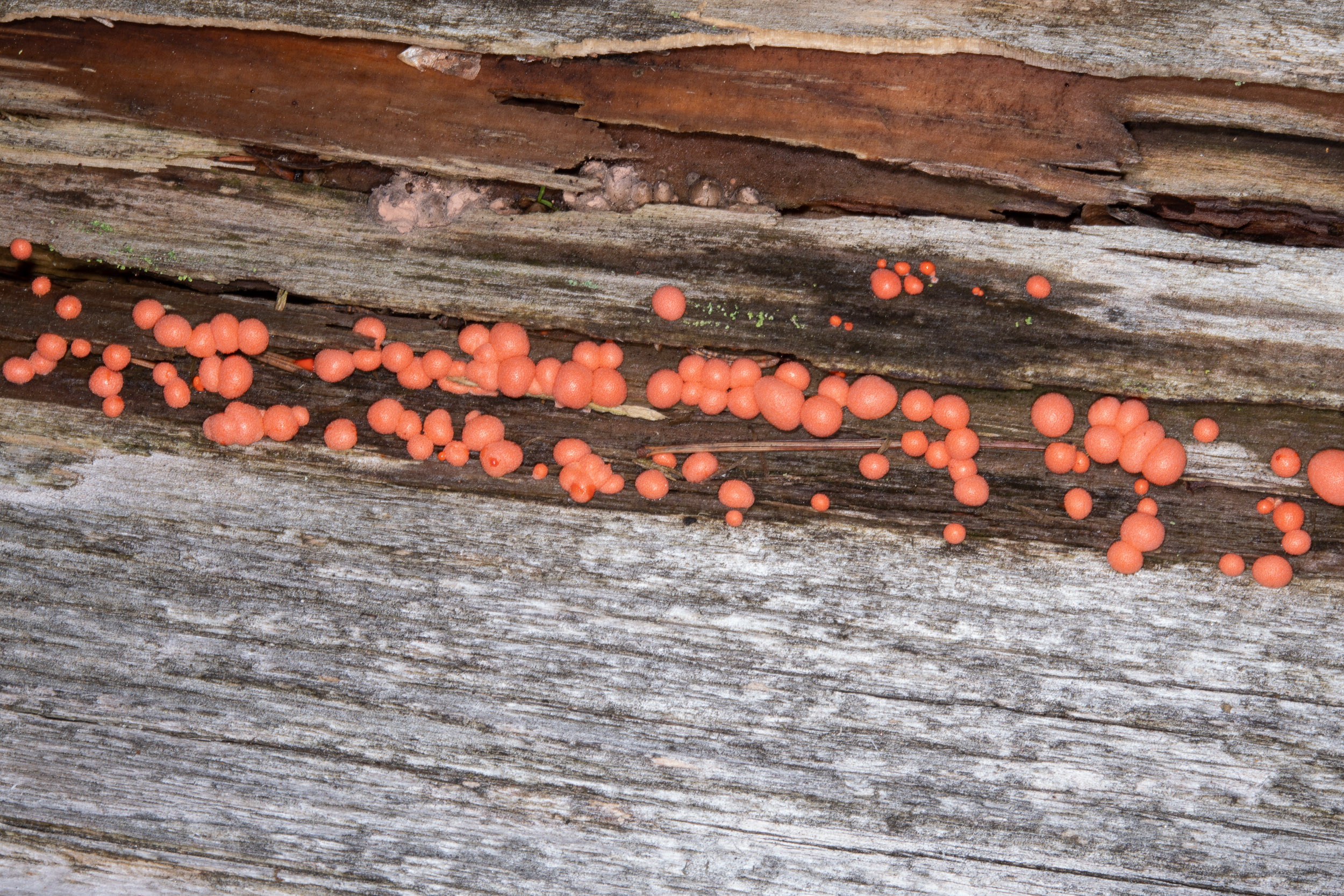
6/9/2025 · Curtis Farm Preserve, Harpswell, Maine · ≈ 7 × 4½″ (18 × 12 cm) 
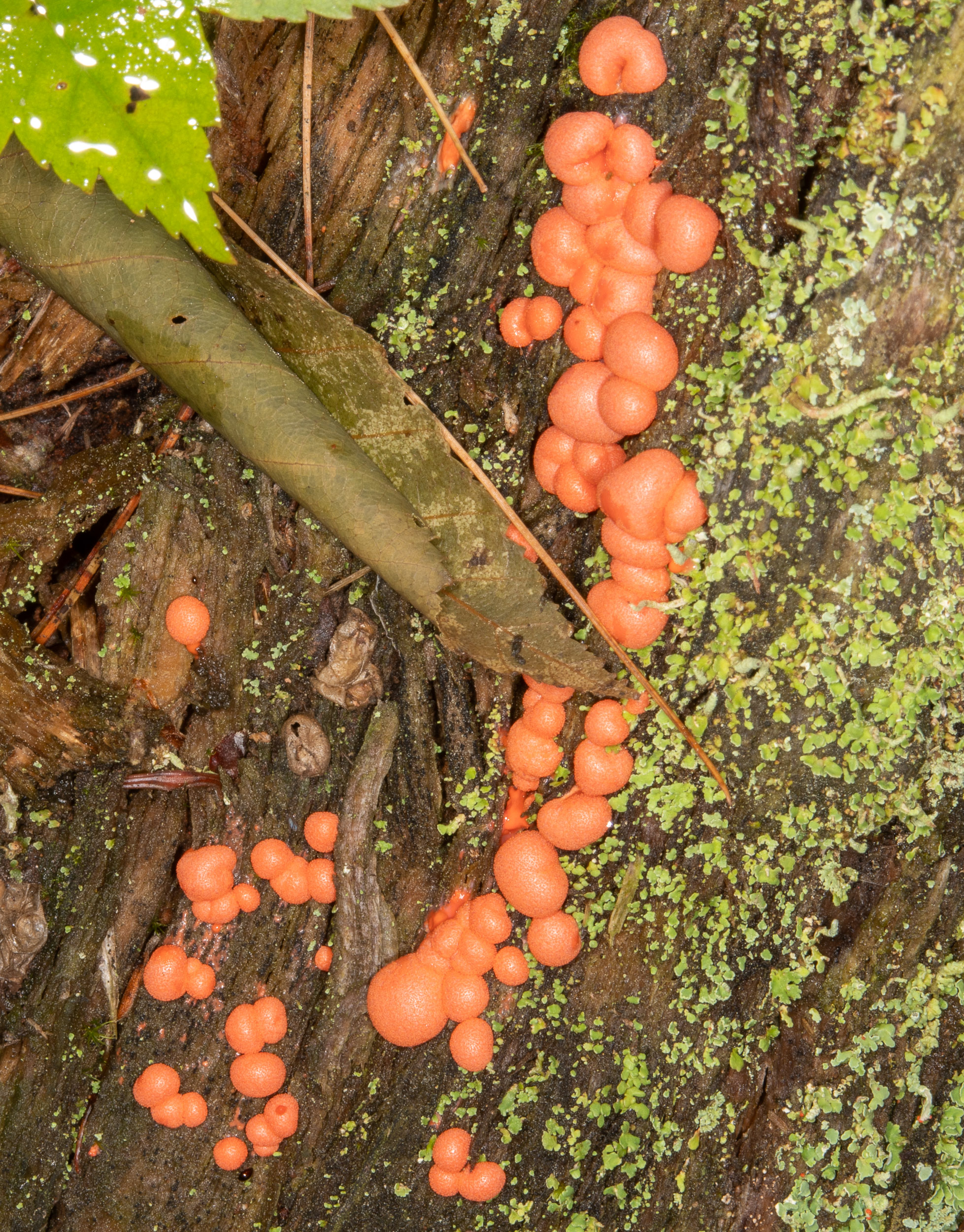
6/24/2024 · Otter Brrok Preserve, Harpswell Heritage Land Trust, Harpswell, Maine · ≈ 3½ × 5″ (9.7 × 12 cm) 

10/5/2018 · Oak Hill, Littleton, Massachusetts 

9/22/2023 · Moxie Falls, Moxie Gore, Maine · ≈ 6 × 10″ (16 × 24 cm) 

6/18/2015 · Beaver Brook Conservation Area, Hollis, New Hampshire · ≈ 3½ × 3″ (9.3 × 7.8 cm) 

6/18/2015 · Beaver Brook Conservation Area, Hollis, New Hampshire · ≈ 1¼ × 1¼″ (3.5 × 3.5 cm) 

10/5/2016 · Pine Meadow Conservation Area, Ayer, Massachusetts 
| Roughly 75 people in North America are poisoned each year by mushrooms, often from eating a poisonous species that resembles an edible species. Though deaths are rare, there is no cure short of a liver transplant for severe poisoning. Don’t eat any mushroom unless you are absolutely certain of its identity! Please don’t trust the identifications on this site. We aren’t mushroom experts and we haven’t focused on safely identifying edible species. |
Lycogala epidendrum description by Thomas H. Kent, not updated.

© FloraFinder.org. All rights reserved.