Monarda didyma L.
Bergamot, scarlet beebalm, scarlet monarda, Oswego tea, crimson beebalm
Scarlet beebalm is native to eastern North America. The common name bergamot stems from the plant’s odor, which resembles that of bergamot orange. (The bergamot flavoring used in Earl Grey Tea comes from the bergamot orange.)
Plants: 2–5′ (70–150 cm) high, with square stems.
Leaves: Opposite, oval or ovate-lanceolate, toothed, dark green with reddish leaf veins, 2–6 ⨉ 1–3″ (6–15 ⨉ 3–8 cm). Leaves produce a minty fragrance when crushed.
Flowers: These members of the mint family sport the kinds of flowers I expect to find in exotic tropical plants, not in New England. They are brilliant red, a disk of individual 1–1½″ (3–4 cm) tube-shaped flowers pointing outward from the center, a perfect hummingbird feeding station. (Cultivars also appear in rose, pink, violet, and white.) Flowering is from July to August.
Fruits: After flowers drop off, a spherical brown ball of capsules remain, releasing many seeds.
Habitats: Bottomlands, thickets, moist woods and along streambanks.
Online References:

7/6/2013 · Mike and Ellen’s, Shohola, Pennsylvania · ≈ 7 × 4½″ (16 × 11 cm) 
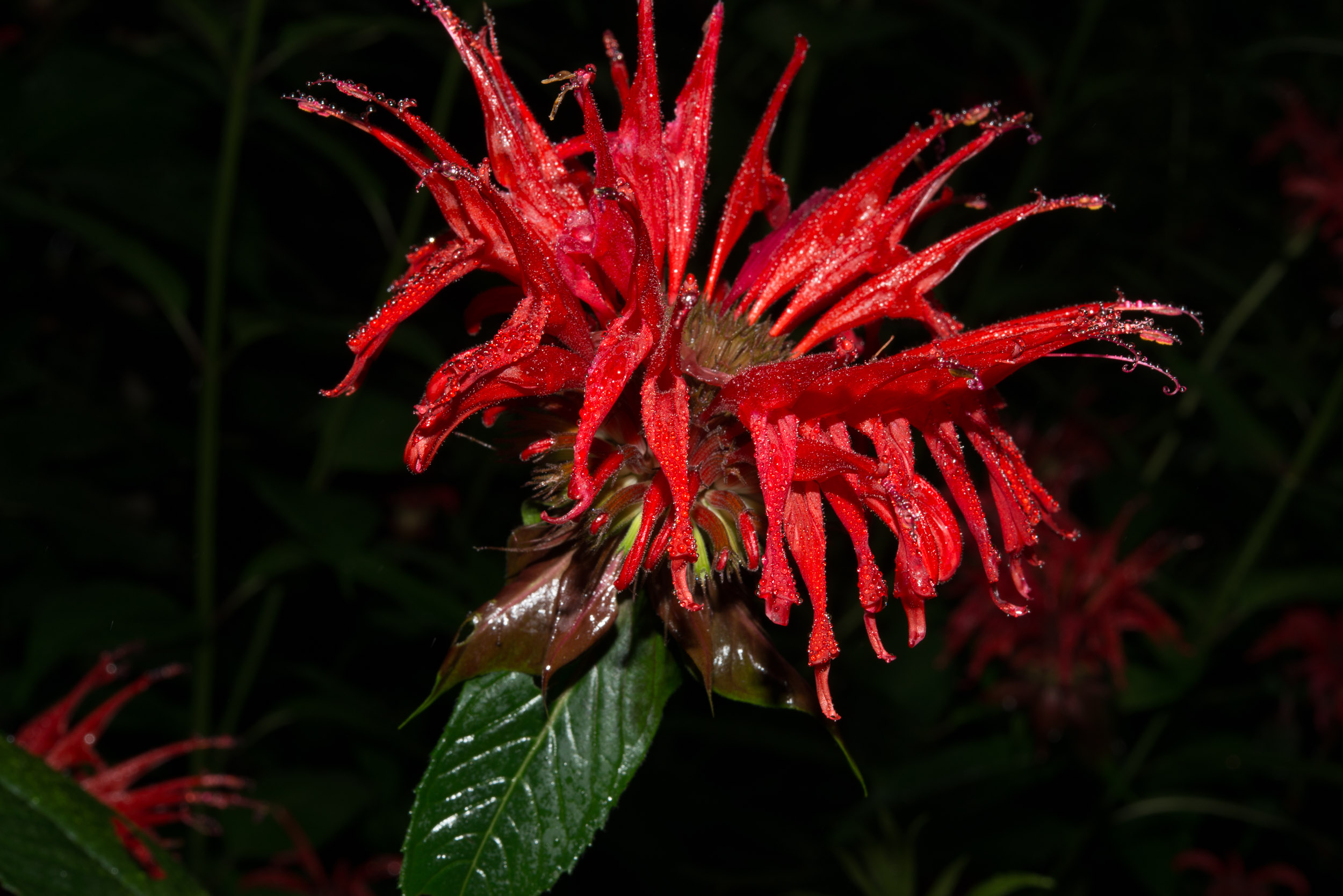
7/10/2013 · Beaver Brook Conservation Area, Hollis, New Hampshire · ≈ 8 × 6″ (20 × 14 cm) 

7/9/2019 · Beaver Brook Conservation Area, Hollis, New Hampshire 

7/24/2010 · Acton Arboretum, Acton, Massachusetts · ≈ 9 × 12″ (23 × 30 cm)  ID is uncertain

7/6/2013 · Mike and Ellen’s, Shohola, Pennsylvania · ≈ 10 × 7″ (25 × 16 cm) 

A cultivar. · 7/14/2012 · Gordon and Kathy’s, Prospect, Maine · ≈ 4½ × 4½″ (11 × 11 cm) ID is uncertain 

7/6/2013 · Mike and Ellen’s, Shohola, Pennsylvania · ≈ 9 × 6″ (22 × 15 cm) 

7/9/2019 · Beaver Brook Conservation Area, Hollis, New Hampshire 

7/10/2013 · Beaver Brook Conservation Area, Hollis, New Hampshire · ≈ 6 × 8″ (14 × 20 cm) 

7/24/2010 · Acton Arboretum, Acton, Massachusetts · ≈ 7 × 6″ (18 × 16 cm) ID is uncertain 

7/10/2013 · Beaver Brook Conservation Area, Hollis, New Hampshire · ≈ 8 × 5″ (19 × 13 cm) 

7/23/2015 · Beaver Brook Conservation Area, Hollis, New Hampshire · ≈ 6 × 6″ (15 × 14 cm) 

I was surprised to see these two flowerheads, here gone mostly to seed, on the same stem. · 8/5/2019 · Wildflower Trail, Beaver Brook Conservation Area, Hollis, New Hampshire · ≈ 4½ × 6″ (12 × 16 cm) 

7/6/2013 · Mike and Ellen’s, Shohola, Pennsylvania · ≈ 9 × 6″ (23 × 16 cm) 
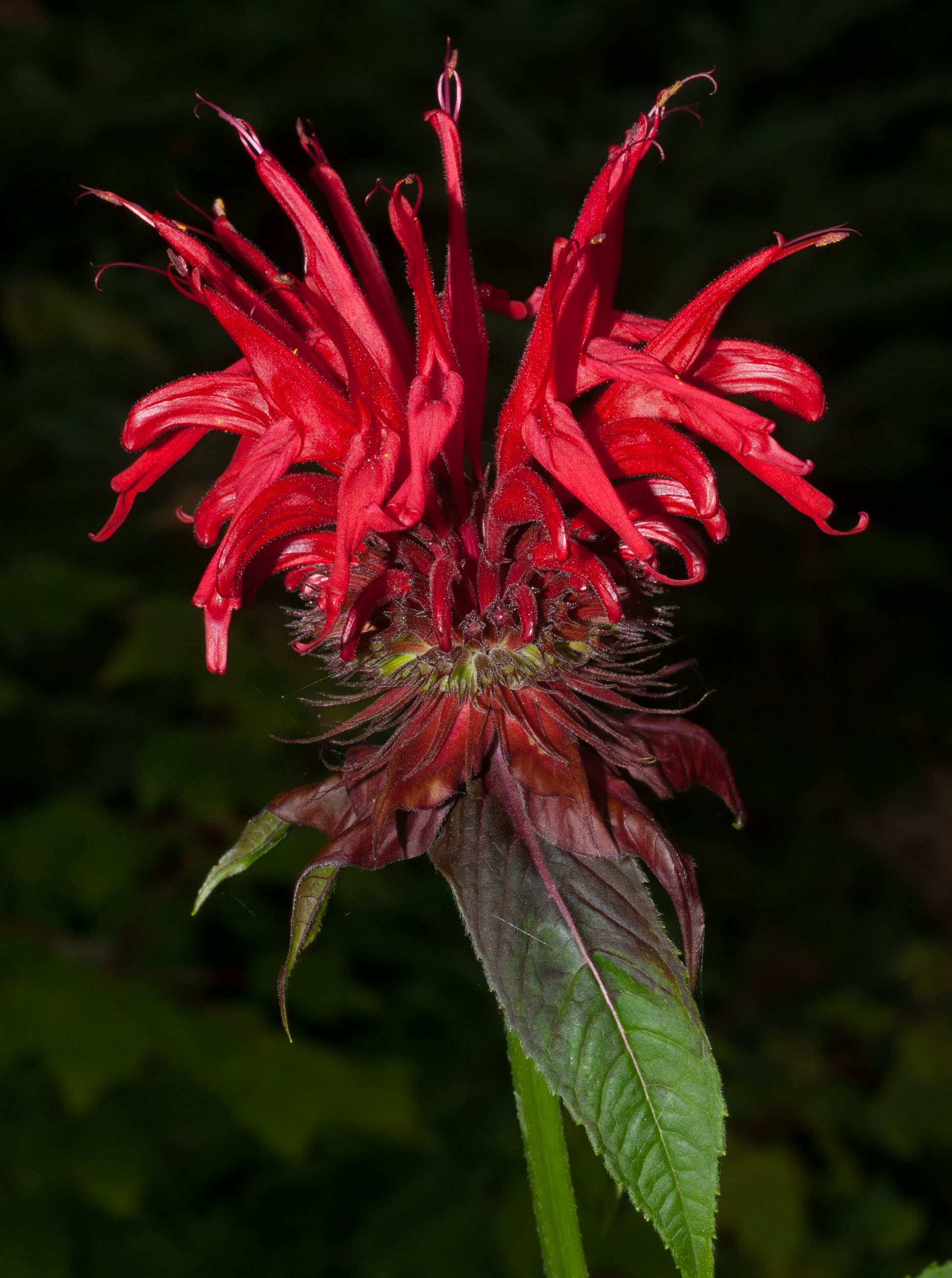
A cultivar. · 7/14/2012 · Gordon and Kathy’s, Prospect, Maine · ≈ 5 × 7″ (13 × 17 cm) ID is uncertain 

7/23/2015 · Beaver Brook Conservation Area, Hollis, New Hampshire · ≈ 8 × 6″ (20 × 14 cm) 
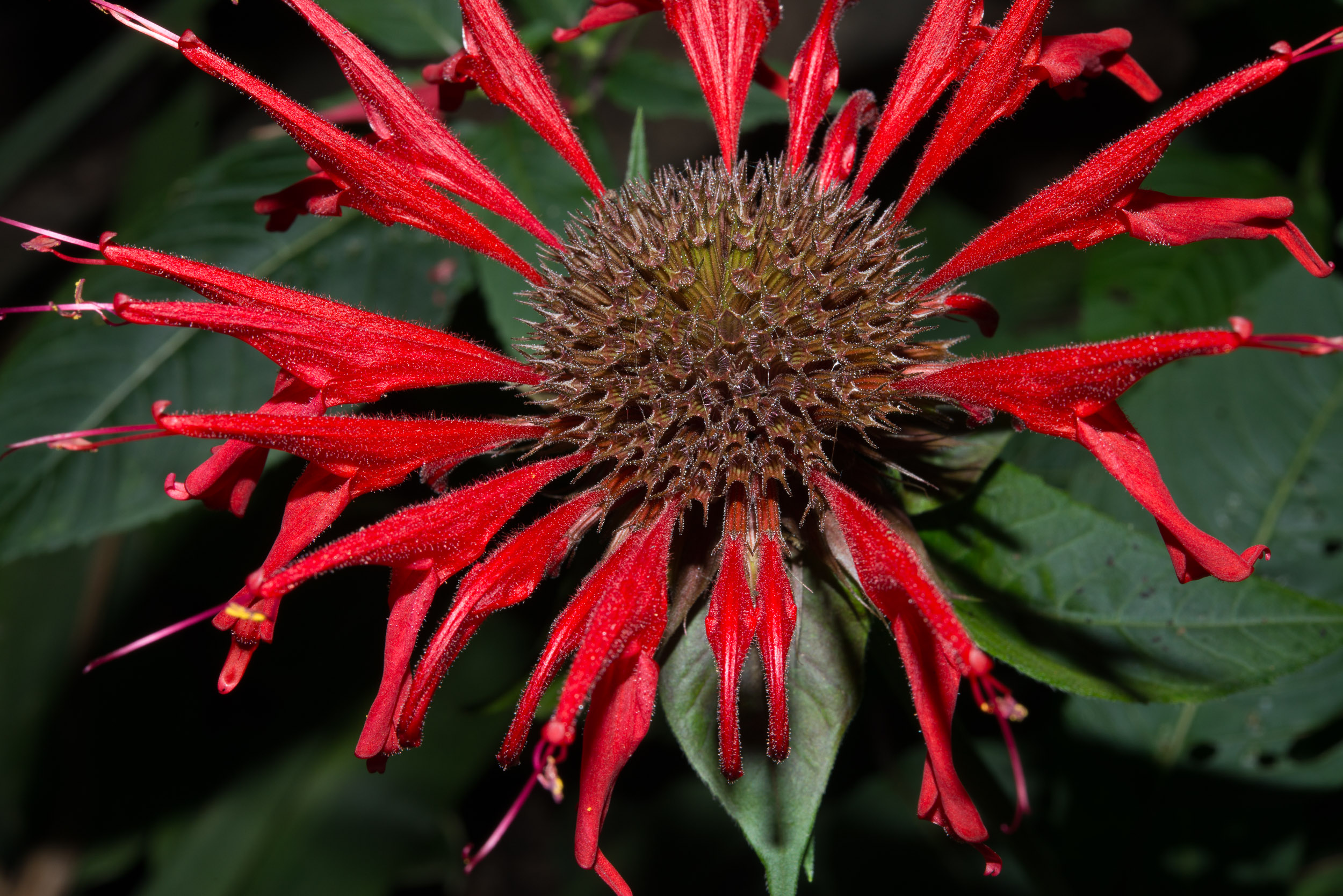
7/6/2013 · Mike and Ellen’s, Shohola, Pennsylvania · ≈ 7 × 4½″ (18 × 12 cm) 

7/10/2013 · Beaver Brook Conservation Area, Hollis, New Hampshire · ≈ 9 × 6″ (23 × 16 cm) 
| Kingdom | Plantae | Plants, but not fungi, lichens, or algae (from Stearn's Botanical Latin) |
| Subkingdom | Tracheobionta | Vascular plants—plants with a “circulatory system” for delivering water and nutrients |
| Division | Magnoliophyta | Flowering plants, also known as angiosperms |
| Class | Magnoliopsida | Dicotyledons—plants with two initial seed leaves |
| Subclass | Asteridae | A large class that encompasses asters |
| Order | Lamiales | Aromatic herbs and shrubs, including lavender, lilac, olive, jasmine, ash, teak, snapdragon, sesame, psyllium, garden sage, mint, basil, and rosemary |
| Family | Lamiaceae | Mint family |
| Genus | Monarda | Bee balms or bergamots |
| Species | didyma | From Latin didymum, “in pairs,” in reference to the plant stamens occuring in pairs |

Monarda didyma description by Thomas H. Kent, not updated.

© FloraFinder.org. All rights reserved.