Olneya tesota A. Gray
Desert ironwood, ironwood
Ironwood gets its name from its hard, extremely dense heartwood. Indigenous peoples fashioned it into tools, weapons, and building materials. It remains popular for knife handles. The heartwood contains chemicals that resist rot. They live from 50 to 150 years; some trees persist for as long as 800 years. Their range corresponds roughly to that of the Sonoran desert, at elevations below 3609′ (1.1 km).
Plants: A slow-growing shrub or tree up to 33′ (10 m) high, with a trunk up to 2′ (60 cm) around. Imposing dark red thorns are about 1″ (2.5 cm) long. Bark is dark gray, light gray, or red brown
Leaves: Gray- or bluish-green, even pinnate, alternate or in clusters. There are 8-21 leaflets in each group. Leaflets are roughly oval in shape (technically obovate or elliptic). Their grayish tinge is due to the presence of fine hairs.
Flowers: Flowers are ⅜–½″ (1–1.4 cm) around, shaped like those of the many other members of the pea family. Each flower has a keel or lower lip that is yellow-white to pink or purple, and white and purple-pink wings (upper petals). Flowers appear from April to May.
Fruits: Brown, light red, or mostly green pods are 1½–3″ (3.8–7.6 cm) long, and oblong or elliptic, with 1-3 seeds.
Edibility: Seeds and seedpods were roasted by native peoples, and are said to taste like peanuts. Seeds were also parched in the sun, ground lightly, shaped into loaves, and baked.
Habitats: Common in desert washes.
Online References:

5/2/2018 · Bajada Trail, Joshua Tree National Park, California · ≈ 8 × 12″ (20 × 31 cm) 

5/1/2018 · Parker, Arizona · ≈ 1 × 1′ (39 × 34 cm) 
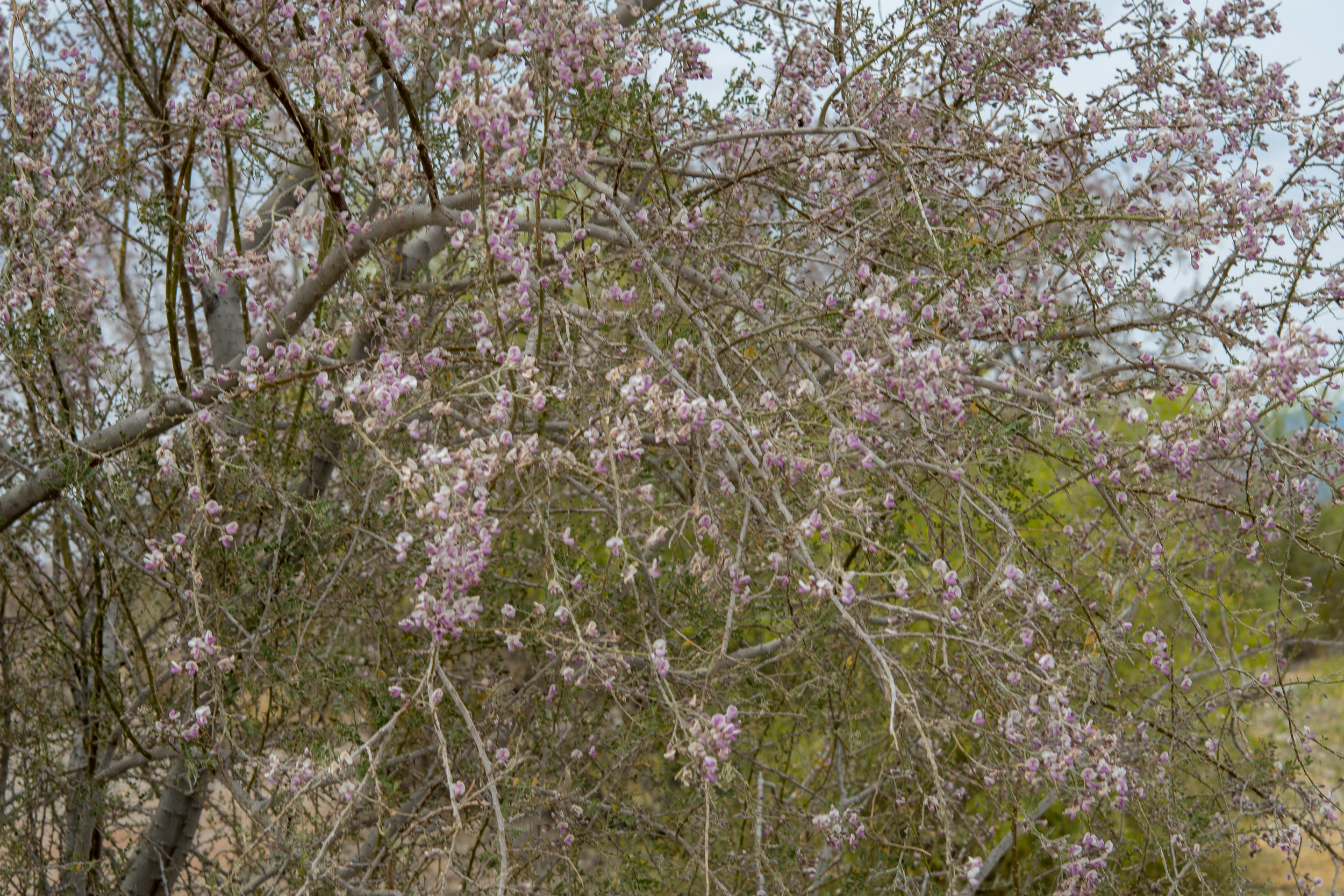
5/1/2018 · Parker, Arizona 

2/28/2010 · Anza-Borrego Desert State Park, California 
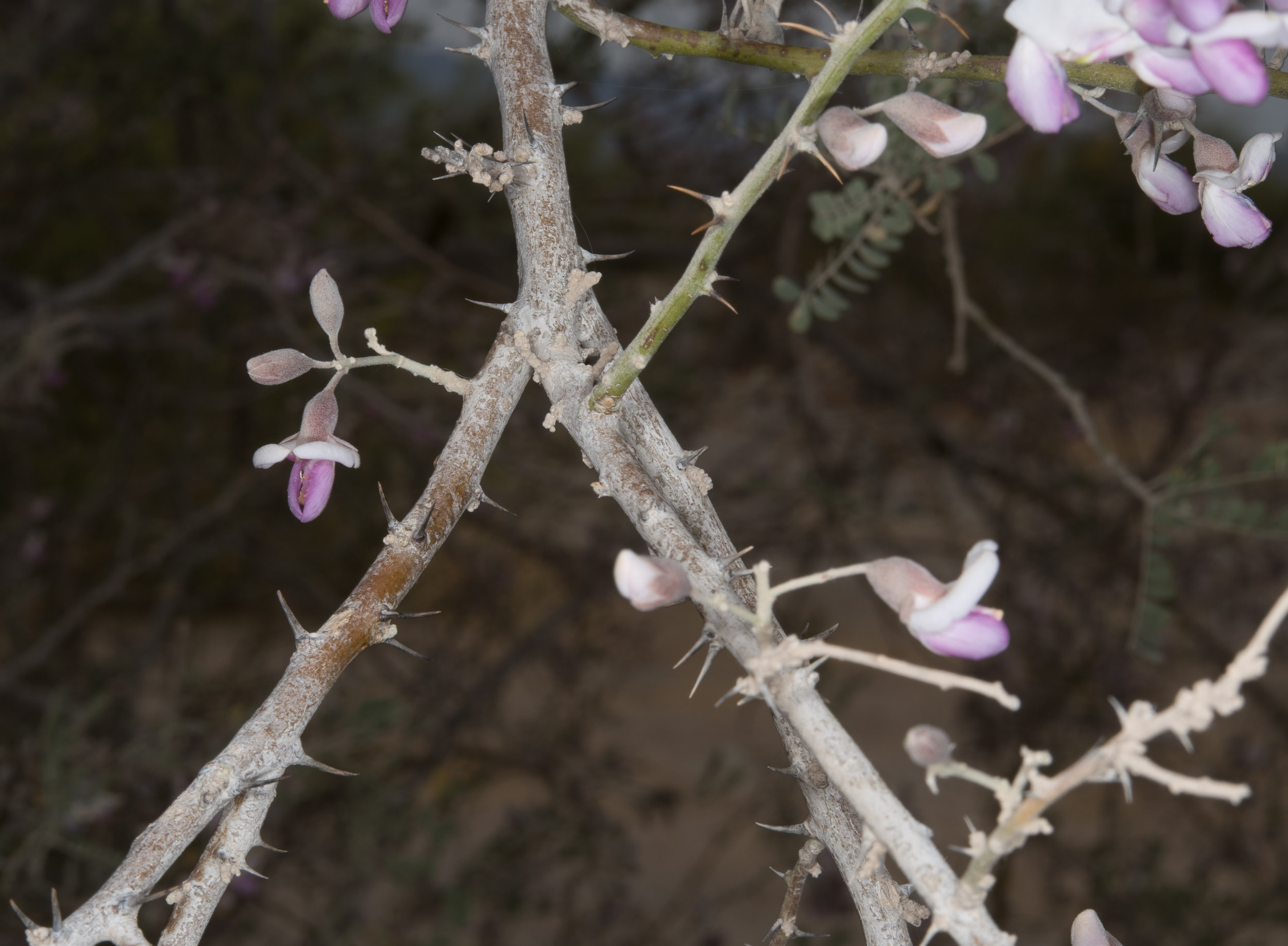
5/1/2018 · Parker, Arizona · ≈ 7 × 4½″ (16 × 12 cm) 

5/1/2018 · Parker, Arizona · ≈ 3½ × 4″ (9.8 × 10 cm) 

5/1/2018 · Parker, Arizona 

5/1/2018 · Parker, Arizona · ≈ 4½ × 7″ (12 × 18 cm) 

5/1/2018 · Parker, Arizona · ≈ 3½ × 4″ (8.6 × 10 cm) 

5/1/2018 · Parker, Arizona · ≈ 7 × 4½″ (18 × 12 cm) 

5/1/2018 · Parker, Arizona · ≈ 5 × 8″ (13 × 20 cm) 
| Kingdom | Plantae | Plants, but not fungi, lichens, or algae (from Stearn's Botanical Latin) |
| Subkingdom | Tracheobionta | Vascular plants—plants with a “circulatory system” for delivering water and nutrients |
| Division | Magnoliophyta | Flowering plants, also known as angiosperms |
| Class | Magnoliopsida | Dicotyledons—plants with two initial seed leaves |
| Subclass | Rosidae | Roses, legumes, proteas, dogwoods, hydrangeas, mistletoes, euphorbias, grapes, many more |
| Order | Fabales | Legumes (pea and bean families) |
| Family | Fabaceae | Legume family (peas and beans) |
| Genus | Olneya | After Stephen Thayer Olney (1812-1878), a Rhode Island botanist and woolen manufacturer |
| Species | tesota | Corruption of the Spanish tieso meaning “stiff or firm”. Tesota is a southwest Native American name for this tree |

Olneya tesota description by Thomas H. Kent, not updated.

© FloraFinder.org. All rights reserved.