Pilocereus pringlei (S. Watson) F. A. C. Weber 1898
Pachycereus calvus Britton & Rose 1909
Pachycereus pringlei (S. Watson) Britton & Rose 1909
Cardón, cardón gigante, cardón pelón, sagueso, sahuaso, Mexican giant cardon, elephant cactus
These imposing cacti are native to the Sonoran Desert and on the Baja peninsula in Mexico. They can live for hundreds of years.
Plants: Cardón occurs as very tall columns, sometimes branched, up to 36′ (11 m) high, with trunks 2′ (60 cm) in diameter. (The tallest cactus ever recorded is one of these, at 63′ (19 m). They closely resemble Saguaros, a related species, and play a similar ecological role. Stems are strongly furrowed with 10-16 ribs, dark green or bluish green, becoming yellow green.
Flowers: Multiple white flowers appear near the tips, each up to 3″ (8 cm) long. They are shaped like funnels or bells.
Fruits: Spherical fruits are covered with yellowish brown fine hairs and bristles, and are 2½″ (7 cm) around.
Habitats: They occur almost throughout the desert areas of Baja California and near the coast in central Sonora. In Sonora they is abundant in a coastal belt about 50 km wide.
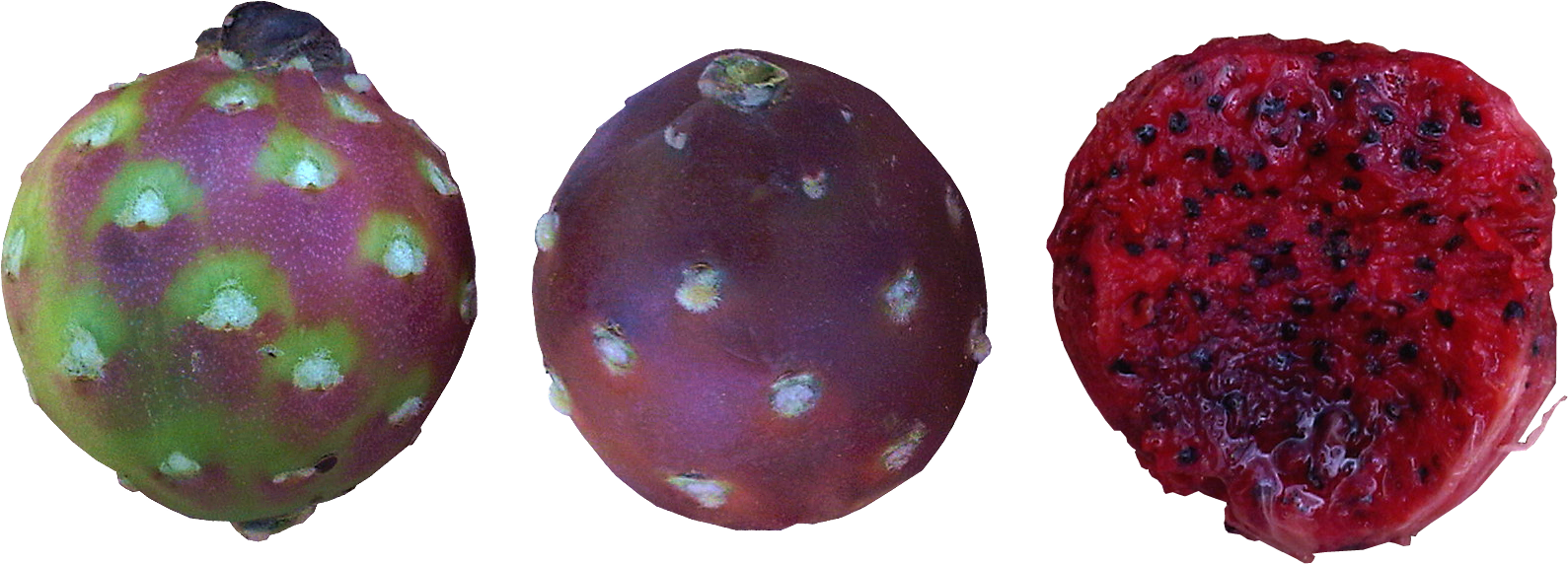
Green fruit (left), mature fruit, and the fruit interior. By Wilfredor. 
References:
Online References:

1/5/2026 · East of Kino Bay, Hermosillo, Sonora, Mexico · By John W. Kent 
| Kingdom | Plantae | Plants, but not fungi, lichens, or algae (from Stearn's Botanical Latin) |
| Subkingdom | Tracheobionta | Vascular plants—plants with a “circulatory system” for delivering water and nutrients |
| Division | Magnoliophyta | Flowering plants, also known as angiosperms |
| Class | Magnoliopsida | Dicotyledons—plants with two initial seed leaves |
| Subclass | Caryophyllidae | Cacti, many other succulents, carnivorous plants, and leadworts |
| Order | Caryophyllales | Includes cacti, carnations, amaranths, ice plants, and many carnivorous plants |
| Family | Cactaceae | Succulent (water-storing) plants, often spiny |
| Genus | Pachycereus | From the ancient Greek παχύς (pachys), “thick,” and the Latin cereus, “torch” |
| Species | pringlei | After Cyrus Guernsey Pringle (1838-1911), a Quaker imprisoned for refusal to enter the Union Army, later an ardent collector and classifier of southwestern flora, eventually donating 500,000 specimens to the University of Vermont, to what became the Pringle Herbarium |
Pachycereus pringlei description by Thomas H. Kent, not updated.

© FloraFinder.org. All rights reserved.
