Picea glauca (Moench) Voss
White spruce, Canadian spruce, skunk spruce, cat spruce, black hills spruce, western white spruce, Alberta white spruce, porsild spruce
White spruce is native to northern boreal and temperate forests of North America, originating mostly in Canada and Alaska but reaching gradually south.
Plants: Trees are typically 49–98′ (15–30 m) tall, sometimes reaching 131′ (40 m). Trunks are as much as 3′ (1 m) in diameter. The tree crown is conical in young trees, become more cylindrical as they age. Bark is light gray brown, thin and scaly, peeling in small circular plates.
Leaves: Leaves are needles ⅜–¾″ (1.2–2 cm) long, with diamond-shaped cross-sections. The rigid blue-green needles have a waxy whitish coating, hence the name “white spruce.”
Fruits: Hanging cones are cylinder-shaped, 1–2½ ⨉ ½″ (3–7 ⨉ 1.5 cm). They are comprised of thin scales ½″ (1.5 cm) long, with smooth edges. They begin green or violet, gradually turning pale brown. Seeds are black, 1/16–⅛″ (2–3 mm) in size, with a small pale brown wing about three times the size of the seed.
Habitats: Floodplains, treeline sites and upland slopes, and other landscapes, at elevations from sea level up to 1.3 mi (2.1 km).
Online References:
Picea canadensis (Mill.) Britton, Sterns & Poggenb.

9/9/2010 · Pine Meadow Conservation Trust Land, Groton Harvard Road, Ayer, Massachusetts · ≈ 9 × 14″ (23 × 35 cm)  ID is uncertain
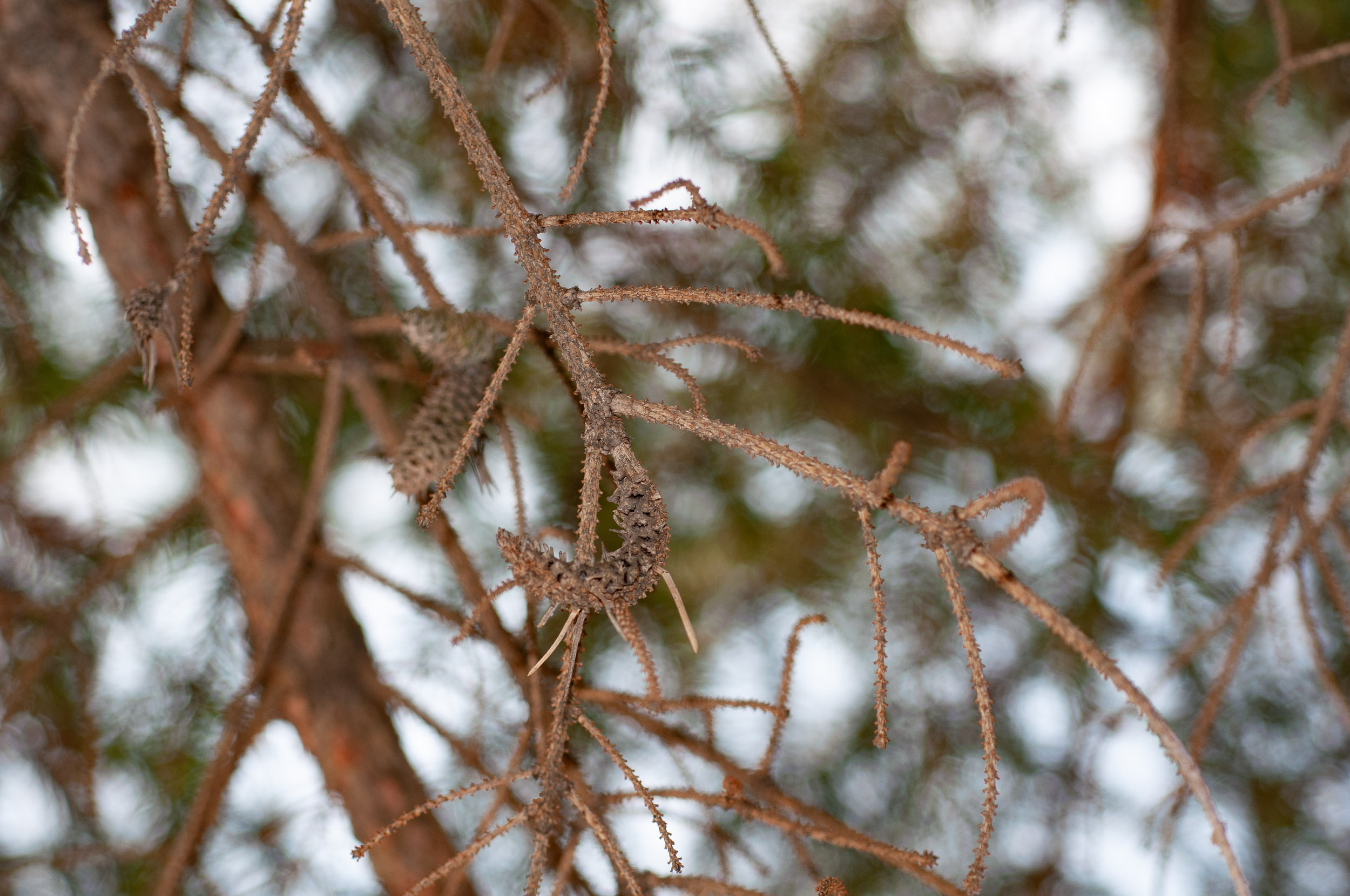
1/1/2011 · MacDonald-Zachos’ · ≈ 14 × 9″ (35 × 23 cm) 

1/1/2011 · MacDonald-Zachos’ · ≈ 14 × 9″ (35 × 23 cm) 

7/17/2010 · Mackworth Island, Falmouth, Maine · ≈ 9 × 6″ (23 × 15 cm) ID is uncertain 

9/9/2010 · Pine Meadow Conservation Trust Land, Groton Harvard Road, Ayer, Massachusetts ID is uncertain 
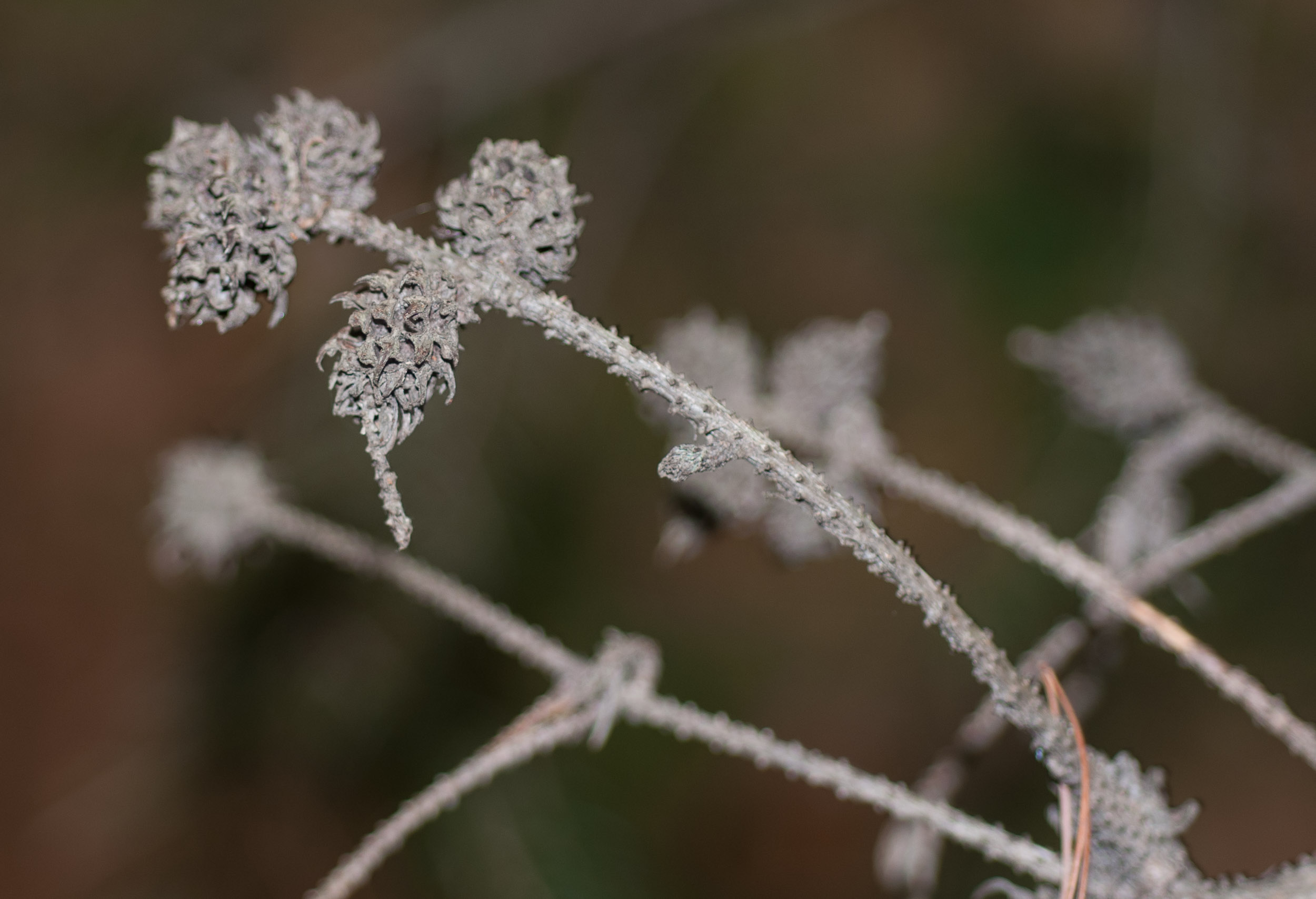
The conelike objects may be from spruce budworms. · 9/9/2010 · Pine Meadow Conservation Trust Land, Groton Harvard Road, Ayer, Massachusetts · ≈ 6 × 3½″ (14 × 9.6 cm) ID is uncertain 

9/9/2010 · Pine Meadow Conservation Trust Land, Groton Harvard Road, Ayer, Massachusetts · ≈ 8 × 5″ (19 × 13 cm) ID is uncertain 
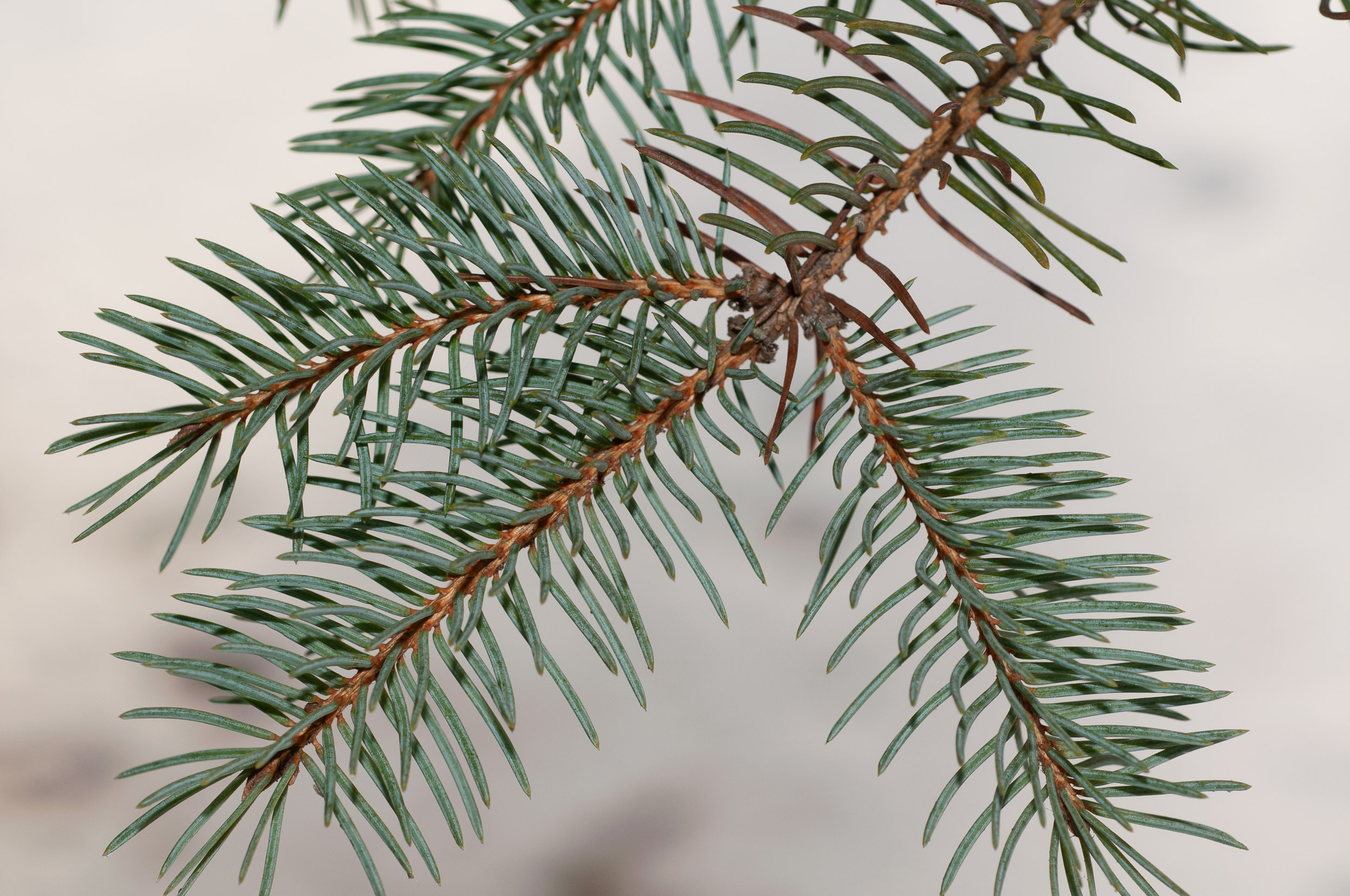
1/1/2011 · MacDonald-Zachos’ · ≈ 7 × 4½″ (17 × 11 cm) 

9/20/2009 · Wild Gardens of Acadia, Acadia National Park, Bar Harbor, Maine · ≈ 12 × 14″ (29 × 35 cm) 

1/1/2011 · MacDonald-Zachos’ · ≈ 12 × 17″ (29 × 44 cm) 
| Kingdom | Plantae | Plants, but not fungi, lichens, or algae (from Stearn's Botanical Latin) |
| Subkingdom | Tracheobionta | Vascular plants—plants with a “circulatory system” for delivering water and nutrients |
| Division | Coniferophyta | Conifers—cone-bearing trees (and a few shrubs) |
| Class | Pinopsida | Gymnosperms such as cedars, Douglas-firs, cypresses, firs, junipers, kauri, larches, pines, hemlocks, redwoods, spruces, and yews |
| Order | Pinales | Cone-bearing plants: cedar, cypress, fir, juniper, larch, pine, redwood, spruce, yew, and others |
| Family | Pinaceae | Pine family: cedars, firs, hemlocks, larches, pines and spruces |
| Genus | Picea | Spruce; means “pitch” |
| Species | glauca | Glaucous, from the Greek meaning “bluish-gray,” referring primarily to the leaves, and specifically to “bloom,” the fine, whitish powder that coats the leaves of certain plants |

Picea glauca description by Thomas H. Kent, not updated.

© FloraFinder.org. All rights reserved.