Rhus integrifolia (Nutt.) W.H. Brewer & S. Watson
Lemonadeberry, lemonade berry, lemonade sumac
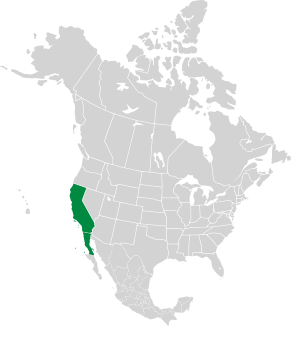
Lemonadeberry is native to southern California and the northern part of the Baja peninsula.
Plants: A shrub or small tree 3–26′ (1–8 m) tall, with a sprawling habit. Inland, they often become trees, but closer to the coast, they often remain low, spreading sideways up to 30′ (9.1 m), forming impenetrable thickets.
Leaves: Simple, evergeen, leathery, finely toothed, 1¾–2½ ⨉ ¾–1½″ (5–7 ⨉ 2–4 cm). Leaves have a waxy shine above, and are more pale below. They remind me a little of holly leaves.
Flowers: Dense clusters of small, sticky, white to pink flowers. They appear from February to May.
Fruits: Berries are dark red and sticky, up to ⅜″ (1 cm) in diameter, and oddly misshapen.
Habitats: Well-drained chaparral, below elevations of 2953′ (900 m).
Edibility: Fruits are edible raw or cooked, exuding a sour, lemony flavor. Berry clusters are soaked for 10-30 minutes in hot or cold water to make a drink reminiscent of lemonade. Boiling ruins the flavor, releasing excessive tannins.
Online References:

2/26/2010 · Torrey Pines State Natural Reserve, La Jolla, California · ≈ 3½ × 2′ (103 × 69 cm) 

2/26/2010 · Torrey Pines State Natural Reserve, La Jolla, California · ≈ 10 × 8″ (24 × 19 cm) 

2/24/2010 · Batiquitos Lagoon, Carlsbad, California · ≈ 1½ × 1′ (54 × 36 cm) 

2/26/2010 · Torrey Pines State Natural Reserve, La Jolla, California · ≈ 9 × 6″ (23 × 15 cm) 

2/24/2010 · Batiquitos Lagoon, Carlsbad, California · ≈ 8 × 12″ (21 × 31 cm) 

2/24/2010 · Batiquitos Lagoon, Carlsbad, California 

2/24/2010 · Batiquitos Lagoon, Carlsbad, California · ≈ 8 × 5″ (19 × 13 cm) 

2/24/2010 · Batiquitos Lagoon, Carlsbad, California · ≈ 7 × 9″ (18 × 23 cm) 
| Kingdom | Plantae | Plants, but not fungi, lichens, or algae (from Stearn's Botanical Latin) |
| Subkingdom | Tracheobionta | Vascular plants—plants with a “circulatory system” for delivering water and nutrients |
| Division | Magnoliophyta | Flowering plants, also known as angiosperms |
| Class | Magnoliopsida | Dicotyledons—plants with two initial seed leaves |
| Subclass | Rosidae | Roses, legumes, proteas, dogwoods, hydrangeas, mistletoes, euphorbias, grapes, many more |
| Order | Sapindales | Includes citrus; maples, horse-chestnuts, lychees and rambutans; mangos and cashews; frankincense and myrrh; mahogany and neem |
| Family | Anacardiaceae | Cashew or sumac family |
| Genus | Rhus | From Greek rhous, ancient name for sumac |
| Species | integrifolia | Indicates that the leaf margins are entire, uncut, not toothed |
Rhus integrifolia description by Thomas H. Kent, not updated.

© FloraFinder.org. All rights reserved.