Symphyotrichum lateriflorum (L.) Á. Löve & D. Löve
Calico aster
Calico aster is native to central and eastern North America.
Plants: 2–3′ (60–91 cm) tall and almost as big around, with hairy green stems, reddening with age.
Leaves: Long lateral branches have rough-textured leaves, sometimes with serrated margins. The leaves are lanceolate, oblanceolate, or elliptic. Lower leaves are largest, up to 6 ⨉ 1½″ (15 ⨉ 3.8 cm), decreasing further up the stem.
Flowers: Produces panicles of white composite flowers. The panicles are up to 10″ (25 cm) long and 6″ (15 cm) around. Each flower is about ½″ (1.3 cm) in diameter, and has 9-16 white or purple-tinged ray florets and a central disc containing 8-16 tiny tubular disc flowers. Creamy white or pale yellow at first, the disc flowers darken to purple-brown.
Fruits: Fruit is a dry seed with a tuft of white or pinkish hairs for wind dispersion.
Habitats: Forest margins, stream borders, low wet woods, meadows, wet depressions of prairies and roadsides.
From Minnesota Wildflowers:
There are a number of asters with small, white flowers in Minnesota and it can be a real challenge to keep them straight. Calico Aster is distinguished by a combination of characteristics: smaller than average flower size (~½ inch), fewer rays than most other white asters (9 to 16), creamy white or very pale yellow center disk (not bright yellow), generally lance-elliptic leaves with hairs only along the midvein on the underside, and stems covered in soft, white hairs. By comparison with other white asters having a generally similar leaf shape, Northern Bog Aster (Symphyotrichum boreale), Panicled Aster (S. lanceolatum), Ontario Aster (S. ontarionis), and Awl Aster (S. pilosum) have flowers with more than 15 rays and brighter yellow disks. In addition, Northern Bog Aster and Panicled Aster have leaves that are hairless except around the edges and only lines of hairs on the stems. Ontario Aster and Awl Aster may have similar branching as Calico Aster as well as stems covered in hairs, but where Calico Aster has hairs only along the leaf midvein, the other two are also hairy on one or both leaf surfaces.
Online References:

8/22/2023 · Schiller Coastal Studies Center, Orr’s Island, Maine · ≈ 4½ × 7″ (12 × 18 cm) 

9/9/2014 · Bemis Road, Pepperell, Massachusetts · ≈ 11 × 7″ (28 × 18 cm) 

9/10/2012 · Squannacook River Wildlife Area, Townsend, Massachusetts · ≈ 7 × 4½″ (17 × 11 cm) 
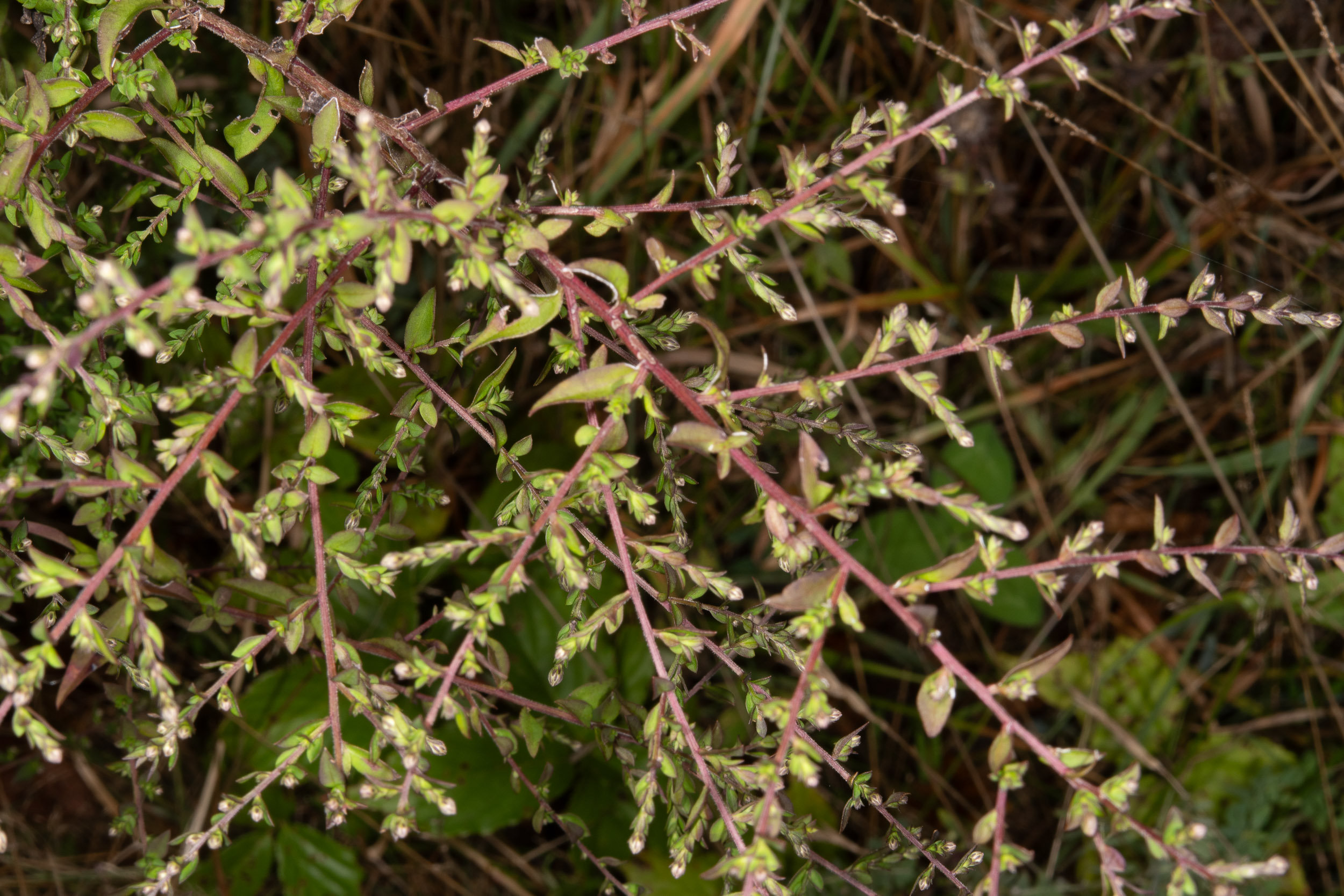
9/3/2020 · Mitchell Field, Harpswell, Maine · ≈ 8 × 5″ (20 × 13 cm) 

9/14/2023 · Nature Conservancy Access Trail, Sprague Pond, Phippsburg, Maine · ≈ 8 × 5″ (20 × 13 cm) 

9/18/2010 · Nashua River Rail Trail, Groton Center, Groton, Massachusetts · ≈ 12 × 8″ (31 × 20 cm) 

8/22/2023 · Schiller Coastal Studies Center, Orr’s Island, Maine · ≈ 4½ × 6″ (12 × 14 cm) 

9/10/2012 · Squannacook River Wildlife Area, Townsend, Massachusetts · ≈ 6 × 4½″ (14 × 12 cm) 

9/18/2010 · Nashua River Rail Trail, Groton Center, Groton, Massachusetts · ≈ 6 × 4″ (15 × 10 cm) 
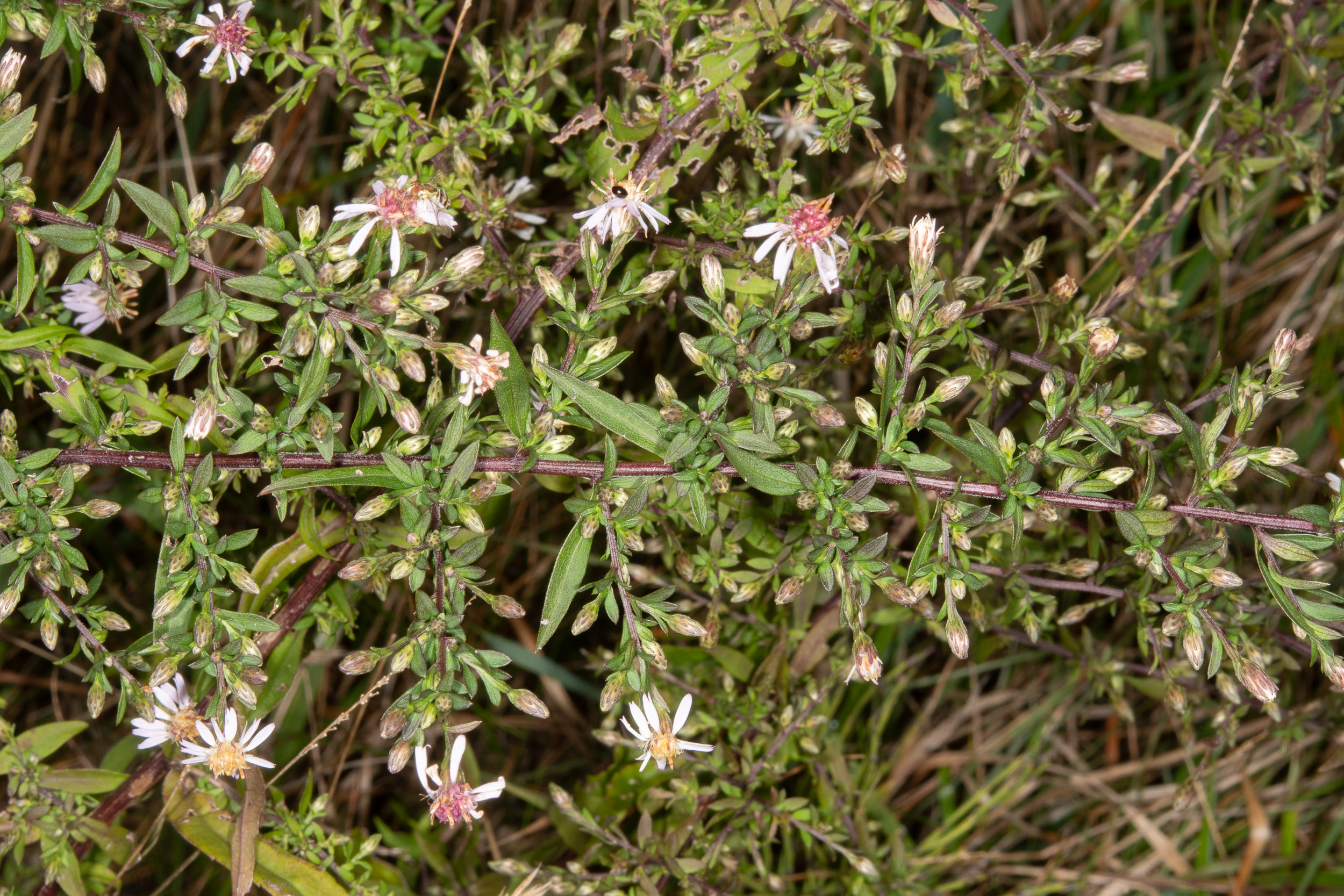
9/3/2020 · Mitchell Field, Harpswell, Maine · ≈ 8 × 5″ (20 × 13 cm) 
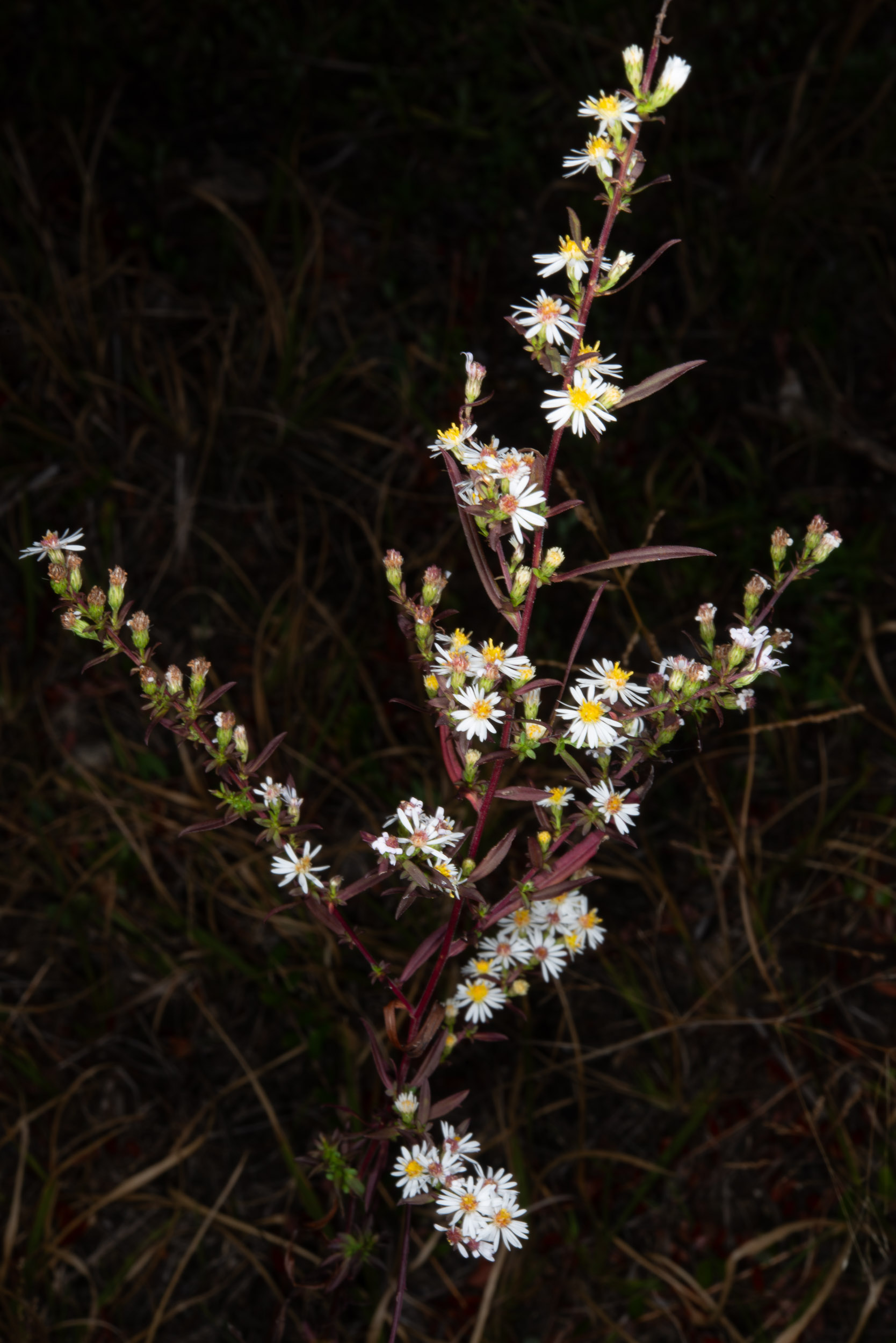
9/9/2014 · Bemis Road, Pepperell, Massachusetts · ≈ 6 × 9″ (16 × 23 cm) 
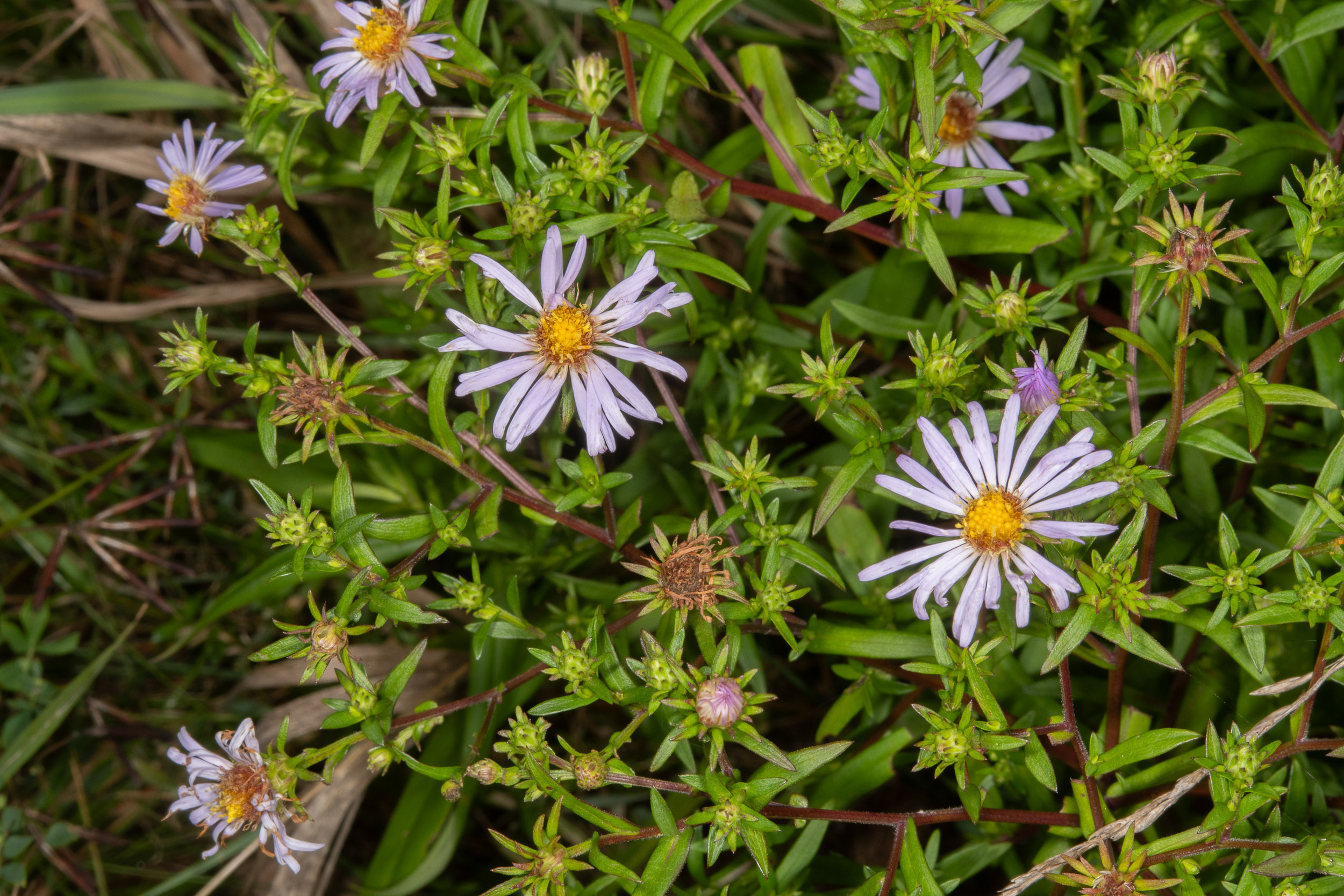
9/3/2020 · Mitchell Field, Harpswell, Maine · ≈ 8 × 5″ (20 × 13 cm) 
| Kingdom | Plantae | Plants, but not fungi, lichens, or algae (from Stearn's Botanical Latin) |
| Subkingdom | Tracheobionta | Vascular plants—plants with a “circulatory system” for delivering water and nutrients |
| Division | Magnoliophyta | Flowering plants, also known as angiosperms |
| Class | Magnoliopsida | Dicotyledons—plants with two initial seed leaves |
| Subclass | Asteridae | A large class that encompasses asters |
| Order | Asterales | Flowering plants with a central disk flower and surrounding petals, like daisies |
| Family | Asteraceae | The aster family, which also includes daisies and sunflowers; from the Greek ἀστήρ, “star,” for the star-shaped flowers |
| Genus | Symphyotrichum | From Greek symphysis, “borne together or growing together, coalescing,” and trichinos, “hair, a single hair” |
| Species | lateriflorum | With flowers on the side |

Symphyotrichum lateriflorum description by Thomas H. Kent, not updated.

© FloraFinder.org. All rights reserved.