Tamarix ramosissima Ledeb.
Tamarisk, tamarix, saltcedar
Saltcedar is native to eastern Europe and temperate regions of Asia. It is considered a serious invasive species over much of its North American range. Bushes live for up to 100 years.
Plants: This deciduous shrub is 15–20′ (4.6–6.1 m) high. On young shrubs, bark is smooth and reddish. Older plants have brown and furrowed bark. Plant roots extend up to 30′ (9.1 m) down to reach water tables.
Leaves: Scale-like, gray-green, leaves are ½ ⨉ 1/32″ (1.5 cm ⨉ 1 mm), overlapping along branches. The foliage strongly resembles that of cedar, hence the name “saltcedar,” but the species are not related.
Flowers: Flowers appear on multiply branched linear spikes. Spikes are ¾–1¾″ (2–5 cm) long. Individual flowers are pink, about 1/32″ (1.5 mm) across, with 5 petals.
Fruits: Capsules are pinkish red to greenish yellow, 1/16–⅛″ (3–4 mm) long, and contain numerous seeds less than 1/32″ (0.5 mm) in size.
Habitats: Riverbanks and brackish soils that are well drained, and full sunlight, at elevations below 1.3 mi (2.1 km).
Online References:
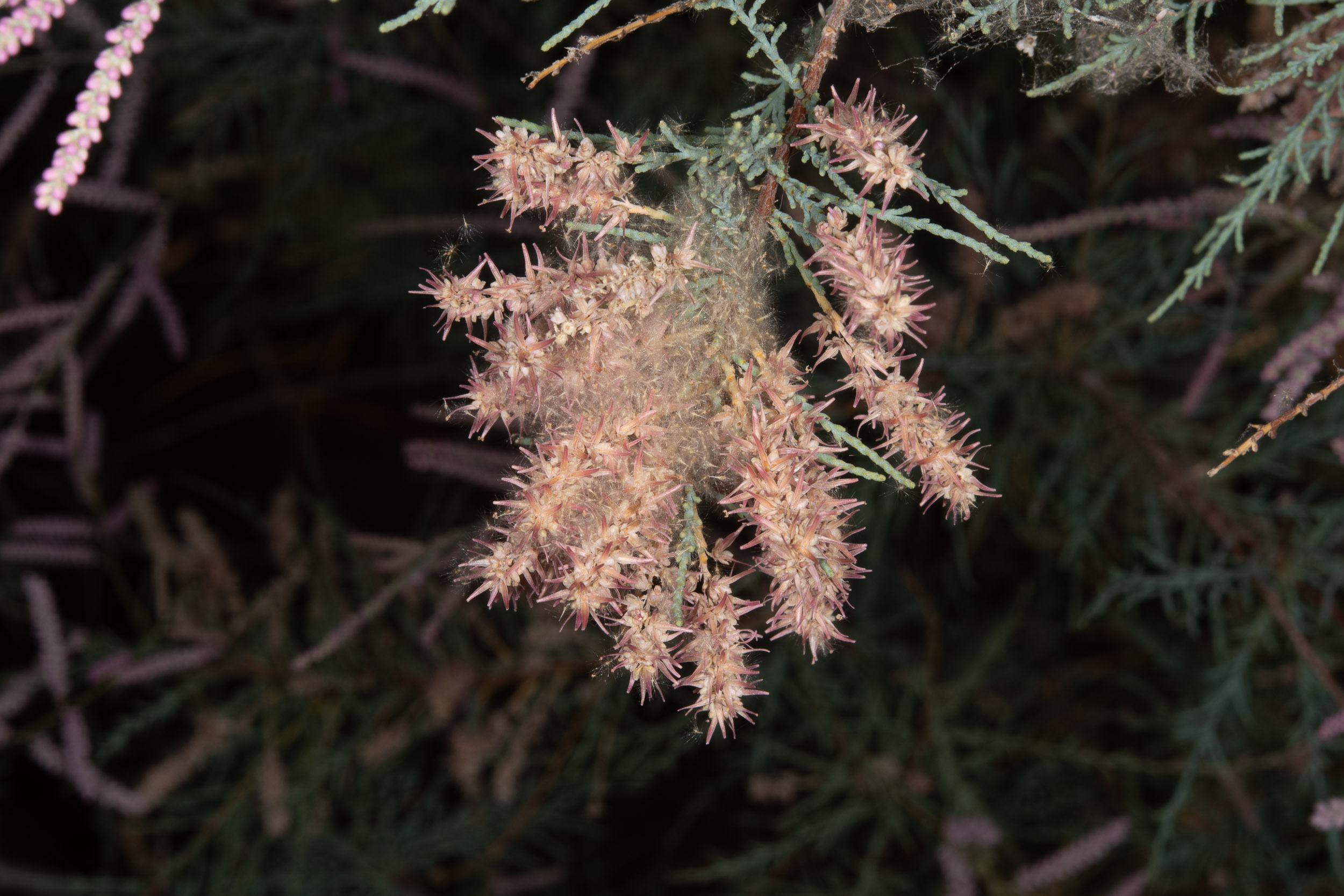
4/29/2018 · Jack Smith Park, Colorado River, Needles, California · ≈ 6 × 4″ (15 × 10 cm) 

8/27/2014 · Rio Grande Nature Center, Albuquerque, New Mexico · ≈ 12 × 8″ (31 × 21 cm) 

4/29/2018 · Jack Smith Park, Colorado River, Needles, California · ≈ 7 × 4½″ (18 × 12 cm) 
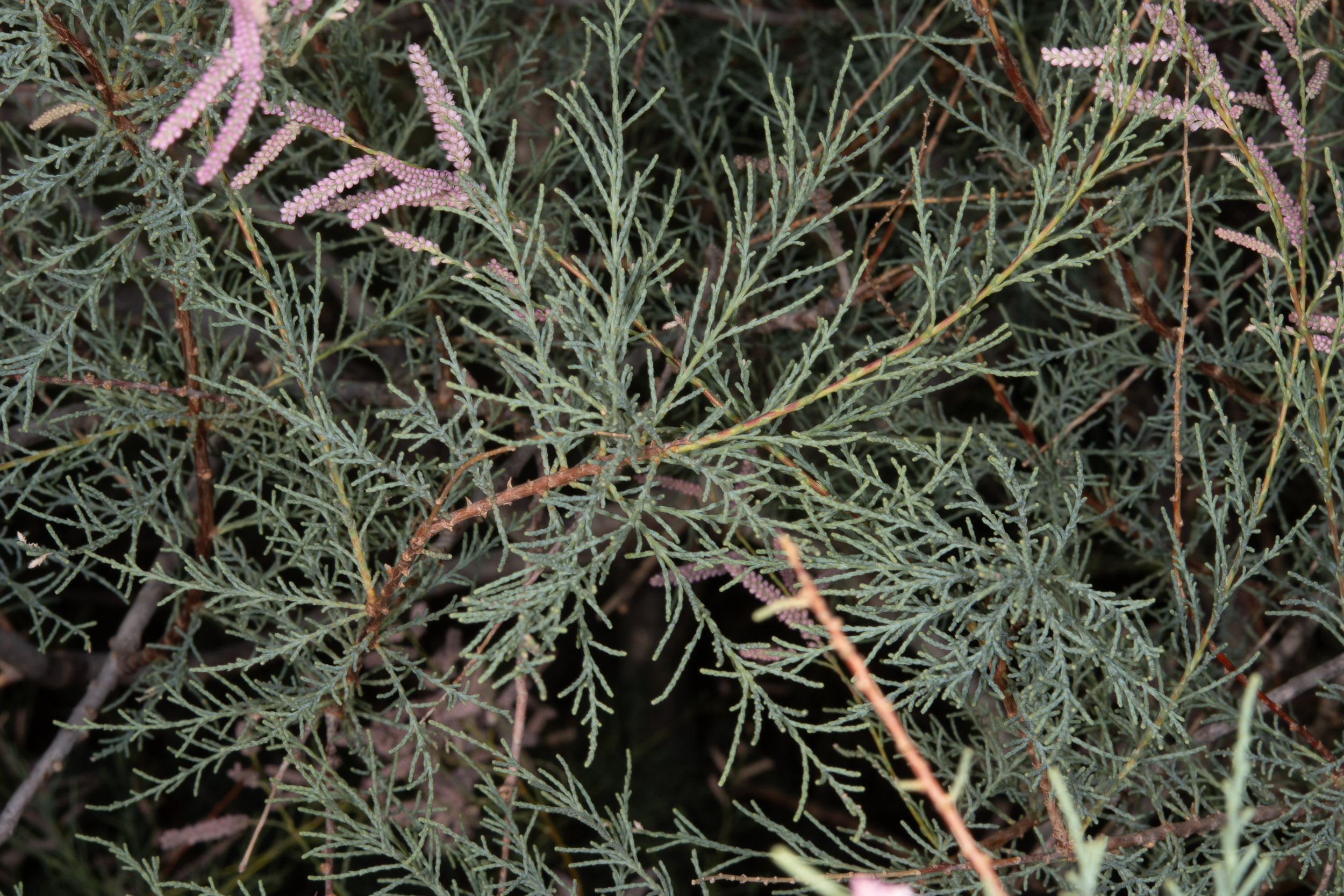
4/29/2018 · Jack Smith Park, Colorado River, Needles, California · ≈ 10 × 6″ (24 × 16 cm) 
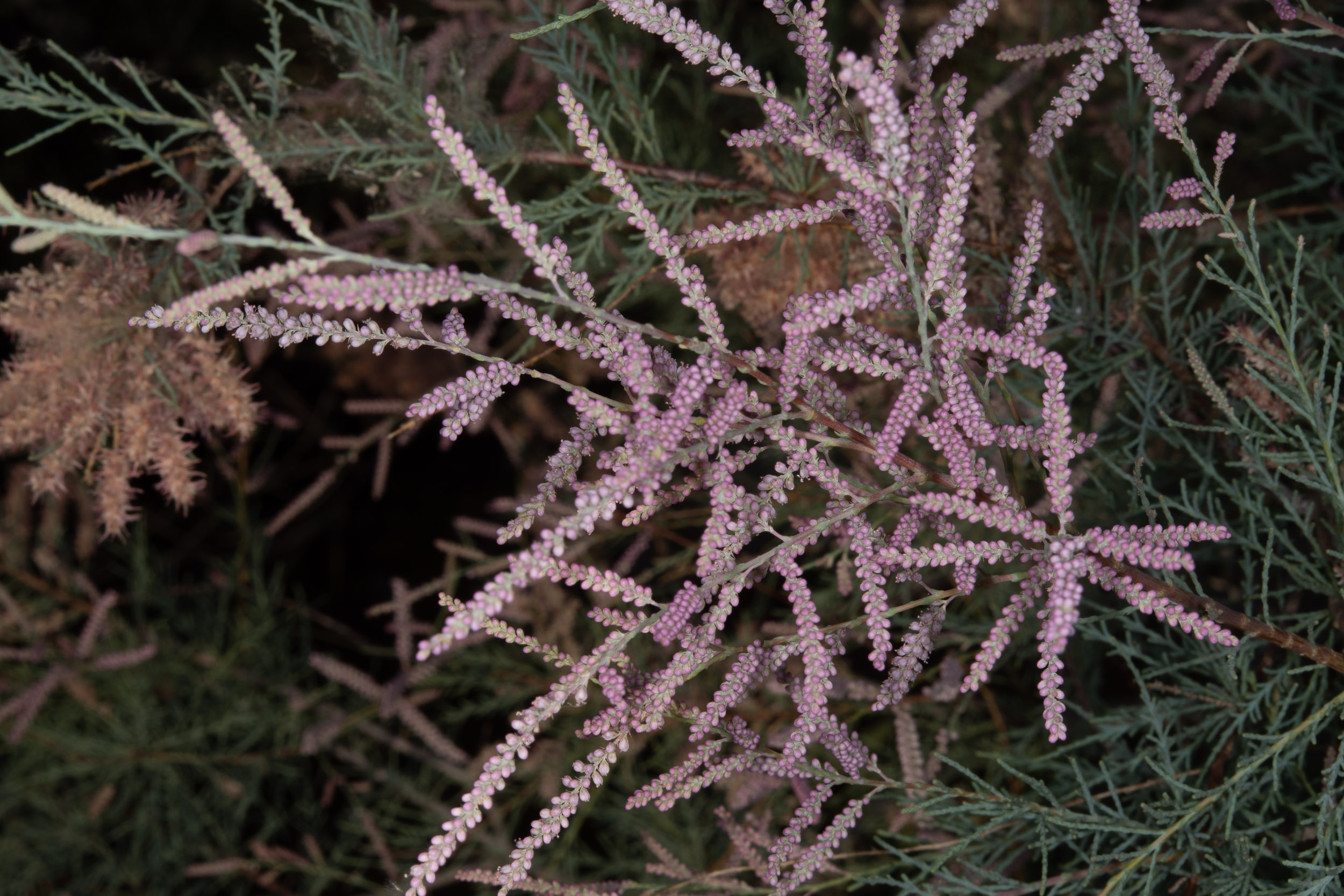
4/29/2018 · Jack Smith Park, Colorado River, Needles, California · ≈ 8 × 5″ (20 × 13 cm) 

8/27/2014 · Rio Grande Nature Center, Albuquerque, New Mexico · ≈ 15 × 10″ (37 × 25 cm) 

8/27/2014 · Rio Grande Nature Center, Albuquerque, New Mexico · ≈ 8 × 12″ (21 × 31 cm) 

4/29/2018 · Jack Smith Park, Colorado River, Needles, California · ≈ 7 × 4½″ (18 × 12 cm) 

4/29/2018 · Jack Smith Park, Colorado River, Needles, California · ≈ 8 × 5″ (20 × 13 cm) 
| Kingdom | Plantae | Plants, but not fungi, lichens, or algae (from Stearn's Botanical Latin) |
| Subkingdom | Tracheobionta | Vascular plants—plants with a “circulatory system” for delivering water and nutrients |
| Division | Magnoliophyta | Flowering plants, also known as angiosperms |
| Class | Magnoliopsida | Dicotyledons—plants with two initial seed leaves |
| Subclass | Caryophyllidae | Cacti, many other succulents, carnivorous plants, and leadworts |
| Order | Caryophyllales | Includes cacti, carnations, amaranths, ice plants, and many carnivorous plants |
| Family | Tamaricaceae | From Latin tamarix, possibly associated with Tamarici, a people of the Atlantic Coast of Spain |
| Genus | Tamarix | The Latin name for this plant derived from the Tamaris River in Spain |
| Species | ramosissima | Very branched |

Tamarix ramosissima description by Thomas H. Kent, not updated.

© FloraFinder.org. All rights reserved.