Trianthema portulacastrum L.
Horse purslane, desert horsepurslane, black pigweed, giant pigweed
Horsepurslane is native to tropical areas of Africa and North and South America, and it has been introduced to many other areas.
Plants: Prostrate, mat-forming annual, with mostly terete, fleshy red or green stems up to 3′ (1 m) long. Plants are always less than 1½′ (45 cm) in height, and usually much lower.
Leaves: Green or reddish green fleshy, opposite, succulent, leaves are round, oval, or obovate. They are up to 1½″ (4 cm) long, on petioles ⅛–1″ (4–30 mm) long.
Flowers: Sessile pink (rarely white) flowers appear on leaf axils. They lack petals but have five petal-like sepals in the shape of a star. Flowers are about ¼″ (6.3 mm) in diameter.
Fruits: Curved, cylindrical capsules emerge from stems. They are up to ⅛″ (5 mm) long.
Habitats: Moist or seasonally dry, usually open, wetlands including alkaline flats, playa lakes, banks of rivers, creeks, roadside depressions, beaches, disturbed areas including gardens, irrigated soils and ditches, fields, ballast, stockyards, sidewalks, railroad tracks; at elevations below 3281′ (1 km).
Edibility:  Poisonous. Older leaves may cause
cause diarrhea or paralysis.
Online References:
References:
McMullen, Conley K., Flowering Plants of the Galápagos, Comstock Publishing Associates, 1999, p. 246
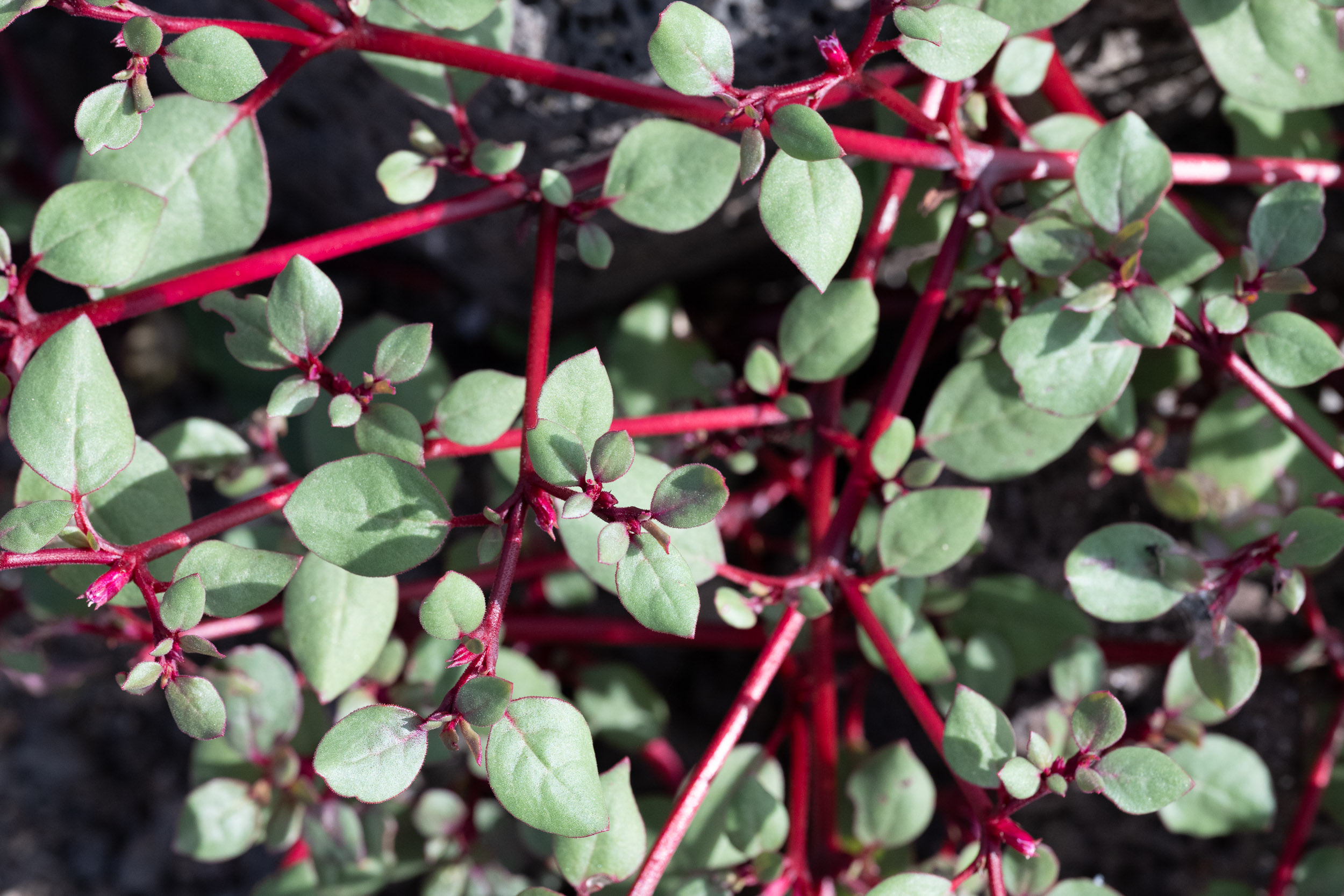
4/3/2025 · North Seymour, Galápagos Islands, Ecuador · ≈ 9 × 6″ (22 × 15 cm) 

4/3/2025 · North Seymour, Galápagos Islands, Ecuador · By Kathryn Morgis 
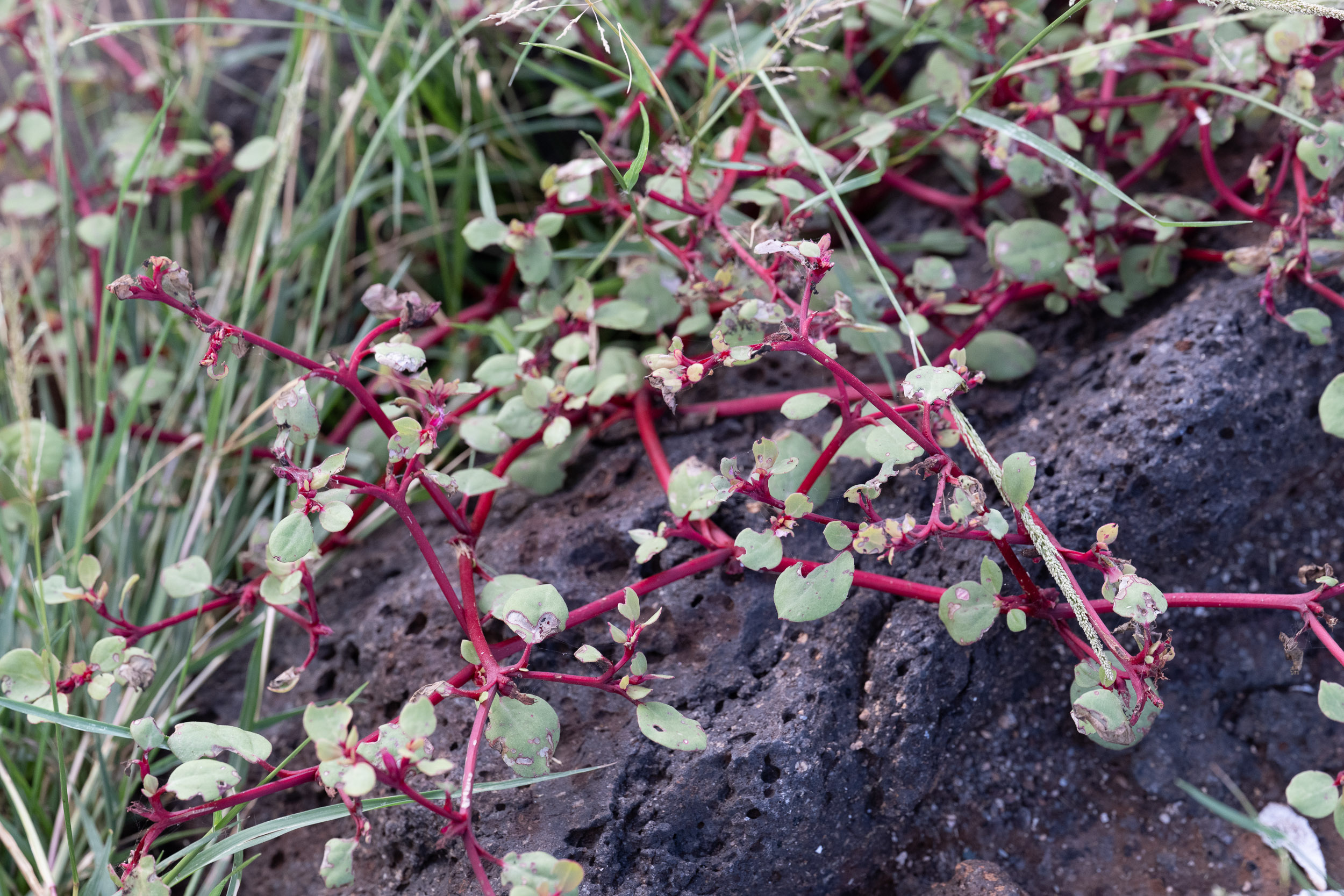
4/3/2025 · North Seymour, Galápagos Islands, Ecuador · ≈ 16 × 11″ (40 × 27 cm) 

4/3/2025 · North Seymour, Galápagos Islands, Ecuador · By Kathryn Morgis 
| Kingdom | Plantae | Plants, but not fungi, lichens, or algae (from Stearn's Botanical Latin) |
| Subkingdom | Tracheobionta | Vascular plants—plants with a “circulatory system” for delivering water and nutrients |
| Division | Magnoliophyta | Flowering plants, also known as angiosperms |
| Class | Magnoliopsida | Dicotyledons—plants with two initial seed leaves |
| Subclass | Caryophyllidae | Cacti, many other succulents, carnivorous plants, and leadworts |
| Order | Caryophyllales | Includes cacti, carnations, amaranths, ice plants, and many carnivorous plants |
| Family | Aizoaceae | Fig-marigold or ice plant family (previously Mesembryanthemaceae) |
| Genus | Trianthema | From the Greek treis, “three,” and anthemon, “flower” |
| Species | portulacastrum | Michael Charters infers that the meaning of this comes from the genus name Portulaca and the astrum, “star,” so would indicate a Portulaca-like plant that has star-shaped flowers |
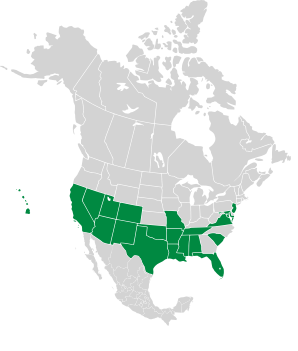
Trianthema portulacastrum description by Thomas H. Kent, not updated.

© FloraFinder.org. All rights reserved.