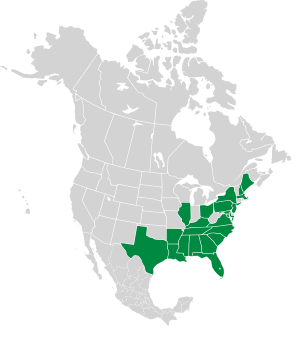
Rehsonia floribunda (Willd.) Stritch
Wisteria floribunda (Willd.) DC.
Japanese wisteria
[An article has not been written yet.]
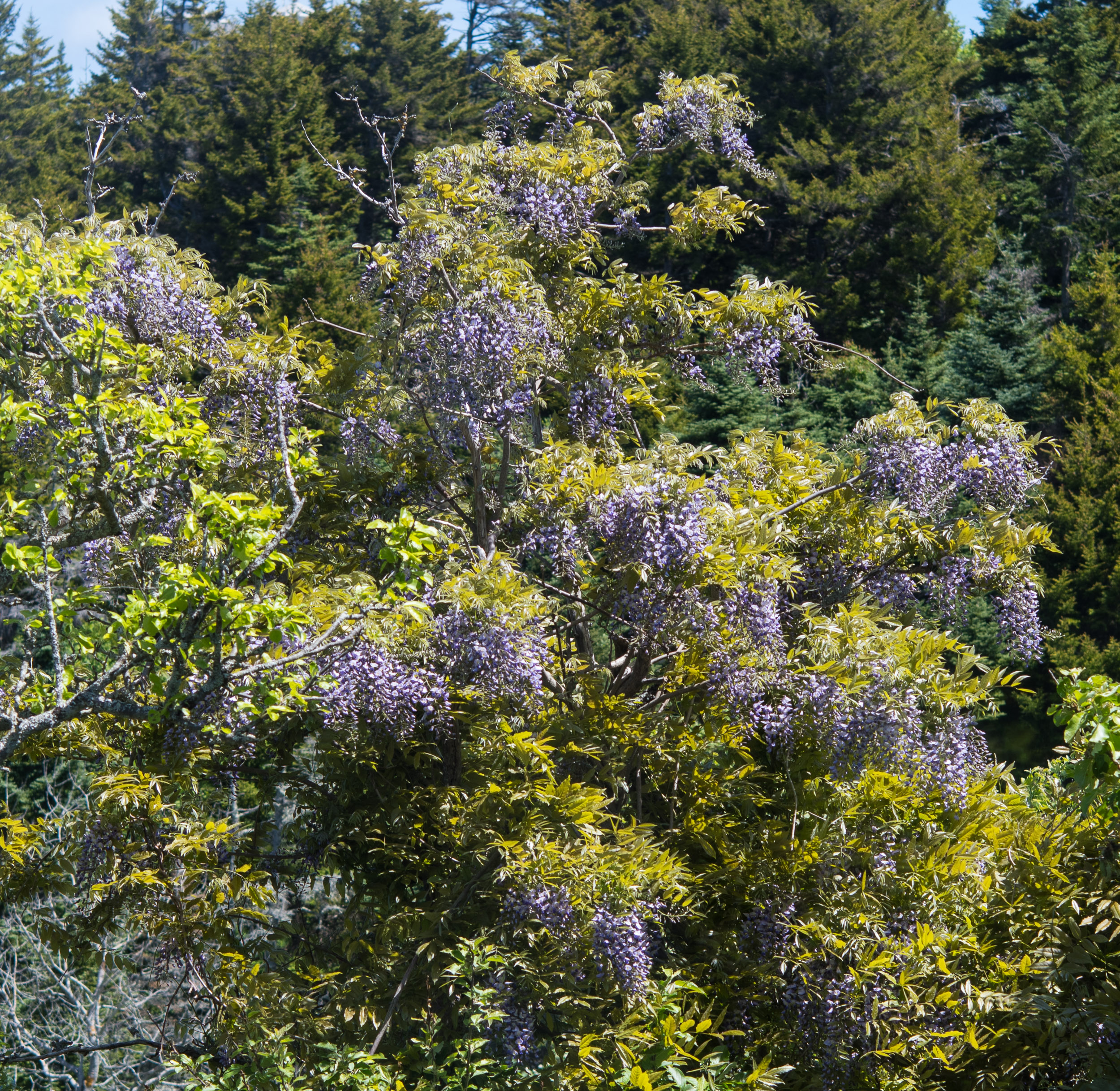
6/10/2016 · Monhegan Island, Maine 
| Kingdom | Plantae | Plants, but not fungi, lichens, or algae (from Stearn's Botanical Latin) |
| Subkingdom | Tracheobionta | Vascular plants—plants with a “circulatory system” for delivering water and nutrients |
| Division | Magnoliophyta | Flowering plants, also known as angiosperms |
| Class | Magnoliopsida | Dicotyledons—plants with two initial seed leaves |
| Subclass | Rosidae | Roses, legumes, proteas, dogwoods, hydrangeas, mistletoes, euphorbias, grapes, many more |
| Order | Fabales | Legumes (pea and bean families) |
| Family | Fabaceae | Legume family (peas and beans) |
| Genus | Wisteria | For Dr. Caspar Wistar (1761-1818), anatomist and professor of chemistry and physiology, who aided Thomas Jefferson in identifying fossils and provided natural sciences instruction for the Lewis and Clark expedition |
| Species | floribunda | From floris, “flower,” or florere, “to flower,” with the Latin adjectival suffix -bundus used in the sense of doing or action accomplished, and thus meaning “profusely flowering, producing or having produced abundant flowers” |
Wisteria floribunda description by Thomas H. Kent, not updated.

© FloraFinder.org. All rights reserved.