Carolina sea-lavender is native to salt marshes along the entire east coast
of North America, including Canada and Mexico.
Plants: These slow-growing perennials look a bit
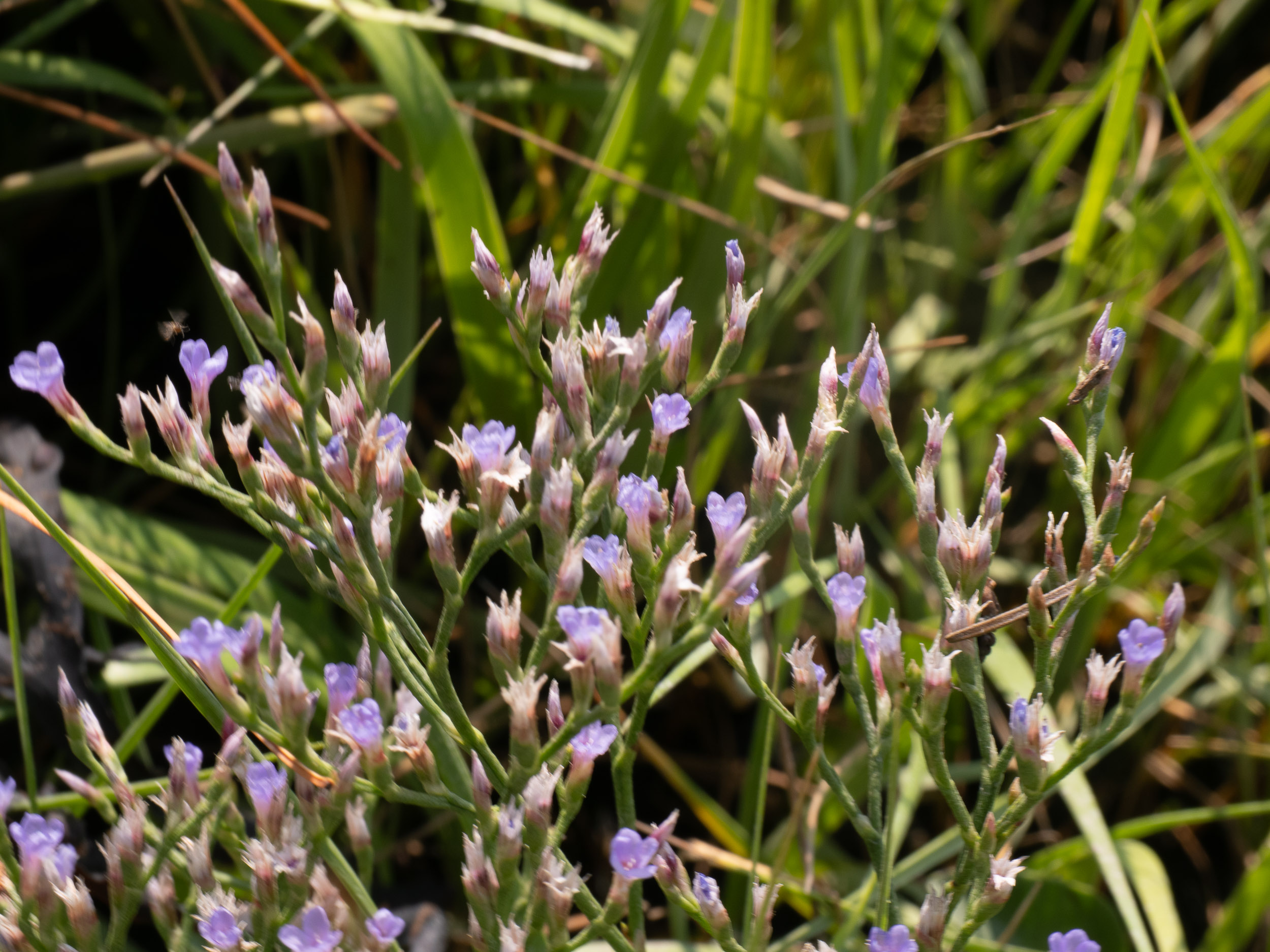
out of place in otherwise nearly uniform masses of salt marsh grasses. From a distance,
when blooming,
they look like sprays of pale purplish tumbleweed. Plants are 1–3 ⨉ 1–2′ (30–91 ⨉ 30–60 cm).
Leaves: Basal rosettes
1¾–10″ (5–25 cm) around (rarely up to 1′ (40 cm).
Leaves are spatulate,
obovate, or elliptic.
They are 1¾–6 ⨉ ⅛–1¾″ (5–15 cm ⨉ 5–50 mm), leathery in texture,
with smooth edges and sharp tips. The leaves have salt glands that
excrete excess salt, in order to survive marine environments.
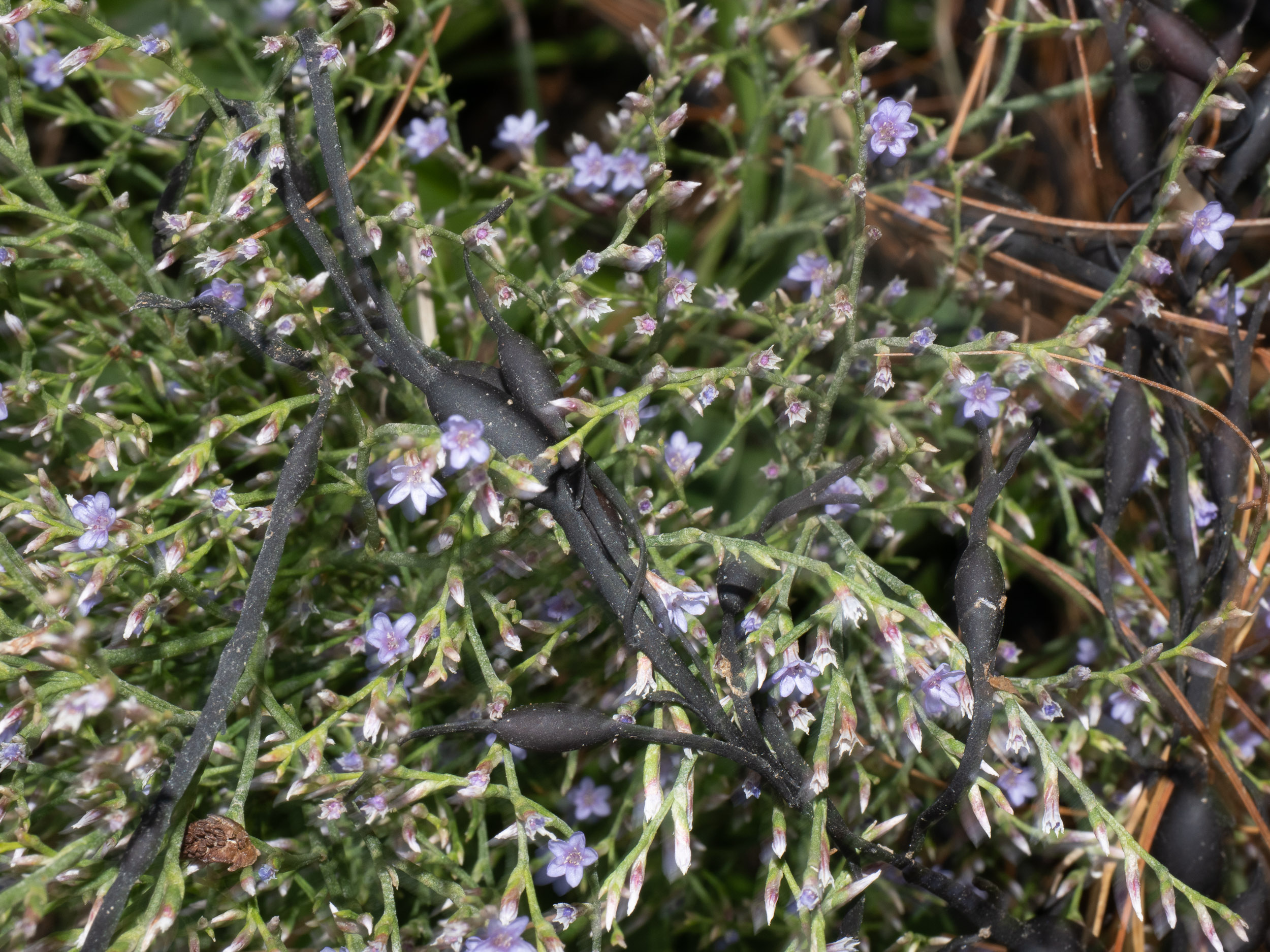
Flowers: Large intricately branched inflorescences
contain hundreds of diminutive flowers. Each flower is 1/16–⅛″ (2–3 mm) in size, with five petals
and five stamens, and blue to purple,
or rarely white. Flowers appear from June to December.
Fruits: Seeds 1/16–3/16″ (3–5.5 mm) long.
Habitats: Brackish or salt marshes and flats, coastal beaches, marshes, and intertidal ocean areas.