Mentha × piperita
Peppermint
Peppermint is a herbaceous perennial plant. (“Peppermint” was initially coined by John Ray in his 1704 volume, Historia Plantarum, naming it Mentha palustris or Peper–Mint.) It is a natural hybrid of watermint (Mentha aquatica) and spearmint (M. spicata). It is native to Europe and parts of Africa and Asia, but cultivated in temperate regions worldwide. (Note that wintergreen comes from an unrelated species, Gaultheria procumbens.)
Plants: Up to 3′ (90 cm) tall. Like all mint family plants, stems are square in cross-section. They are green or purple, and usually slightly fuzzy.
Leaves: Opposite, dark green with reddish veins, coarsely serrated, and 1½–3½ ⨉ ½–1½″ (4–9 ⨉ 1.5–4 cm).
Flowers: Purple, ⅛–¼″ (6–8 mm). The corolla has four lobes about ⅛″ (5 mm) in diameter. They appear in whorls called verticillasters around the stem, forming thick spikes. Flowers appear from mid to late summer.
Fruits: Peppermint does not produce seeds. It spreads vegetatively, via runners.
Habitats: Moist habitats like stream banks and drainage ditches.
Edibility: A widely used flavoring agent. In large quantities, it can be toxic to pregnant women.
Medical: Peppermint may have antioxidant, anti-inflammatory, antifungal, antimicrobial, and other effects, but supporting evidence is weak.
 |
Similar species. |
Online References:
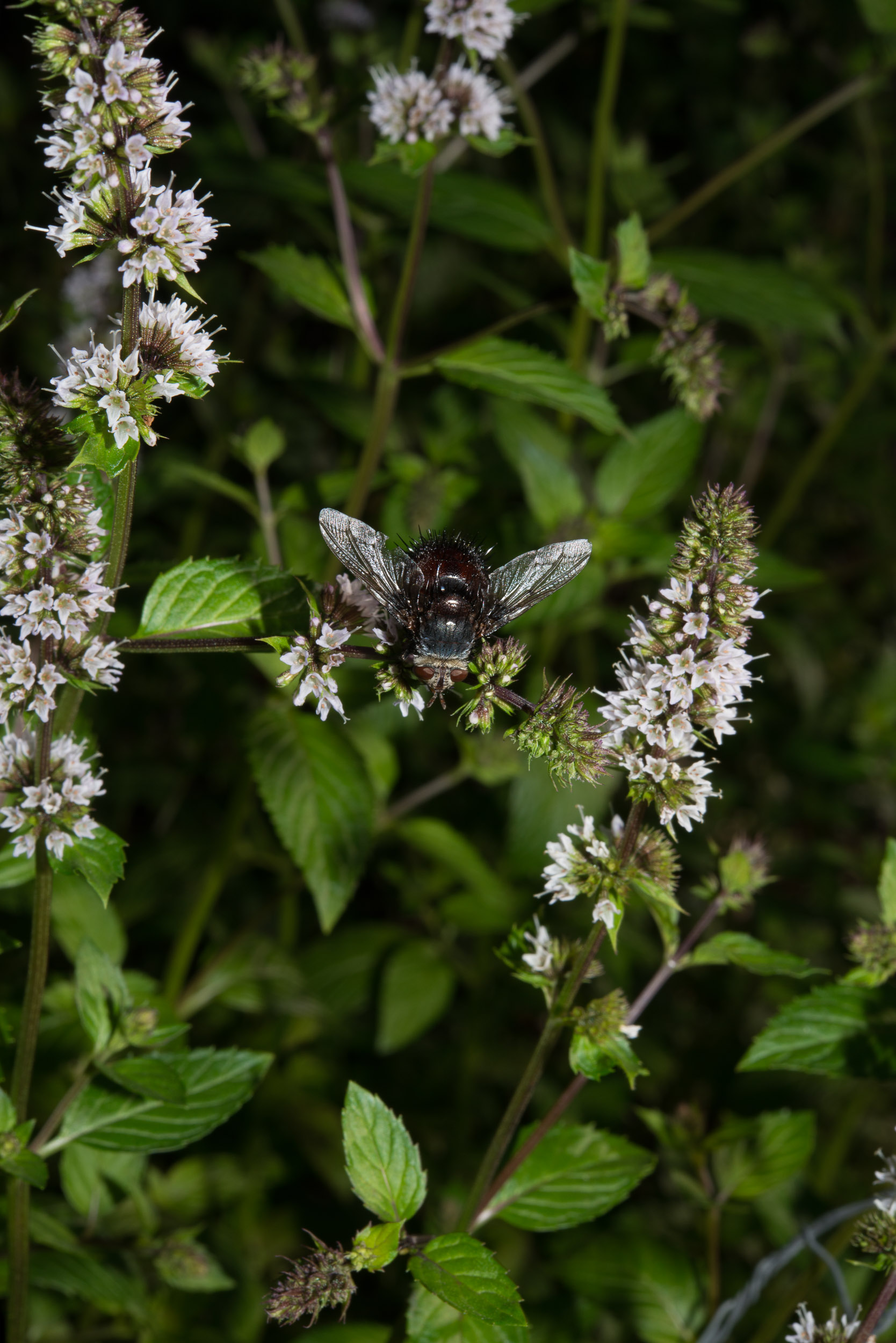
8/4/2013 · Barry’s, Acton, Massachusetts · ≈ 4½ × 7″ (12 × 18 cm) 
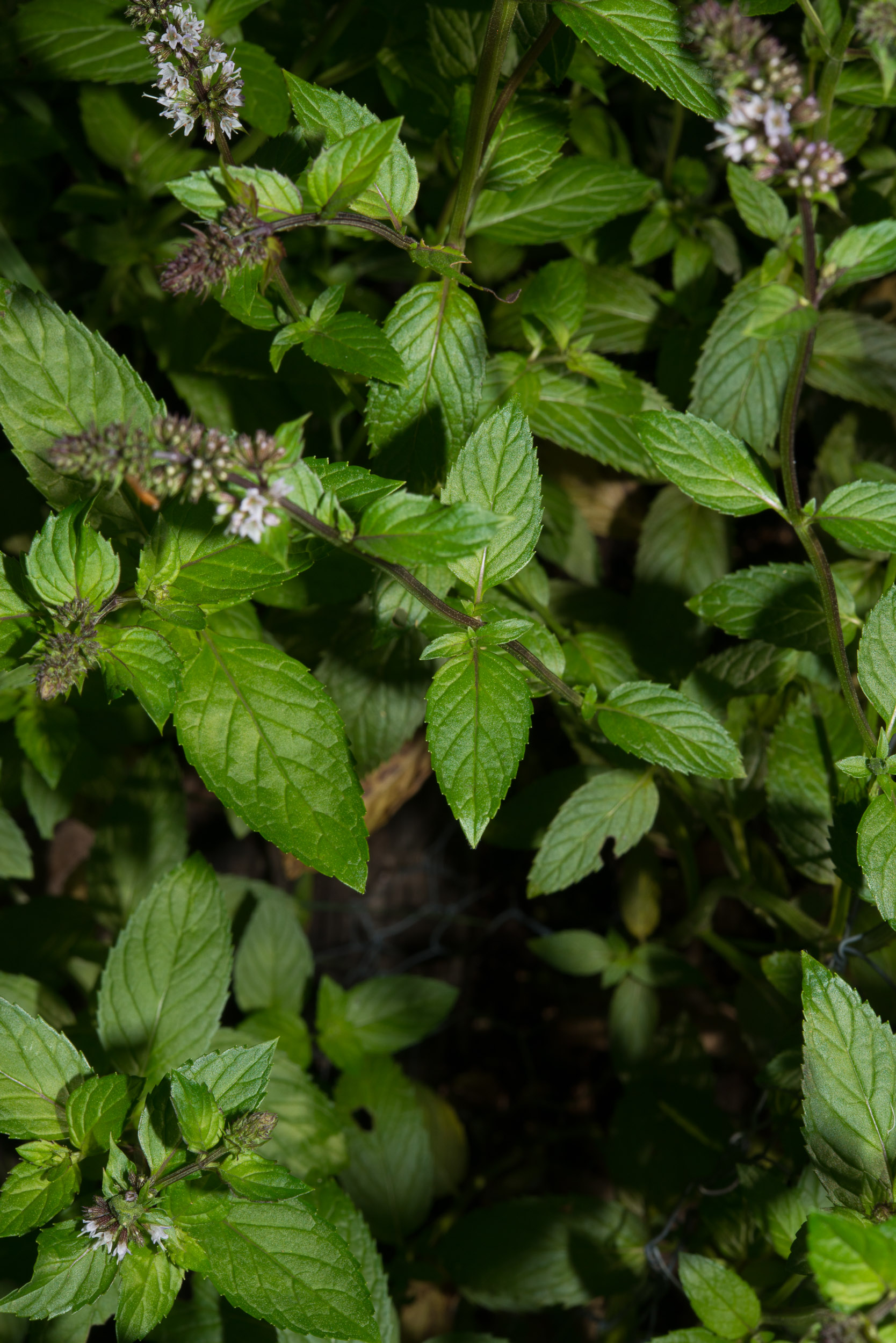
8/4/2013 · Barry’s, Acton, Massachusetts · ≈ 6 × 9″ (16 × 23 cm) 

8/4/2013 · Barry’s, Acton, Massachusetts · ≈ 5 × 8″ (12 × 19 cm) 
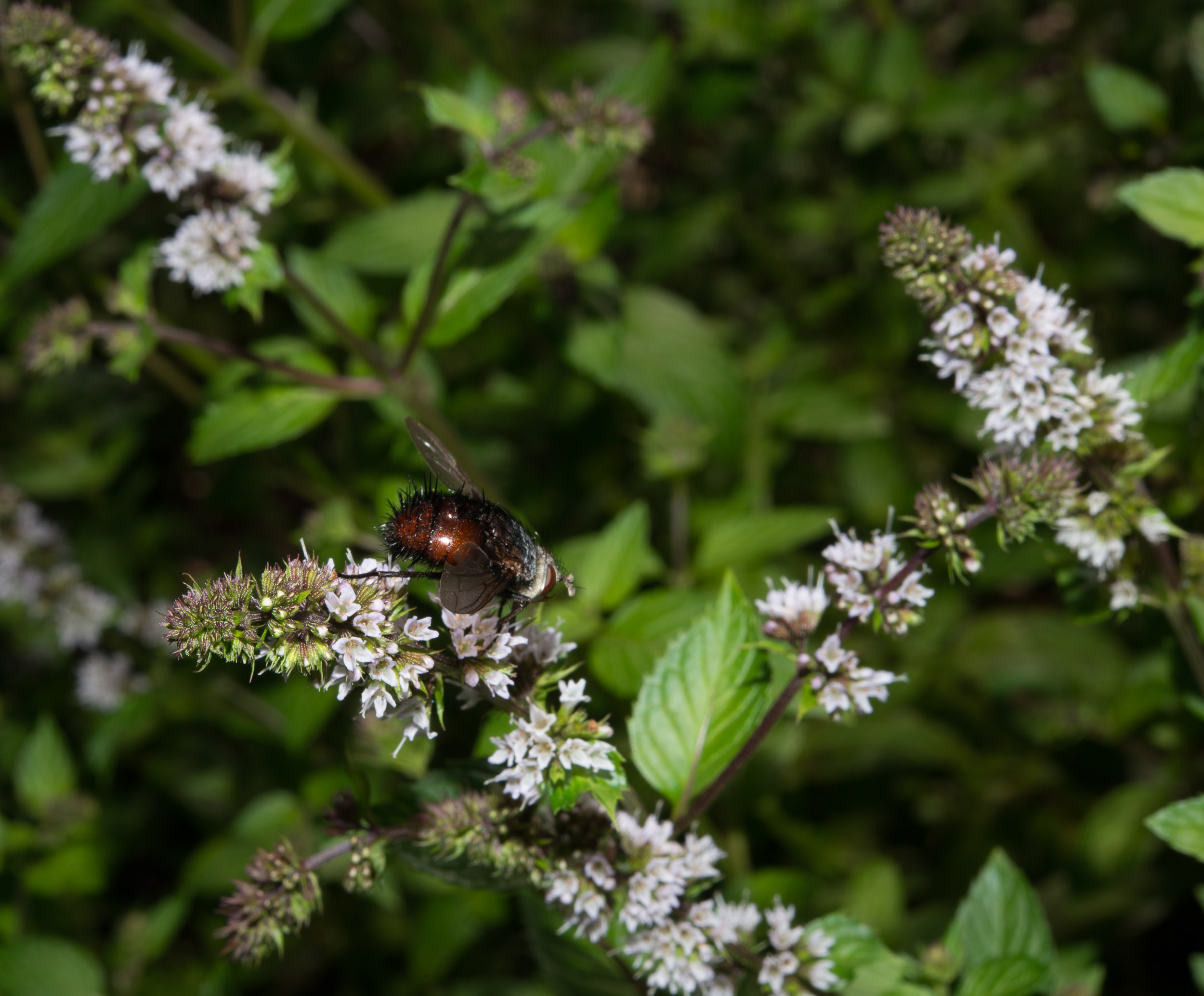
8/4/2013 · Barry’s, Acton, Massachusetts · ≈ 6 × 4½″ (14 × 12 cm) 
| Kingdom | Plantae | Plants, but not fungi, lichens, or algae (from Stearn's Botanical Latin) |
| Subkingdom | Tracheobionta | Vascular plants—plants with a “circulatory system” for delivering water and nutrients |
| Division | Magnoliophyta | Flowering plants, also known as angiosperms |
| Class | Magnoliopsida | Dicotyledons—plants with two initial seed leaves |
| Subclass | Asteridae | A large class that encompasses asters |
| Order | Lamiales | Aromatic herbs and shrubs, including lavender, lilac, olive, jasmine, ash, teak, snapdragon, sesame, psyllium, garden sage, mint, basil, and rosemary |
| Family | Lamiaceae | Mint family |
| Genus | Mentha | From Minthe or Menthe, a water nymph in Greek mythology, who was transformed by Persephone into a mint plant in revenge for Minthe’s ongoing affair with Hades (husband of Persephone). |
| Species | piperita | pepperlike, tasting hot and sharp like pepper |

Mentha × piperita description by Thomas H. Kent, not updated.

© FloraFinder.org. All rights reserved.