Rosa carolina L.
Pasture rose, wild rose, Carolina rose, low rose
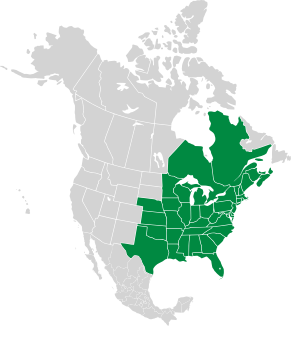
Pasture rose is native to most of North America.
Plants: Pasture rose is a low shrub, 1–3′ (30–91 cm) high that prefers drier ground. It may be erect or sprawl over other plants. Stems have straight, needlelike, relatively slender thorns, vs. the stronger curved thorns on many roses.
Leaves: In clusters of five or seven, with a single leaf at the end of each branch. They are ovate (oval, with pointed ends), and serrated. Leaf undersides are bluish and hairless, or with only a few hairs.
Flowers: Flowers are almost always solitary. They are pink (rarely white) with yellow centers, with five petals, and about ¾–1½″ (1.9–3.8 cm) in diameter. They have the fragrance of roses.
Fruits: Fruits, called “rose hips,” are smooth, red, shiny globes, sometimes somewhat flattened, about ¼–⅜″ (8–12 mm) around.
Habitats: Wide-ranging: in dry soils, at the border of prairies, woodlands, and savannas, in thickets, in upland forested areas, and dunes; as well as wet soils along stream beds, swamps and low grassy areas.
Edibility: Rose hips are edible, but extremely tart.
See our wild rose comparison guide for further information.
Online References:
References:

6/26/2010 · Nashua River Rail Trail, Groton Center, Groton, Massachusetts · ≈ 6 × 7″ (15 × 18 cm) 

8/1/2021 · Houghton Graves Park, Harpswell, Maine · ≈ 4½ × 3″ (11 × 7.5 cm) 

7/5/2021 · Curtis Farm Preserve, Harpswell, Maine · ≈ 4½ × 3″ (11 × 7.9 cm) 

9/29/2013 · Compass Harbor, Acadia National Park, Bar Harbor, Maine · ≈ 7 × 5″ (18 × 12 cm)  ID is uncertain

6/26/2012 · Nashua River Rail Trail, Dunstable, Dunstable, Massachusetts · ≈ 5 × 3½″ (13 × 9.2 cm) 

6/20/2010 · Stan and Connie Kent, Falmouth, Maine · By Constance B. Kent 

7/15/2012 · Fort Point State Park, Stockton Springs, Maine · ≈ 9 × 6″ (23 × 15 cm) ID is uncertain 

9/18/2010 · Nashua River Rail Trail, Groton Center, Groton, Massachusetts · ≈ 4½ × 3½″ (11 × 9.2 cm) ID is uncertain 

7/5/2021 · Curtis Farm Preserve, Harpswell, Maine · ≈ 3½ × 6″ (9.4 × 14 cm) 

6/20/2010 · Stan and Connie Kent, Falmouth, Maine · By Constance B. Kent 

7/6/2017 · Mt. Watatic, access road, Ashby, Massachusetts · ≈ 8 × 5″ (20 × 13 cm) 

8/1/2021 · Houghton Graves Park, Harpswell, Maine · ≈ 4 × 2½″ (10 × 7 cm) 

7/15/2019 · Beaver Brook Conservation Area, New Long Loop, Hollis, New Hampshire · ≈ 7 × 4½″ (18 × 12 cm) 

7/20/2023 · Curtis Farm Preserve, Harpswell, Maine 

6/15/2012 · Townsend State Forest, Townsend, Massachusetts · ≈ 5 × 4½″ (12 × 11 cm) 

7/6/2017 · Mt. Watatic, access road, Ashby, Massachusetts · ≈ 7 × 4½″ (18 × 12 cm) 

6/26/2012 · Nashua River Rail Trail, Dunstable, Dunstable, Massachusetts · ≈ 5 × 3½″ (13 × 9.2 cm) 
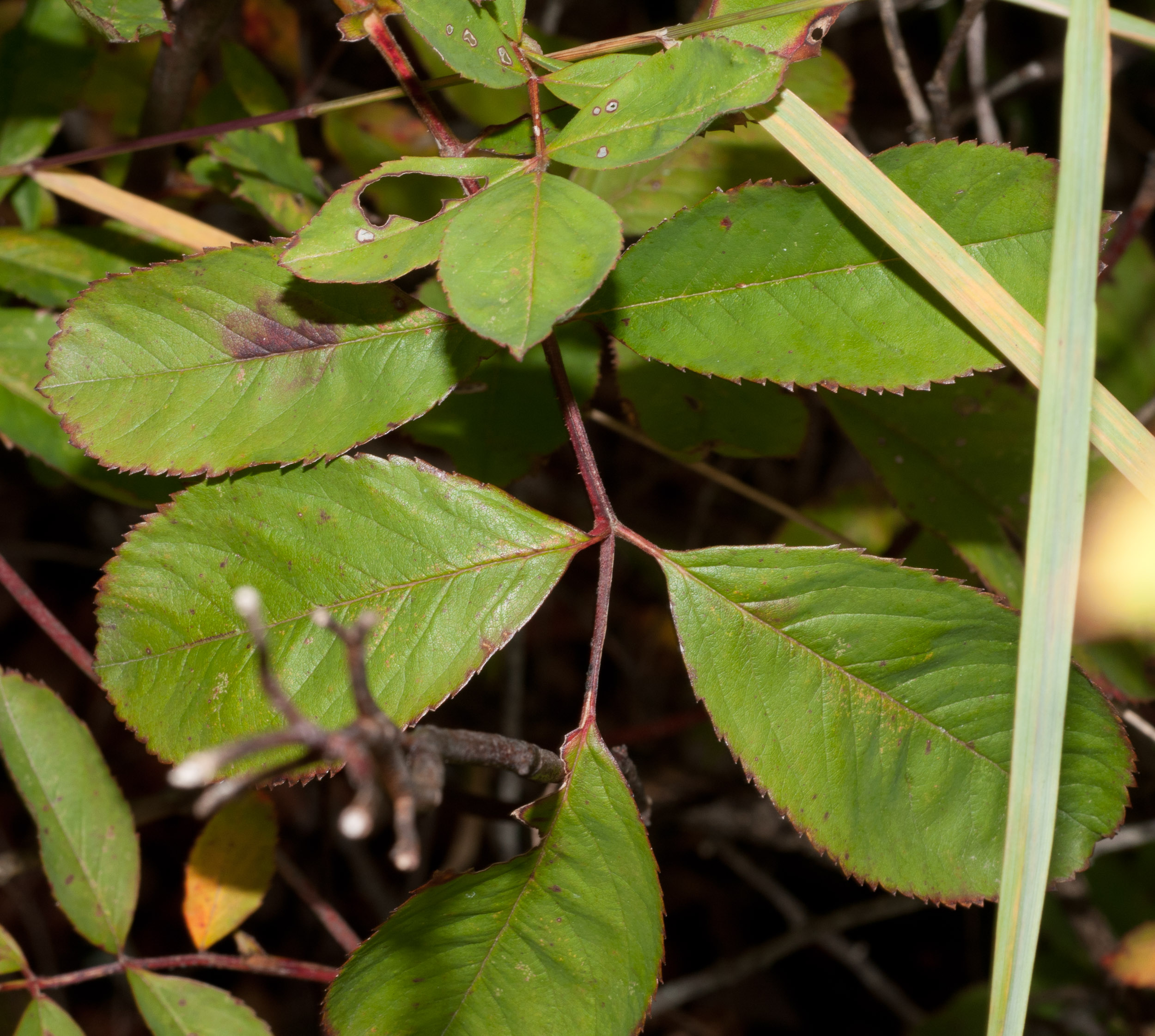
9/18/2010 · Nashua River Rail Trail, Groton Center, Groton, Massachusetts · ≈ 6 × 6″ (16 × 14 cm) ID is uncertain 
| Kingdom | Plantae | Plants, but not fungi, lichens, or algae (from Stearn's Botanical Latin) |
| Subkingdom | Tracheobionta | Vascular plants—plants with a “circulatory system” for delivering water and nutrients |
| Division | Magnoliophyta | Flowering plants, also known as angiosperms |
| Class | Magnoliopsida | Dicotyledons—plants with two initial seed leaves |
| Subclass | Rosidae | Roses, legumes, proteas, dogwoods, hydrangeas, mistletoes, euphorbias, grapes, many more |
| Order | Rosales | Rose family and eight others |
| Family | Rosaceae | Includes apples, apricots, plums, cherries, peaches, pears, raspberries, strawberries, almonds, roses, meadowsweets, photinias, firethorns, rowans, and hawthorns; many others |
| Genus | Rosa | From a Latin name so old its meaning is no longer known |
| Species | carolina | “From the Carolinas” |
Rosa carolina description by Thomas H. Kent, not updated.

© FloraFinder.org. All rights reserved.