Solanum elaeagnifolium Cav.
Silverleaf nightshade, prairie berry, silverleaf nettle, white horsenettle, silver nightshade, bull nettle, tomato weed, trompillo, buena mujer, tomatito de buena mujer, pera
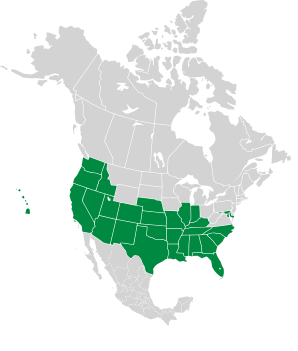
Silverleaf nightshade is native to North and South America. Solanum, the nightshade genus, is very large, with 1200-1800 species worldwide.
Plants: Plants are up to 3′ (1 m) tall. Stems are covered, sometimes sparsely, sometimes densely, with nettle-like spines. Spines are more common in more arid climates. Tiny hairs lying flat against the stem impart a silvery gray appearance.
Leaves: 6″ long ⨉ ⅛–⅞″ wide (15 cm ⨉ 5–25 mm), also silvery gray from fine hairs. They are alternate, lanceolate to narrowly oblong, shallowly scalloped, with wavy edges.
Flowers: Each flower is purple, blue, lavendar, or sometimes white, and shaped like a five-pointed star, the petals fused together. Five yellow stamens tipped with yellow or orange anthers, and a pistil, project from the center. Flowers appear from May to October.
Fruits: Glossy yellow, orange, or red berries.
Habitats: Prairies, roadsides, pastures, open woods, and human-disturbed habitats, at elevations up to 1.0 mi (1.7 km).
Edibility: Poisonous  . All parts of the plant contain
solanine, which is poisonous to both humans and livestock.
. All parts of the plant contain
solanine, which is poisonous to both humans and livestock.
 |
Similar species. |
Online References:
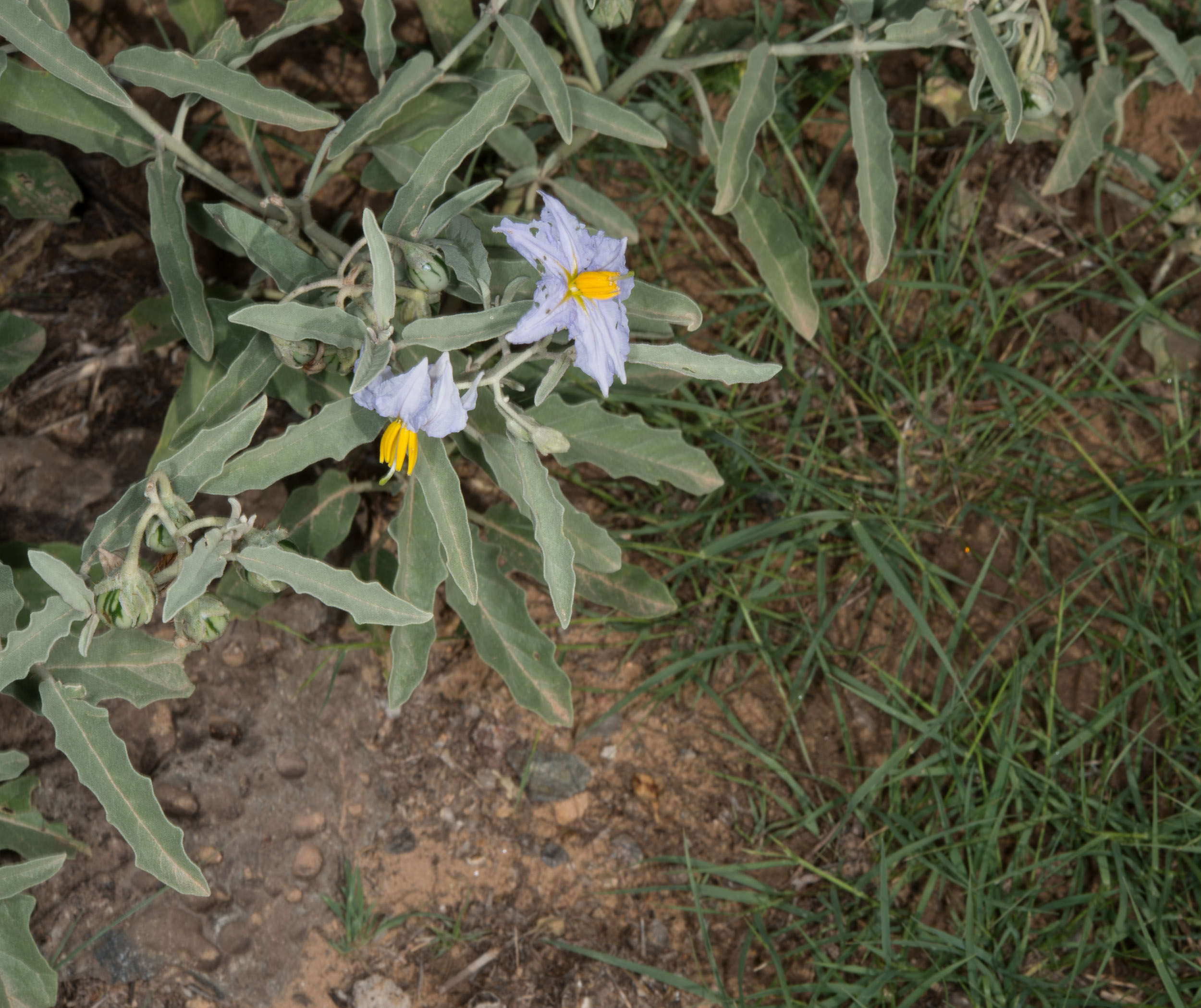
8/27/2014 · Petroglyph National Monument Visitor Center, New Mexico · ≈ 10 × 8″ (25 × 21 cm) 
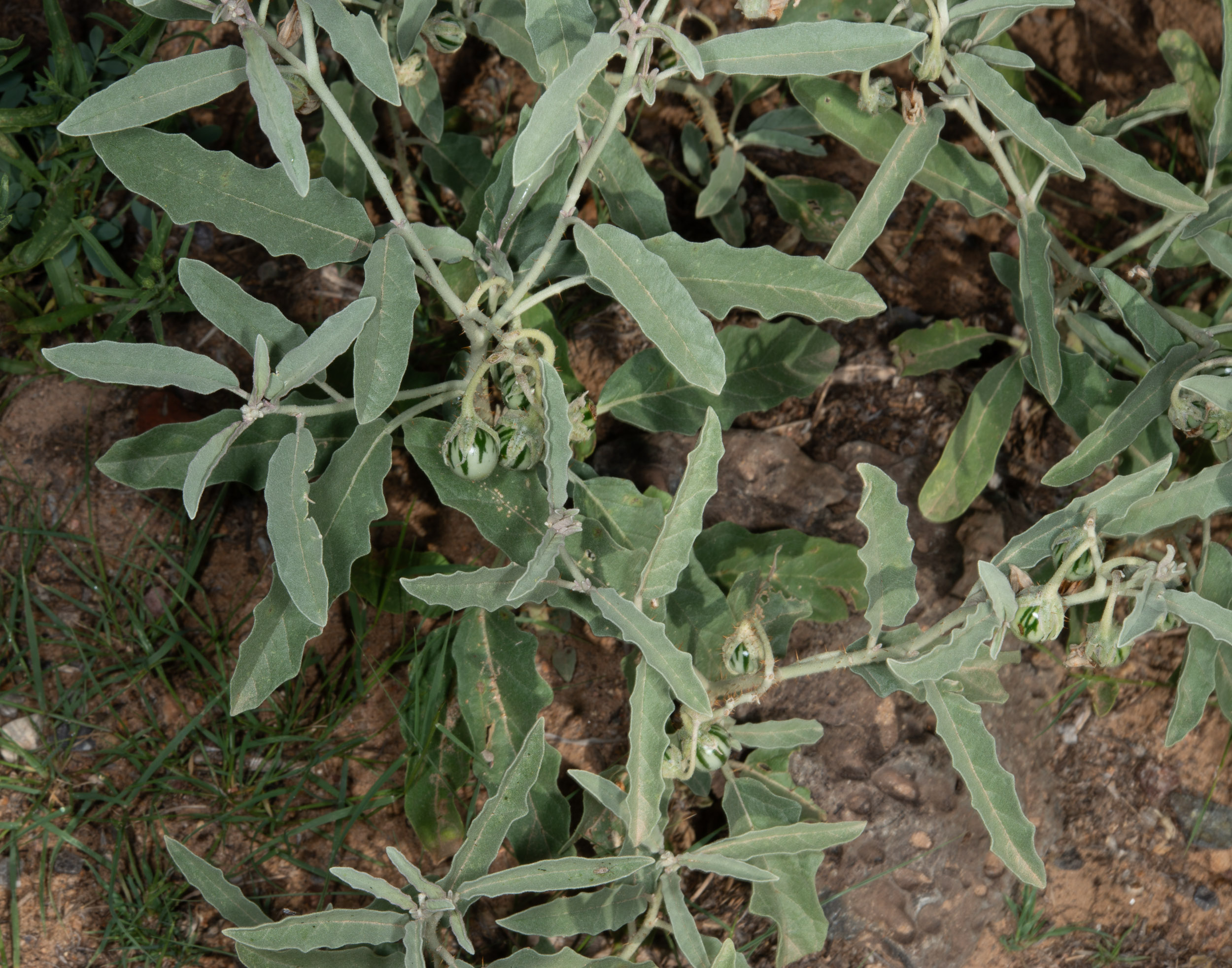
8/27/2014 · Petroglyph National Monument Visitor Center, New Mexico · ≈ 11 × 8″ (26 × 21 cm) 
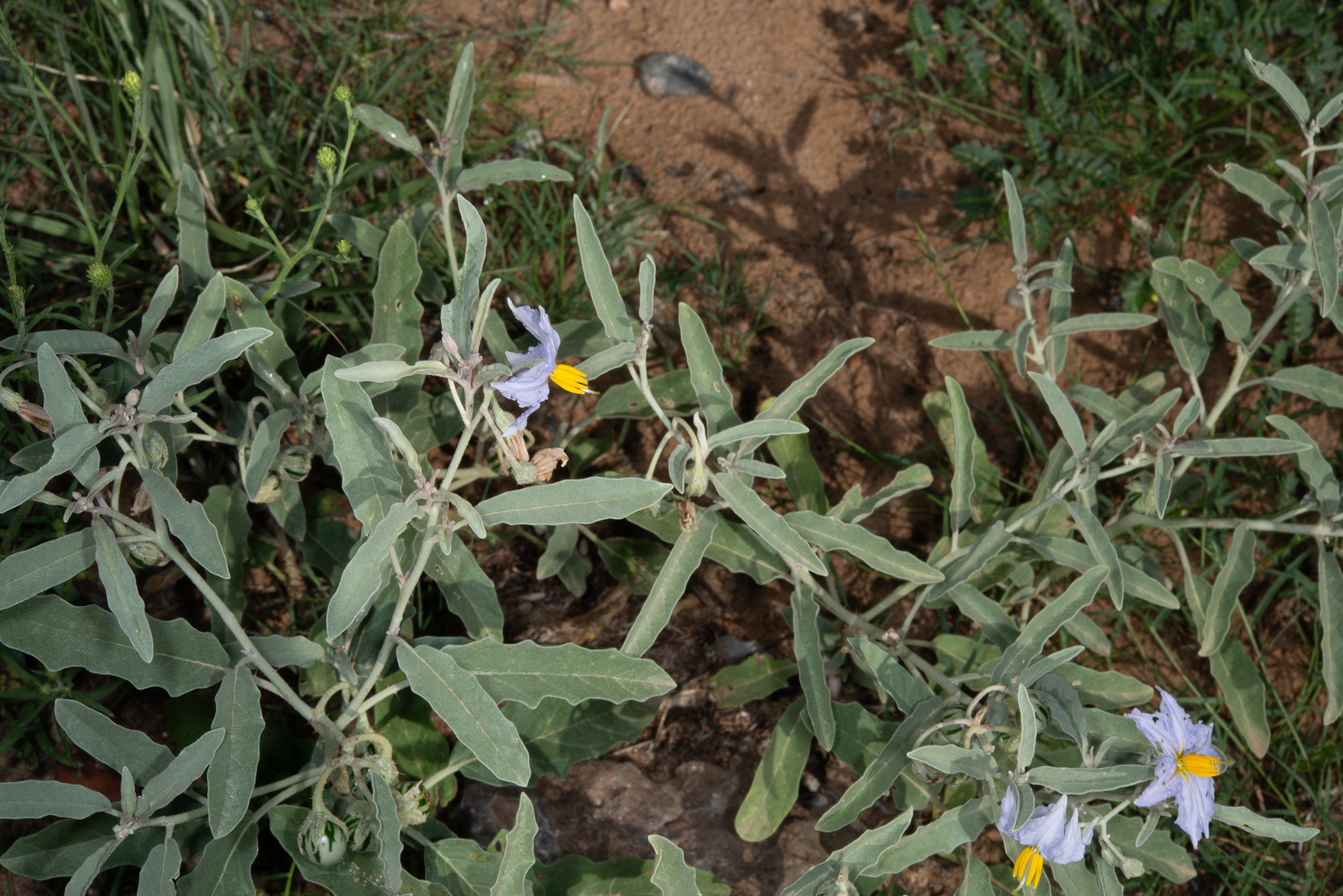
8/27/2014 · Petroglyph National Monument Visitor Center, New Mexico · ≈ 12 × 8″ (31 × 21 cm) 

8/27/2014 · Sandy Walk, Petroglyph National Monument, New Mexico · ≈ 6 × 5″ (16 × 12 cm) 
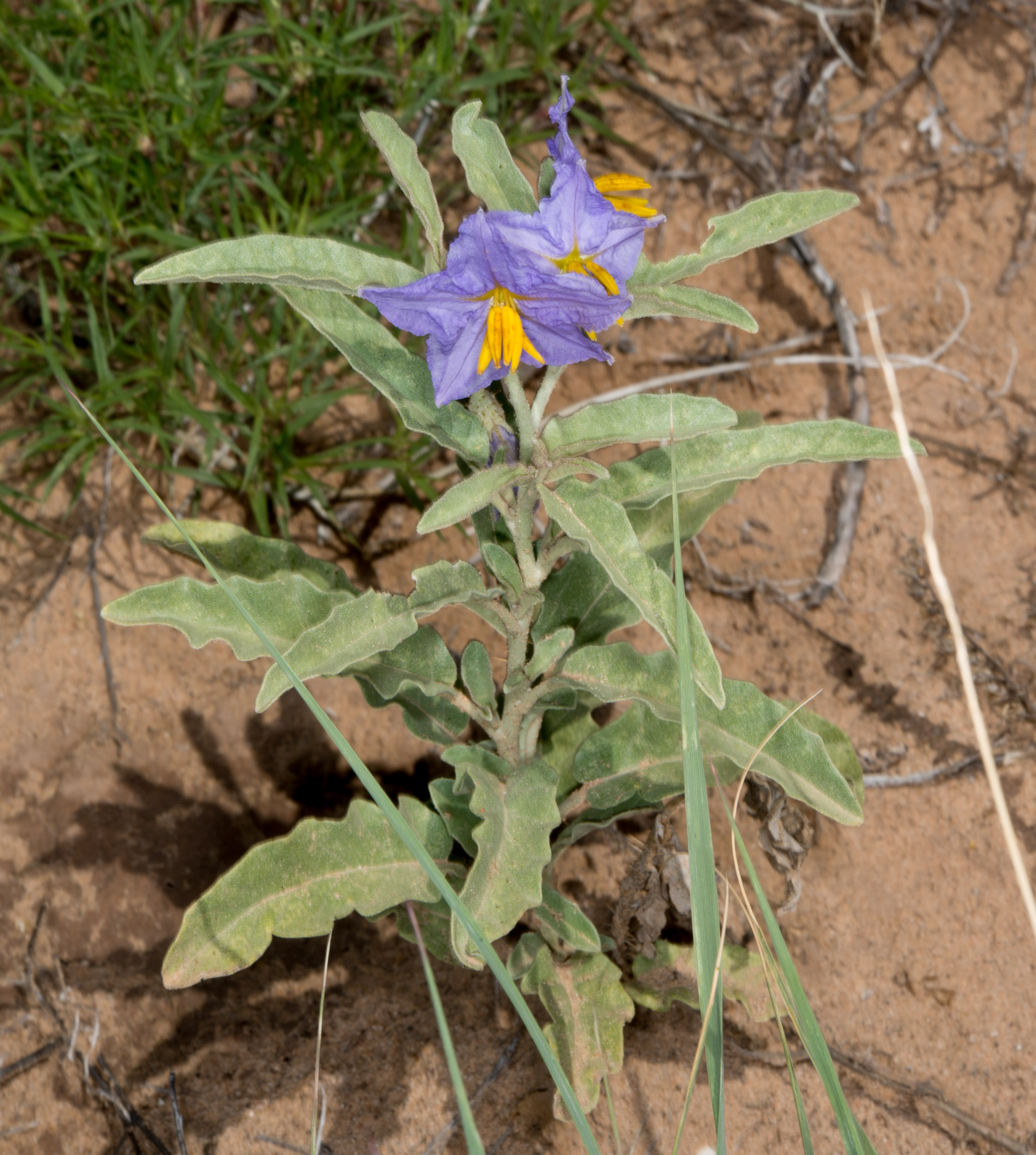
8/27/2014 · Sandy Walk, Petroglyph National Monument, New Mexico · ≈ 6 × 6″ (14 × 15 cm) 
| Kingdom | Plantae | Plants, but not fungi, lichens, or algae (from Stearn's Botanical Latin) |
| Subkingdom | Tracheobionta | Vascular plants—plants with a “circulatory system” for delivering water and nutrients |
| Division | Magnoliophyta | Flowering plants, also known as angiosperms |
| Class | Magnoliopsida | Dicotyledons—plants with two initial seed leaves |
| Subclass | Asteridae | A large class that encompasses asters |
| Order | Solanales | Potatoes, eggplants, tomatoes, peppers, tobacco, petunias, sweet potatoes, morning glories, many others |
| Family | Solanaceae | Nightshade or potato family |
| Genus | Solanum | “Quieting,” for the narcotic effect of some species |
| Species | elaeagnifolium | With leaves like genus Elaeagnus |
Solanum elaeagnifolium description by Thomas H. Kent, not updated.

© FloraFinder.org. All rights reserved.