Solidago simplex Kunth
Rand’s goldenrod, Mt. Albert goldenrod, sticky goldenrod
Rand’s goldenrod is a perennial North American native plant. For a comparison chart of some of the varieties of goldenrods, see Solidago.
Plants: 1¾–31″ (5–80 cm) tall. Smaller plants oocur in cooler climates. Each plant has up to 10 stems.
Leaves: Basal leaves are narrowly oblanceolate, and 1¾–4 ⨉ ⅛–⅝″ (5–10 cm ⨉ 5–16 mm). Their margins are serrate to crenate. Stem leaves are sessile and lanceolate to linear, and ⅜–1¾ ⨉ 1/16–¾″ (1.2–4.5 cm ⨉ 2–19 mm).
Flowers: 3 to 150 flowerheads, densely packed around the stem. Each composite flower is up to ⅛″ (3 mm) in size, and contains 6-16 yellow ray florets and 6-31 disc florets. The flowerheads are somewhat viscid-resinous—sticky—the most distinctive trait of this species. They appear from September to October.
Fruits: Flowers become small spherical arrangements of seeds on “parachutes,” called cypselae, like dandilions gone to seed. The cypselae are 1/16–⅛″ (1.9–3.2 mm) in diameter.
Habitats: Cliffs, balds, or ledges, mountain summits, and, shores of rivers or lakes.
Edibility: Not edible.
Online References:
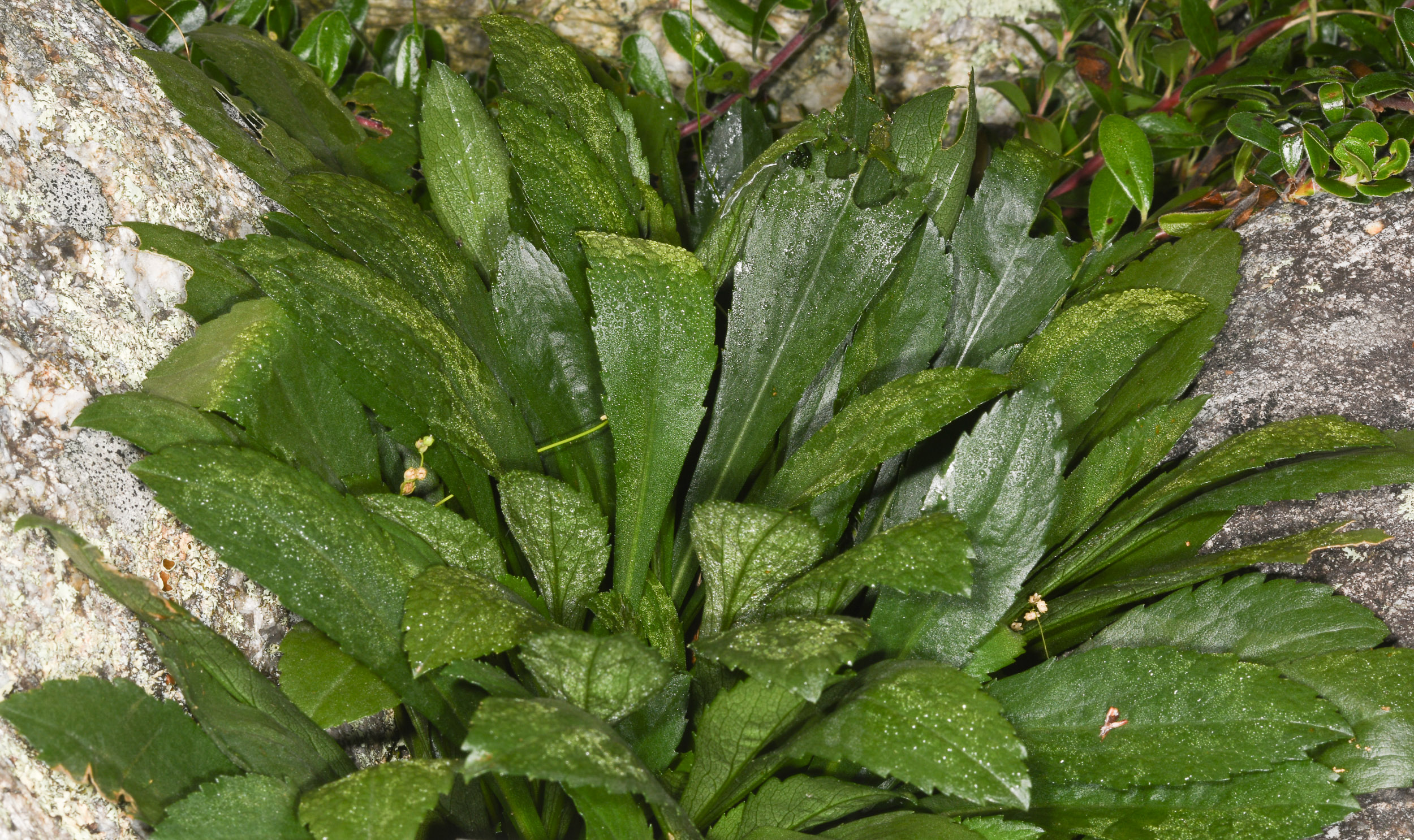
9/16/2016 · Sieur de Monts Botanical Gardens, Bar Harbor, Maine 
| Kingdom | Plantae | Plants, but not fungi, lichens, or algae (from Stearn's Botanical Latin) |
| Subkingdom | Tracheobionta | Vascular plants—plants with a “circulatory system” for delivering water and nutrients |
| Division | Magnoliophyta | Flowering plants, also known as angiosperms |
| Class | Magnoliopsida | Dicotyledons—plants with two initial seed leaves |
| Subclass | Asteridae | A large class that encompasses asters |
| Order | Asterales | Flowering plants with a central disk flower and surrounding petals, like daisies |
| Family | Asteraceae | The aster family, which also includes daisies and sunflowers; from the Greek ἀστήρ, “star,” for the star-shaped flowers |
| Genus | Solidago | From Latin solido, “to make whole or heal,” because it was believed these species had healing properties |
| Species | simplex | Simple, undivided, unbranched |
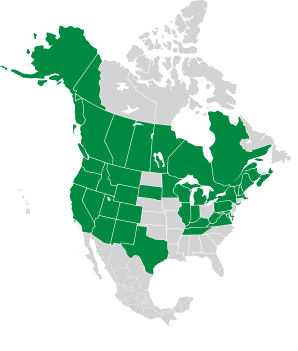
Solidago simplex description by Thomas H. Kent, not updated.

© FloraFinder.org. All rights reserved.