Symphyotrichum Nees
Aster
All asters look identical. They all bloom in the fall. Only a fanatic could tell them apart!
None of the above statements are true, but sometimes it sure seems that way. All asters aren’t even members of the same genus, not any more anyway. They include members of Doellingeria, Eurybia, Ionactis, Oclemena, Sericocarpus, and Symphyotrichum. There are many more flowers that might reasonably be mistaken for asters, among them the fleabanes (Erigeron).
About the only thing all asters have in common is that they are composite flowers, composed of ray flowers (petals) and a central disc comprised of tiny disc flowers.
Wild aster flowers are most often white or blue, but they grade from white to blue to deep purple and occasionally pink. Yellow centers are most common, but some flower centers are variously colored; to further confuse matters, they darken with age. The number of ray flowers is an identifier. Flowers may be sparse or dense, appearing along the stems in racemes or in clusters on top (panicles). Leaf structure varies greatly and is often a key identifying feature. Most asters do bloom in the fall—along with goldenrods, they make up most of the wildflowers visible in temperate regions at this time of year.
Online References:
References:
Clemants, Steven; Gracie, Carol, Wildflowers in the Field and Forest, Oxford University Press, 2006, p. 356
The table below compares some among many similar-appearing asters. See also fleabanes, which look similar but have more ray flowers. The aster family is enormous, over 23,000 species, and we are only concerned here with a group that are commonly called asters, and some similar-appearing relatives. See also Arieh Tel’s well-researched and informative aster comparison guide.
 |
Similar aster family members. |

Heart-leaved aster (Symphyotrichum cordifolium) · 9/25/2010 · Nashua River Rail Trail, Groton Center, Groton, Massachusetts · ≈ 6 × 9″ (14 × 22 cm) 

Bushy American-aster (Symphyotrichum dumosum) · 10/3/2010  ID is uncertain

Smooth blue aster (Symphyotrichum laeve) · 9/19/2013 · Harvard, Massachusetts · ≈ 8 × 7″ (20 × 18 cm) ID is uncertain 

New England aster (Symphyotrichum novae-angliae) · 9/18/2009 · Acadia National Park, Bar Harbor, Maine · ≈ 2½ × 2″ (6.5 × 5.6 cm) 

Purple-stemmed aster (Symphyotrichum puniceum) · 8/25/2013 · Casalis State Forest, Elm Hill Rd, Peterborough, New Hampshire · ≈ 8 × 6″ (21 × 16 cm) ID is uncertain 
| Kingdom | Plantae | Plants, but not fungi, lichens, or algae (from Stearn's Botanical Latin) |
| Subkingdom | Tracheobionta | Vascular plants—plants with a “circulatory system” for delivering water and nutrients |
| Division | Magnoliophyta | Flowering plants, also known as angiosperms |
| Class | Magnoliopsida | Dicotyledons—plants with two initial seed leaves |
| Subclass | Asteridae | A large class that encompasses asters |
| Order | Asterales | Flowering plants with a central disk flower and surrounding petals, like daisies |
| Family | Asteraceae | The aster family, which also includes daisies and sunflowers; from the Greek ἀστήρ, “star,” for the star-shaped flowers |
| Genus | Symphyotrichum | From Greek symphysis, “borne together or growing together, coalescing,” and trichinos, “hair, a single hair” |
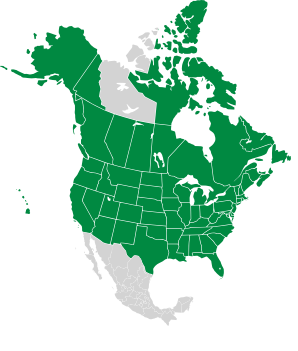
Symphyotrichum description by Thomas H. Kent, not updated.

© FloraFinder.org. All rights reserved.