Armillaria ostoyae
Dark honey fungus, honey fungus
Several varieties of honey mushrooms are native to North America. Honey mushrooms spread, like all mushrooms, by extending networks of thin fibers called mycelia underground and into the sapwood of trees. They are pathogenic, invading living trees as well as dead ones, and they spread more widely than most via rhizomorphs. These are specialized mycelia that form thick and tough bundles, sometimes compared to boot laces. The rhizomorphs spread under the bark of trees, over large distances. Honey mushroom mycelial networks form supercolonies, such as one covering over 91 acres in northern Michigan, weighing an estimated 440 tons. Another in Oregon—the “humungous fungus”—is likely the world’s largest living organism, spanning 3.5 square miles, and weighing as much as 35,000 tons.
| Armillaria was long assumed to be a single species: Armillaria mellea. As of 2025 about 16 species are known, and due to their highly variable appearance, and taxonomic confusion, sources still differ significantly on naming and geographic distribution. Take, for example, A. ostoyae. This name was long used to describe a species on western hardwoods and conifers. In 2011, however, it was found that this species was originally named A. solidipes, so the old name was restored, and the names considered synonymous. Then, in 2017, research by Klopfenstein et. al. revealed that these species are distinct species. |
| Some sources say A. ostoyae is of Eurasian origin; others confirm its presence in northeastern North America; still others say its presence in North America is in the Pacific Northwest and western Canada, and not eastern. A 2009 study confirmed its presence on Betula papyrifera, Pinus resinosa, Betula alleghensis, and Picea glauca in Ontario and Quebec, though this may be the species later found to be A. solidipes. |
Identification: These may be parasitic or saprobic, growing on the wood and roots of conifers or some hardwoods. Fruiting is usually in dense clusters. Caps are convex at first, spreading to an umbrella shape, and 1½–3″ (4–8 cm) in diameter. They are brown tinged with orange or pink, with dark brown scales. Gills are initially white, darkening to orange brown. Stems are 2–6″ (6–15 cm) long. They are fibrous and whitish or brownish in color, and up to ⅜″ (1 cm) around. The spore print is white.
Note: Photo 2, Photo 6, and Photo 7 are atypical. First, this species usually appears in clusters. Second, the large bulb at the base is not typically present, perhaps present here because this specimen is single. Third, the cracking on the top of the cap occurs here because very dry weather followed the fruiting, making the cuticle surface brittle. (Thanks to Michaeline Peterson for identifying these.)
Habitats: On hardwoods and conifers in cooler climates, such as northern North America.
Edibility: Some Armillaria species are edible, but they require proper preparation and can be mistaken for toxic species.
Online References:
References:

1 · 10/11/2013 · Beaver Brook Conservation Area, Hollis, New Hampshire · ≈ 4 × 4½″ (10 × 11 cm)  ID is uncertain

2 · 10/11/2011 · Pearl Hill State Park, Townsend, Massachusetts · ≈ 10 × 7″ (24 × 18 cm) 
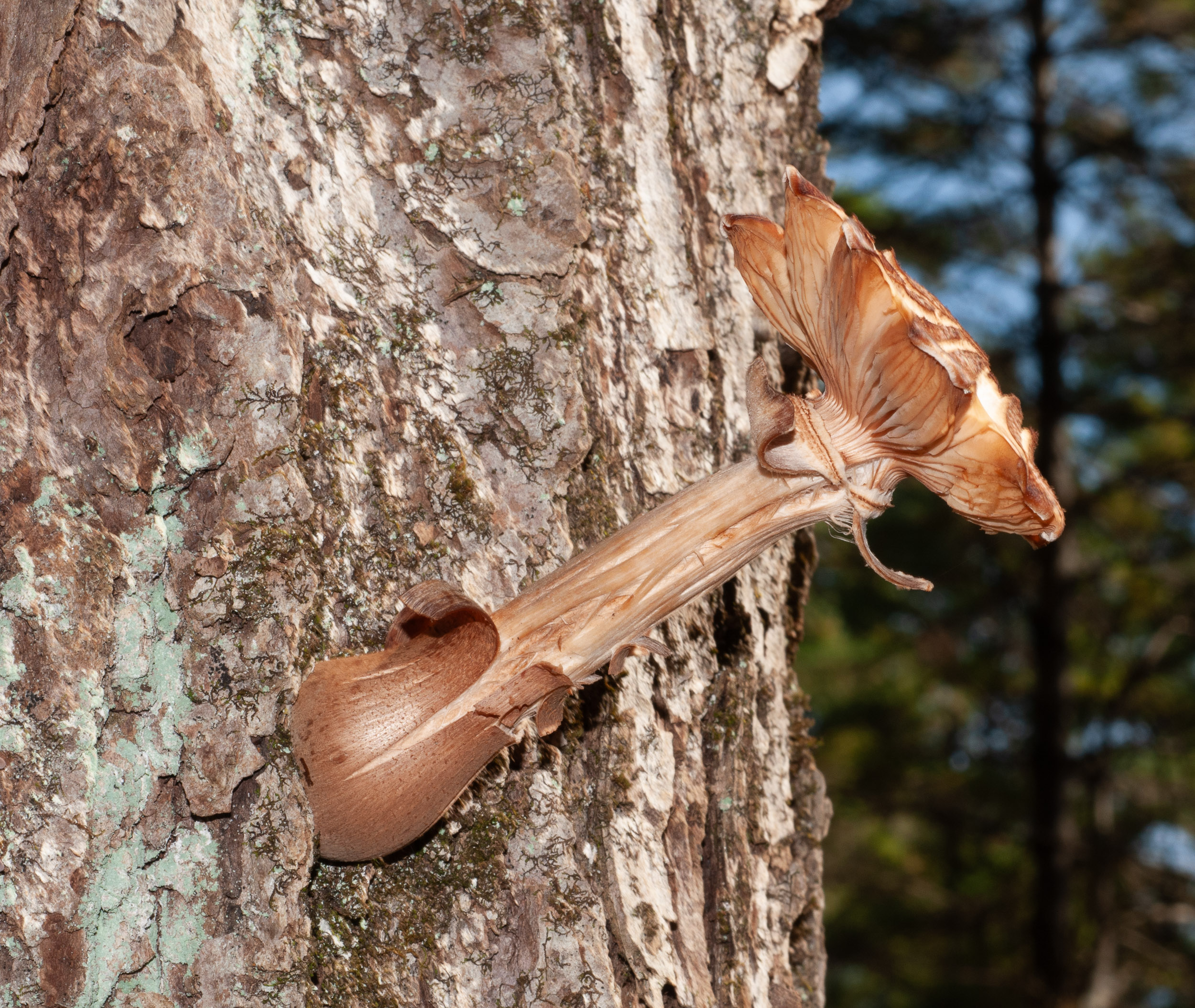
3 · 10/11/2011 · Pearl Hill State Park, Townsend, Massachusetts · ≈ 9 × 7″ (22 × 18 cm) 
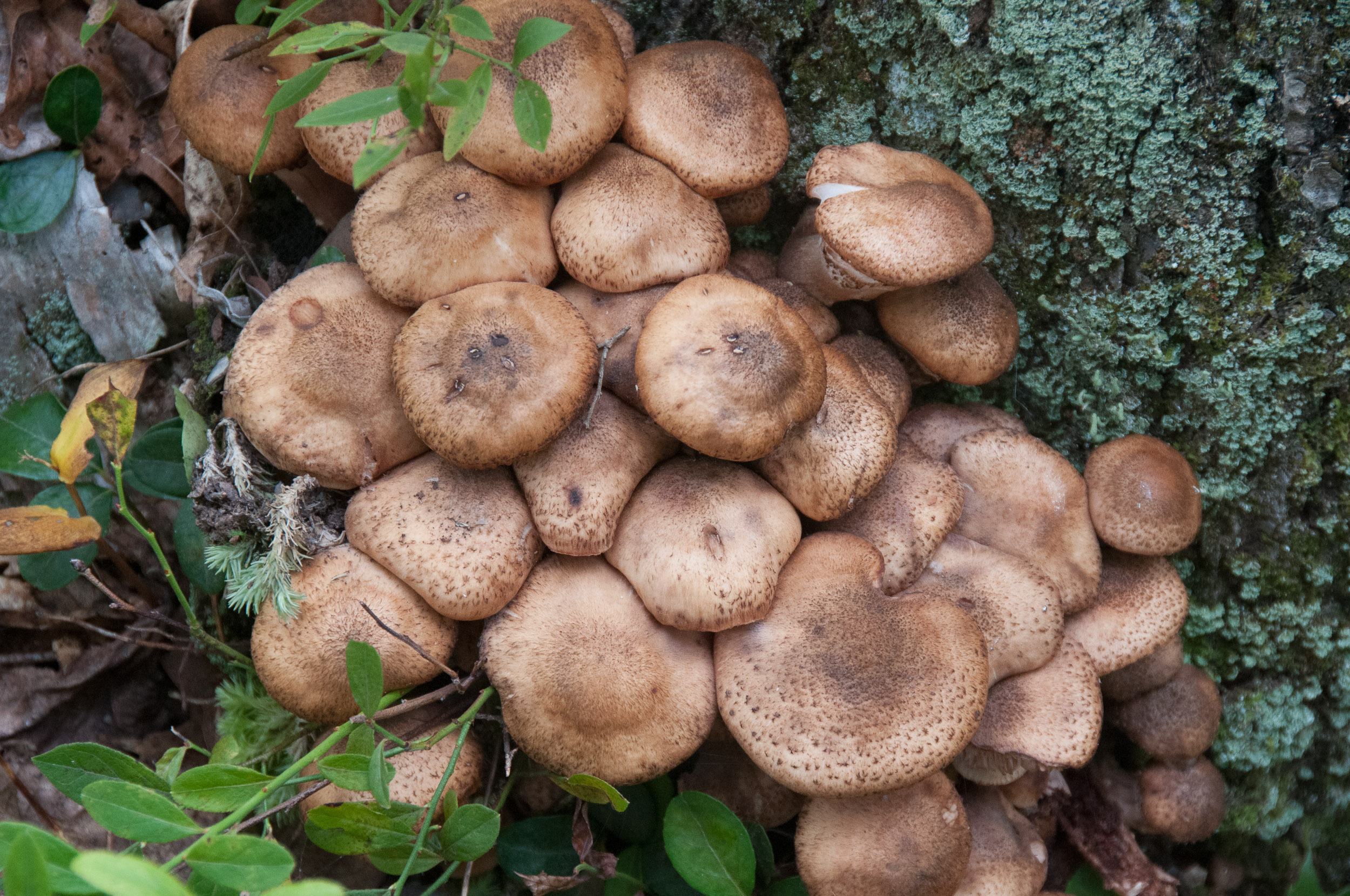
4 · 10/5/2015 · Madame Sherri Forest, Chesterfield, New Hampshire · ≈ 17 × 12″ (44 × 29 cm) 
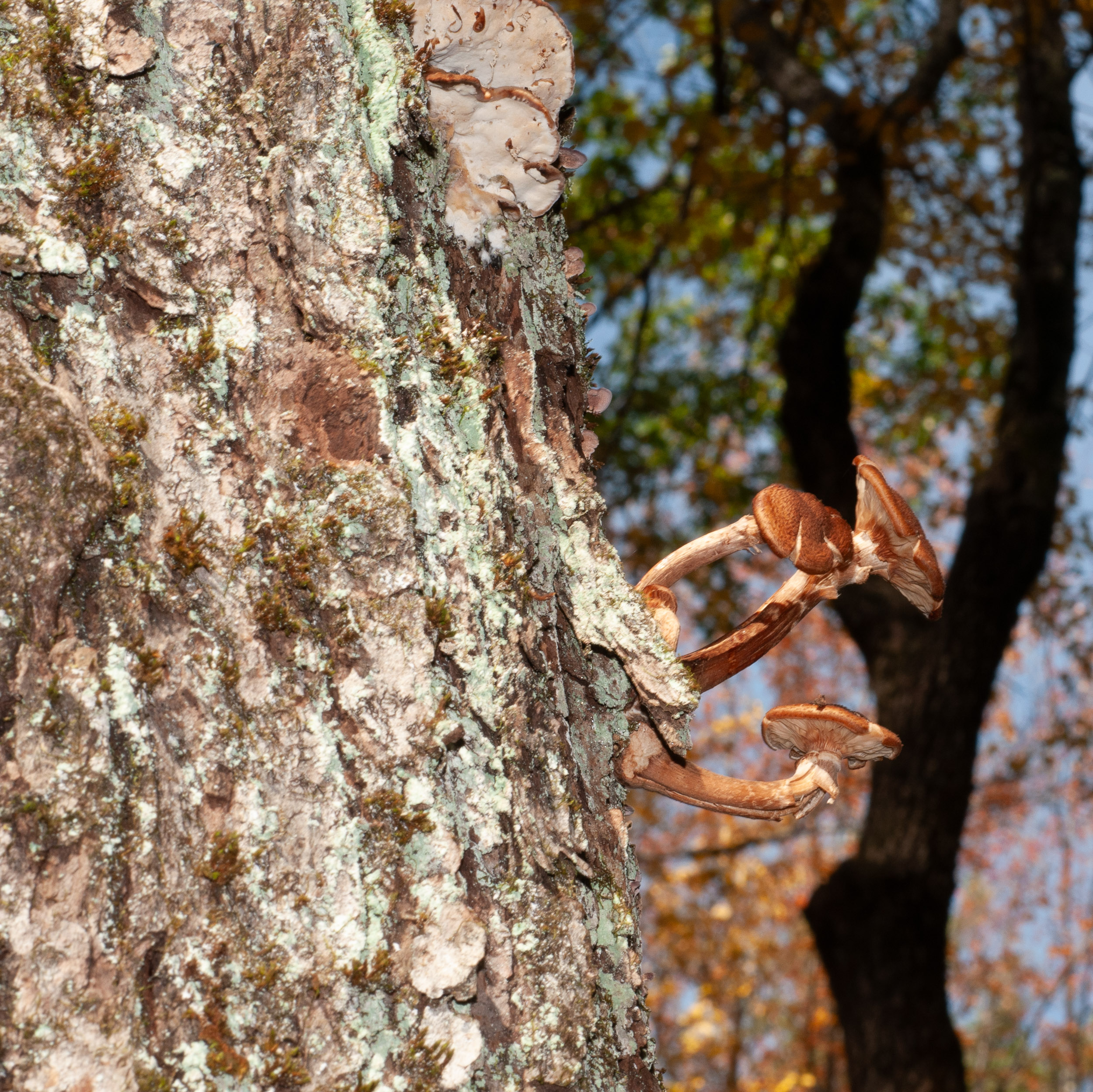
5 · 10/11/2011 · Pearl Hill State Park, Townsend, Massachusetts · ≈ 10 × 10″ (26 × 26 cm) 

6 · 10/11/2011 · Pearl Hill State Park, Townsend, Massachusetts · ≈ 8 × 7″ (21 × 18 cm) 
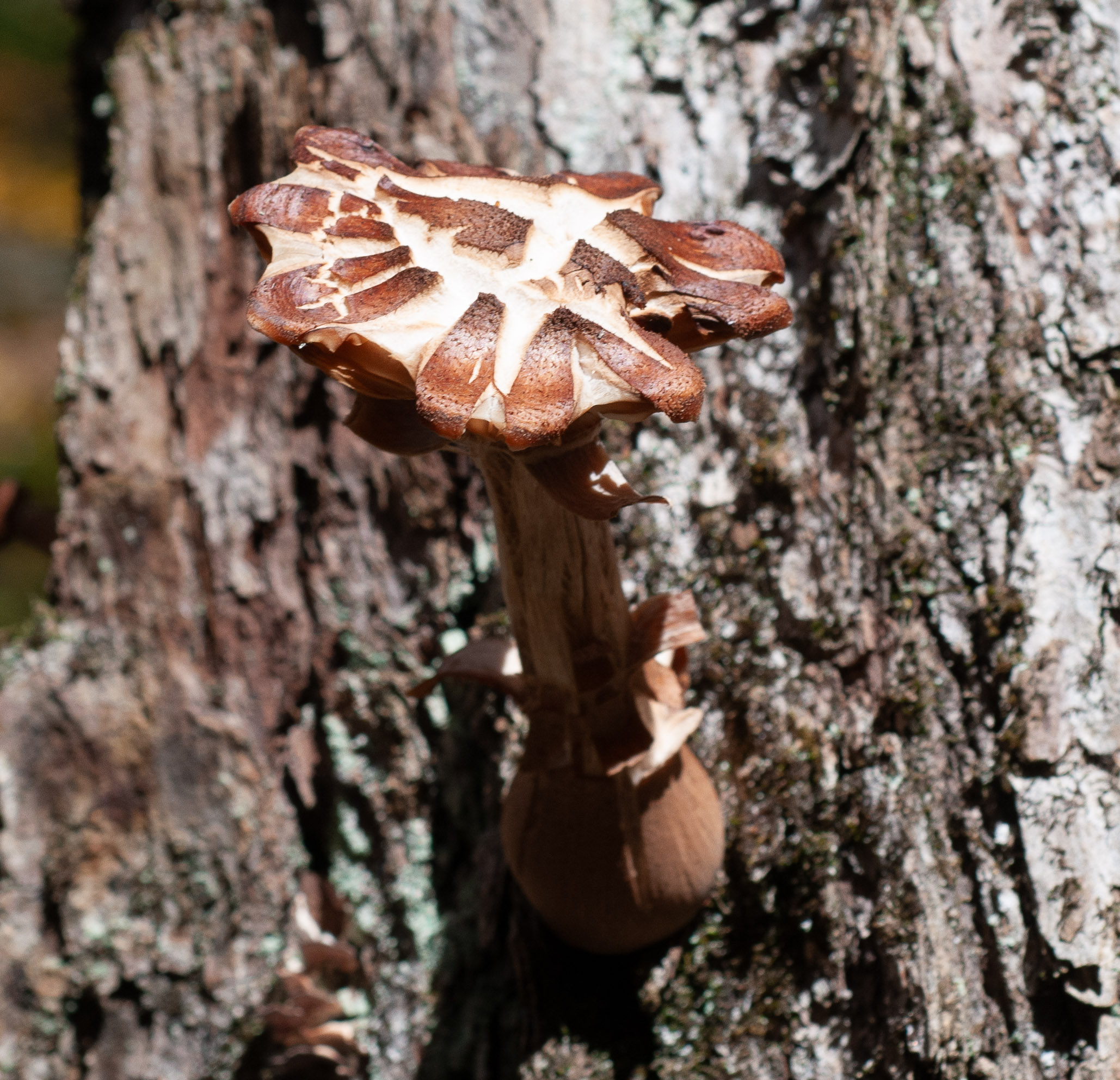
7 · 10/11/2011 · Pearl Hill State Park, Townsend, Massachusetts · ≈ 6 × 6″ (15 × 14 cm) 
| Roughly 75 people in North America are poisoned each year by mushrooms, often from eating a poisonous species that resembles an edible species. Though deaths are rare, there is no cure short of a liver transplant for severe poisoning. Don’t eat any mushroom unless you are absolutely certain of its identity! Please don’t trust the identifications on this site. We aren’t mushroom experts and we haven’t focused on safely identifying edible species. |
Armillaria ostoyae description by Thomas H. Kent, not updated.

© FloraFinder.org. All rights reserved.