This is the only white-flowering goldenrod. (Just to confuse matters, occasionally, they may appear more yellow in color.) Plants are up to 3′ (1 m) high, usually with one stem, but up to 5. Stems have long and soft hairs.
1–2½′ (35–80 cm) tall, relatively small for goldenrods. They have a purplish stem that may be covered with a whitish bloom. It is green when young, becoming blue-gray or purplish-gray with age. Single stems are common, though there may be a few branches.
2–6′ (60–182 cm) high. The main stem is smooth near the base, with rows of soft small hairs nearer the top.
Leaves
Lower leaves are 2–4″ (5–10 cm) long, with shallow teeth and a grayish down. Upper leaves are elliptical in shape, with a single prominent central vein.
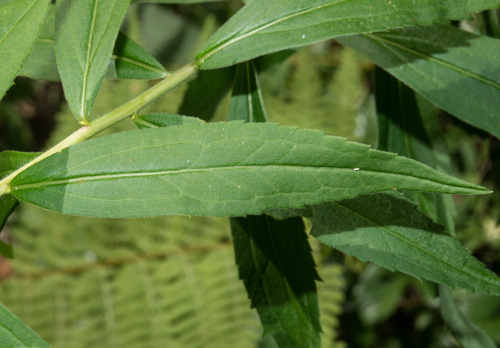
Up to 5″ (12 cm) × 1″ (2.5 cm) at the base, and smaller further up the stem. They are lance-like ("lanceolate") in shape, sometimes thickening more in the center and becoming more oval ("ovate"). Each leaf has a single prominent central vein.
Lance-shaped ("lanceolate"), sharply serrated, gray-green, mostly hairless above, hairy below. They are up to 6 ⨉ 1″ (15 ⨉ 2.5 cm) at the base, and progressively smaller up the stem.
Flowers
Flowers are cream-colored (or white or rarely pale yellow, not bright yellow like other Solidagos.) Plant tops may branch into several clusters of vaguely conical flowerheads. Flowers are even around each stem, not just on one side.
Flowerheads appear in clusters along the stem, often with a larger cluster at the top; flowering is from August to October. Flowers are even around each stem, not just on one side. Individual flowers are ⅛–¼″ (4–6.3 mm) in diameter, with 1-6 ray florets and 3-6 disc florets.
Several yellow flowerheads, each up to 3–5″ (7.6–12 cm) in length, branch sideways from the main stem, and have flowers on one side only. Individual flowers are less than ⅛″ (3.2 mm) around, usually having 8-14 ray florets and 3-6 disc florets. Flowers bloom July to September.
2–4′ (60–121 cm) tall, usually unbranched. Stems tend to be mildly zig-zagged in shape, light green, and mostly smooth.
Plants are 3–7′ (91–213 cm) tall, erect. Stems are light green or pale purple, hairless, sometimes with a whitish waxy bloom. They occur in large patches.
Up to 1½–4′ (45–121 cm) high. The main stem is stiff, hairless and green or reddish, with small vertical ridges.
Leaves
Alternate, oval, with coarse teeth, 2–5″ (5–12 cm) × 1–4″ (2.5–10 cm). Leaf petioles (stems) are ¼–1½″ (6.3–38 mm) long. The leaves narrow quickly at the base, leaving little "wings" on the petiole.
Narrow (lanceolate), ~3½″ (9.1–9.7 cm) × ⅜–½″ (1–1.4 cm) (roughly equal in size throughout the plant). They are pointed at both ends, alternate, sessile, with sharp teeth and three veins.
Basal leaves are sharply serrated, but leaves on the upper half of the stem usually lack serrations. They are alternate, up to 8″ (20 cm) × 1½″ (3.8 cm) at the base, lance-shaped ("lanceolate") or ovate or somewhere in between, and hairless or with tiny hairs just along the margins. Leaves have a single prominent vein, rather than the three parallel veins present in some goldenrods.
Flowers
In addition to a flowerhead at the tip of the stem, which is up to 5″ (12 cm) long, there are smaller racemes along the upper portion of the stem. Each composite flower is about ¼″ (6.3 mm) around. It has 1-5 ray florets and 4-8 disc florets. Blooms from July to October.
Flowerheads may be tight and roughly conical, but are often looser, composed of gently curved tiers of up to 600 small yellow flowers. Each composite flower has 9-15 conspicuous ray florets and 7-12 disc florets.
Flowerheads bend to the left and right, branching heavily. Each composite flower is less than ¼″ (6.3 mm) around, with 7-12 ray florets and 8-15 disc florets. They bloom from June to September.
8–41″ (20–105 cm), usually with a single stem. Stems are strigose—they have stiff appressed hairs.
6–30″ (15–76 cm) tall, smaller than many goldenrods. The main stem is reddish or gray-green, with short grayish-white hairs.
2–5′ (60–152 cm) high. Stems are hairy.
Leaves
Simple, alternate, sometimes toothed. Basal leaves narrow abruptly to elongated petioles, and are spatulate to lanceolate or ovate, 2–4½ ⨉ ½–1¾″ (6–12 ⨉ 1.4–4.5 cm). Upper leaves also taper to short broadly winged petiole-like bases. The leaves are lanceolate, sometimes hairy, sometimes serrated, and ¾–1¾ ⨉ ¼–¾″ (2.2–4.6 cm ⨉ 8–20 mm).
Gray-green, alternate, lance-like (“lanceolate”) or sometimes oval, up to 4″ (10 cm) × ¾″ (1.9 cm), becoming smaller higher on the stem. They are serrated or sometimes smooth. When the serrations are present, they are "crenate-serrate"—sometimes rounded, sometimes sharp-edged. At the base of each leaf there are often two side-pointing smaller leaflets (“wings”). Fine hairs on the leaves make them feel somewhat rough, like fine sandpaper.
Dark green, with smooth or hairy edges and pointed tips, 1½–4″ (4–11 cm) long. They are alternate, sessile, and have a single main vein. Crushed leaves release a scent of anise (licorice).
Flowers
2-110 flowerheads are arranged in groups of 1-10 per branch. Each composite flower has 7-13 ray florets, and 14-29 disc florets. Flowers appear August to September.
Flowerheads may be narrow, or wider at the base; they are 3–10″ (7.6–25 cm) long × 1–4″ (2.5–10 cm) wide. Each composite flower is less than ¼″ (6.3 mm) around, with 5-11 ray florets and 3-10 disc florets.
Flowerheads are roughly tubular in shape. Each composite flower has 3-4 ray florets and 3-5 disc florets. Blooms July through October.
8–39″ (20–100 cm) high, and up to 2′ (60 cm) around. Each plant has up to five woody stems covered with fine hairs.
Up to 5′ (1.5 m) tall. Rough-stemmed goldenrods are named for their hairy, rough stems, which are light green to brownish red. Plants lack the [Glossary(rosette of leaves)] that are at the base of many goldenrods.
1–6½′ (40–200 cm) tall, with 1-10 stems. They prefer oceanside habitats.
Narrow closer to the base of the plant, widening and becoming more oval-shaped toward the top, and usually quite wrinkled in appearance. They are up to 2½″ (7 cm) × ¾″ (2 cm), and attach directly to the stem ("sessile").
Seaside goldenrods’ major identifying feature is fleshy, waxy, gray-green, salt-adapted leaves. Leaves have smooth edges, and are oblong or lanceolate. They are alternate, 2–3″ (5–7.6 cm) long × ½″ (1.3 cm) wide, and attach directly to the stem ("sessile"). Leaves at the base are 3–5″ (7.6–12 cm) long.
Flowers
15 to as many as 250 flowerheads, arranged in panicles. Each flowerhead is on a stalk 1/32–⅛″ (1.5–3 mm) in length. Each composite flower is up to ⅛″ (3 mm) in size, and contains 9-16 yellow ray florets and 6-15 disc florets. They appear September to October.
A pyramid-shaped group of panicles at the top of the plant, with multiple flowering branches of upward-pointing flowers. (Younger plants may have only a single spike.) Each composite flower is bright yellow, about ¼″ (6.3 mm) around, with a small yellow disk surrounded by 4-6 ray florets and 4-6 disc florets. Flowers appear from July to October.
Flowerheads are dense yellow panicles facing to each side, 2–5″ (5–12 cm) across, with flowers only along the upward-pointing side. Each composite flower is about ¼–⅜″ (6.3–9.5 mm) around, somewhat larger than those of most goldenrods, with 8-17 ray florets and 10-22 disc florets. They appear from October to November, and sometimes in the spring.
6 ⨉ 1½″ (15 ⨉ 3.8 cm), long and narrow ("lanceolate") or somewhat wider at the center (“narrowly ovate”). Upper leaves are much smaller. Leaf edges are usually smooth and leaves are hairless.
Egg-shaped, and toothed. They usually form a rosette of large leaves at the base. Leaves along the upper stem are small and narrow.
Flowers
3 to 150 flowerheads, densely packed around the stem. Each composite flower is up to ⅛″ (3 mm) in size, and contains 6-16 yellow ray florets and 6-31 disc florets. The flowerheads are somewhat viscid-resinous—sticky—the most distinctive trait of this species. They appear from September to October.
Flowerheads are erect and upright, conical in shape, up to 1′ (30 cm) at the top of the stem, with tight clusters of tiny yellow flowers. Each composite flower is about ¼″ (6.3 mm) across, and has 3-7 ray florets and 6-16 disc florets. Flowers appear from August to October.
Flowers form long clusters at the top of each stem. Each composite flower is closely attached to the stem, with 10-16 ray florets and 15-30 disc florets. At the base of each flower are green back-curved tiny leaflets (bracts), a key identifying feature.
Plants are perennials, and are 12–47″ (30–120 cm) high. They are found in bogs and swamps, an identifying feature (since most goldenrods prefer dry land). Stems are round, not four-sided as in some goldenrods, and smooth (hairless).
1–4′ (30–121 cm) in height, on erect stems.
Plants are 10–39″ (25–100 cm) in height. Stems are branched partway up, smooth, without a waxy bluish coating (technically, glabrous or glabrate, not glaucous).
Leaves
Leaves at the base of the plant are up to 1′ (30 cm) long and about one eighth as wide, and finely toothed. All leaves are smooth on top. The base of each leaf is clasping—it wraps partly around the stem.
Linear, like grass blades, abundant, and typically bent downward or backward (deflexed). They are ⅞–2½″ long ⨉ 1/32–⅛″ wide (2.4–7 cm ⨉ 1–3 mm), rarely up to ⅛″ (6 mm) wide, and smooth, especially at maturity. Leaves have black resinous dots on leaf undersides.
Flowers
The yellow flowerheads, up to 7″ (17 cm) long, form a tight conical cluster at the top of the plant. Each composite flower has 1-8 moderately conspicuous ray florets and 6-8 disc florets. They appear from August to October.
Flowerheads are up to 1½′ (50 cm) long, but only 1–1¾″ (3–5 cm) around. Each composite flower contains 3-7 yellow ray florets and 8-12 disc florets. They appear from late August to October.
The flowerheads are flat-topped or rounded, often multiply layered, with tiny yellow flowers. Each flower has 7-17 ray florets, and 3-22 disc florets. They bloom from August to December.
Seeds are 1/32″ (0.5 mm) long, hard, pubescent, one-seeded, indehiscent white nutlets, with attached to hair-like bristles (pappus) for wind distribution.
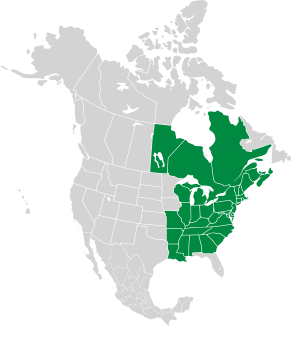
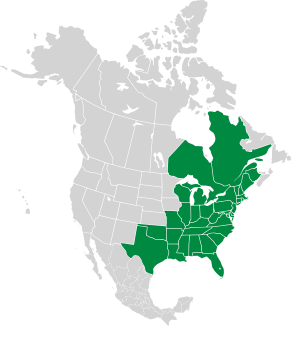
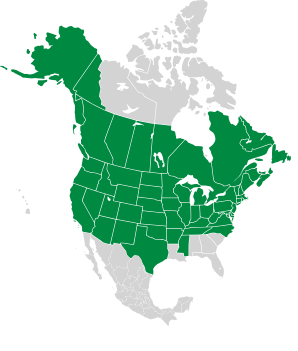
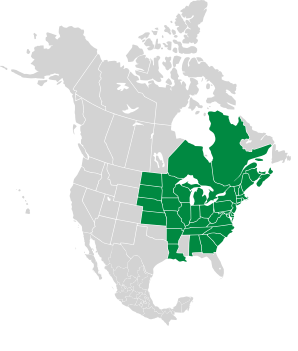
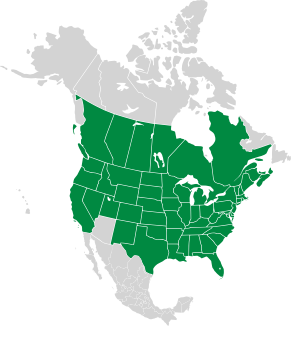
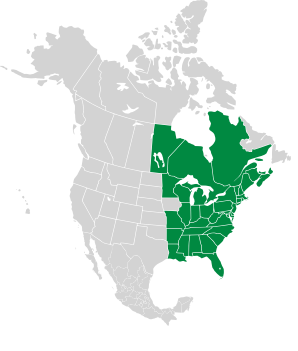
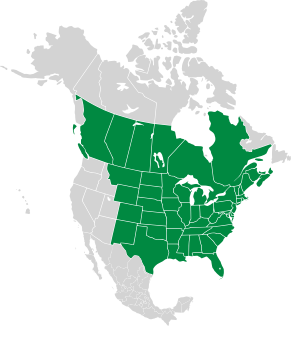
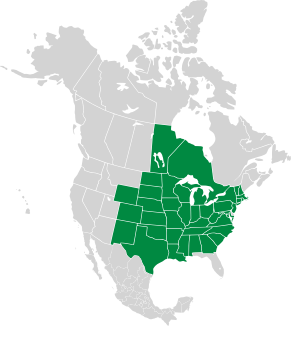
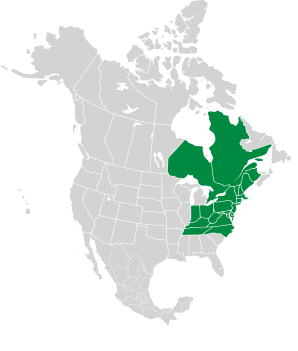
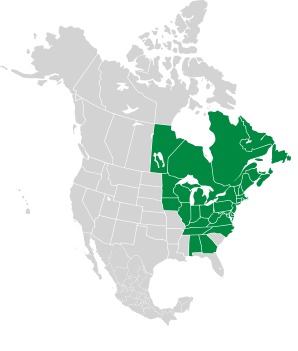
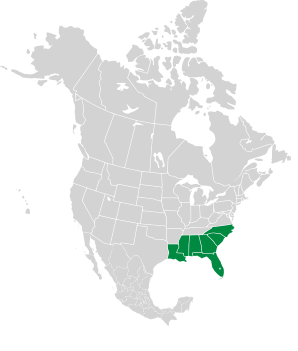
Range/ Zones
Habitats
Bogs and swamps.
Pine savannahs, marshes, and bogs of the coastal plain
Open sandy areas, such as powerline cuts in pine barrens, river or lakeshores, wetland margins.
1–4′ (30–121 cm) tall, often branched only slightly, sometimes heavily-branched and bushy. Stems typically have rows of fine white hairs.
Leaves
Lance-shaped leaves contain 3 veins running along the length of the vein. Sometimes there are 1 or 5 veins, depending upon leaf size. Leaves are 3–6 ⨉ ⅛–⅝″ (7.6–15 cm ⨉ 3.2–15 mm), resembling grass blades, and attached directly to the stem (”sessile”). Leaves have resinous dots.
Flowers
Large, flat-topped or umbrella-shaped yellow flower clusters. Each flower in the flowerhead is ⅛″ (3.2 mm) across. Flowerheads tend to bloom gradually, not all at once, emitting a modest, sweet scent.
Fruit
Seeds are hard, pubescent, one-seeded, indehiscent white nutlets, 1/32″ (0.5 mm) long. Each seed is attached to hairlike pappus.
Range/ Zones
Habitats
Fallow fields, waste places, fencerows, and vacant lots.
Solidago description by Thomas H. Kent, not updated.